By continuing, you agree to LoansJagat's Credit Report Terms of Use, Terms and Conditions, Privacy Policy, and authorize contact via Call, SMS, Email, or WhatsApp
Disclaimer: The information published on LoansJagat is intended for general informational and educational purposes only and should not be considered financial, legal, or investment advice. Interest rates, loan terms, statistics, and other data may change over time and may vary by lender or source. Please verify the latest information and consult a qualified financial advisor or the respective Bank/NBFC before making any financial decisions.
Subscribe Now
About the author

Vidhi Chauhan
Vidhi Chauhan is a copywriter and content writer with extensive experience creating high-quality, SEO-driven content across multiple industries, with a strong focus on fintech. She has written extensively on GST, banking, personal loans, business loans, credit cards, income tax, insurance, and other financial topics, helping Indian readers understand complex concepts through clear, accurate, and engaging content.
Related Blog Post
Simplify All Your Loans Into One Affordable EMI

Customers Served

Debt Consolidated

1200+ Reviews

Locations in India
Club all Loans & Credit Card Bills into Single EMI

Quick Apply Loan
Consolidate your debts into one easy EMI.

Takes less than 2 minutes. No paperwork.

10 Lakhs+
Trusted Customers

2000 Cr+
Loans Disbursed

4.7/5
Google Reviews

50+
Banks & NBFCs Offers
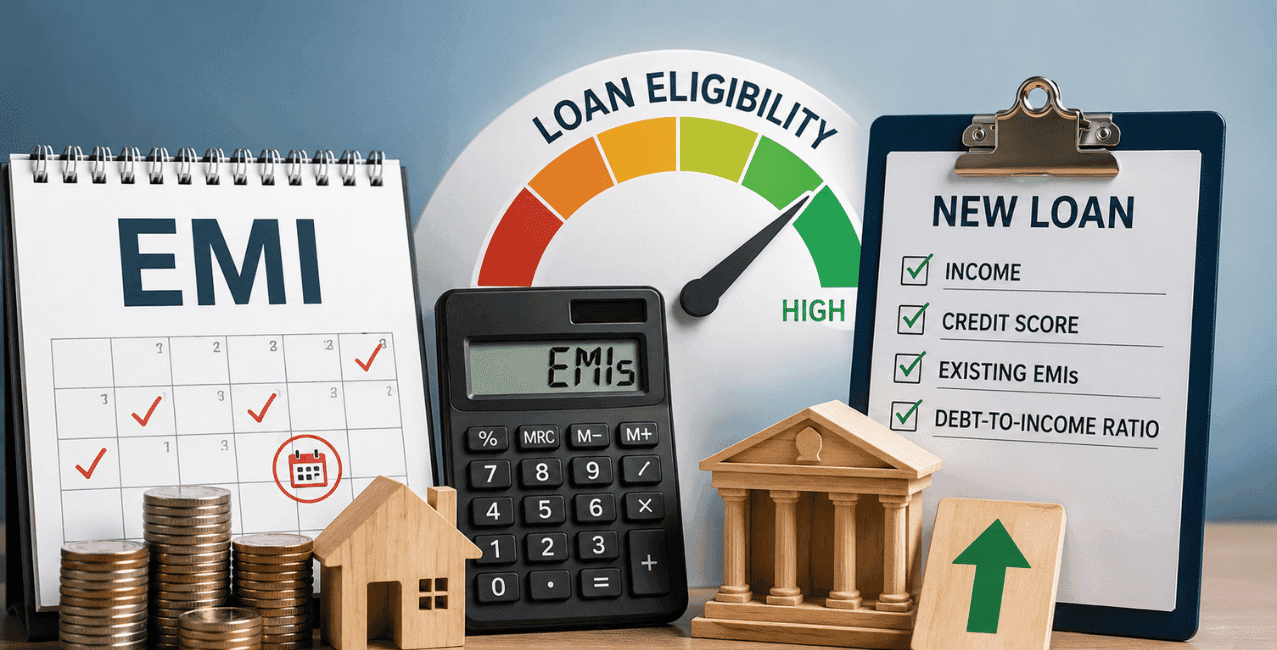
Absolutely, the existing EMIs will affect your ability to qualify for a new loan, but this does not mean that it will prevent you from applying for another loan. Before making the decision, the lenders analyse what percentage of your monthly salary is going towards repaying your debts and calculate how much extra debt you can afford. Whereas your salary represents your ability to repay the loan, the existing EMIs represent the usage of that ability. Thus, you will be able to assess a realistic amount of a loan you can get and avoid unnecessary debt and loan rejection. So, how exactly do the existing EMIs affect your eligibility? Let’s find out.
Make use of loan qualification calculators for new loans.
The existing EMIs show the percentage of your earnings that have been assigned to repay debts. This is evaluated by lenders to determine whether you can handle another loan.
Debt-to-income ratio is one of the major ratios that lenders evaluate before lending you money. This evaluates your monthly income versus your monthly debt obligations. For instance, if your monthly earnings are ₹60,000 and your monthly payments towards existing EMIs are ₹20,000, your earnings will be highly utilised.
An increased EMI liability would give the impression of being stretched financially. Consequently, the bank will consider providing you with a loan amount that is relatively low, or it may even reject your application.
The fact remains that your existing EMIs have a bearing on the loan that you are eligible for, despite having the income required by the bank.
EMIs are just one of the factors that go into the total evaluation process. There may be other factors like your salary, employment stability, credit score, payment record, age, existing liabilities, and the amount of the loan you have applied for.
Sometimes your repayment habits can affect the risk perception of the lender and your credit utilisation ratio as well. Being able to make timely payments on your existing EMIs is important for your credit rating.
The nature of existing loans can also be relevant. For example, having multiple unsecured loans or credit card debt means a greater financial burden than having a manageable secured loan.
The lender may also take into consideration the EMI of the new loan you wish to avail. When the existing liabilities plus the new EMI amount result in no disposable income, then your borrowing ability gets affected.
Yes, just having ongoing EMIs will not disqualify you from taking out a new loan. The criteria are based on whether your salary and financial condition will allow you to manage a loan repayment along with your ongoing EMIs easily.
In case your EMI obligation is already very high, then you have the option of lowering your debt load by repaying some of your debts before applying or going for a lower loan amount so that the EMI is bearable.
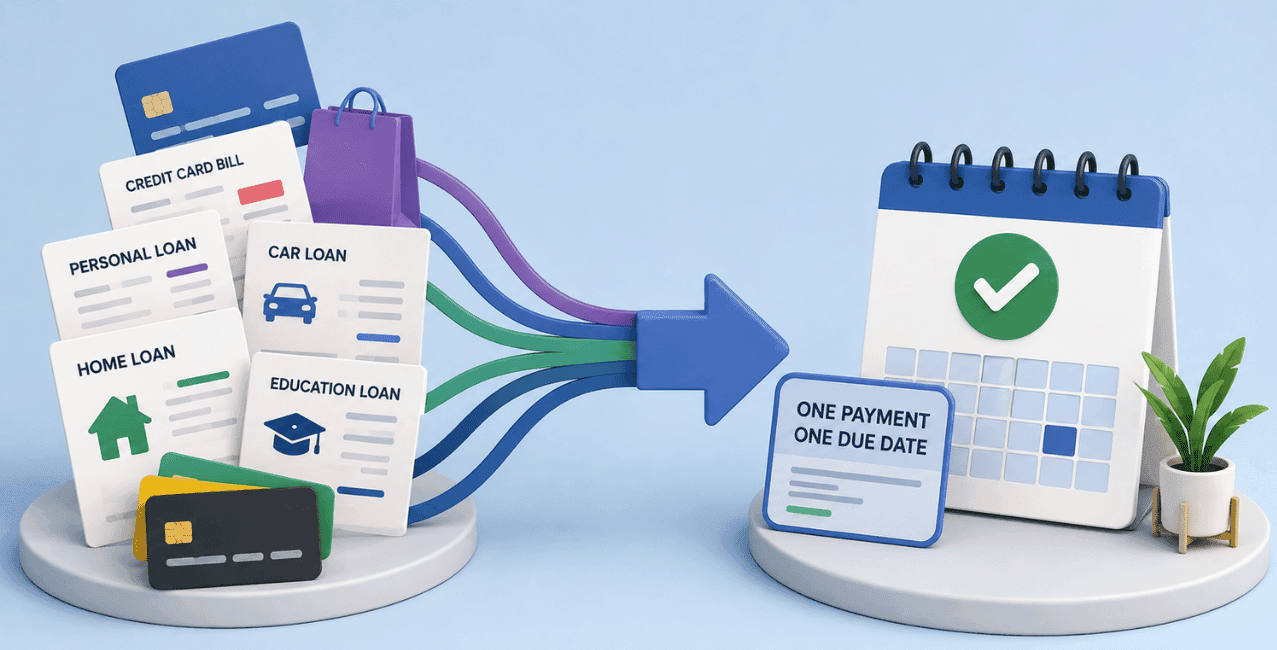
Another alternative would be to consolidate the debt, where several loans that qualify for such a consolidation are consolidated into a single loan. This way, repayment will be easier, although the cost of the consolidated loan needs to be carefully evaluated.
It is important to shop around different lenders instead of making blind applications for loans. Applying for different loans in quick succession leads to several credit inquiries, which can hurt your credit score.
Calculate the amount of money currently being used for debt repayment and see what is left after subtracting the necessary expenses from your salary. This will provide you with more insight into the convenience of borrowing.
Another method involves reducing your current level of debt through regular payments and not getting into debt unnecessarily. It is always good to maintain a healthy credit score and keep credit card balances low.
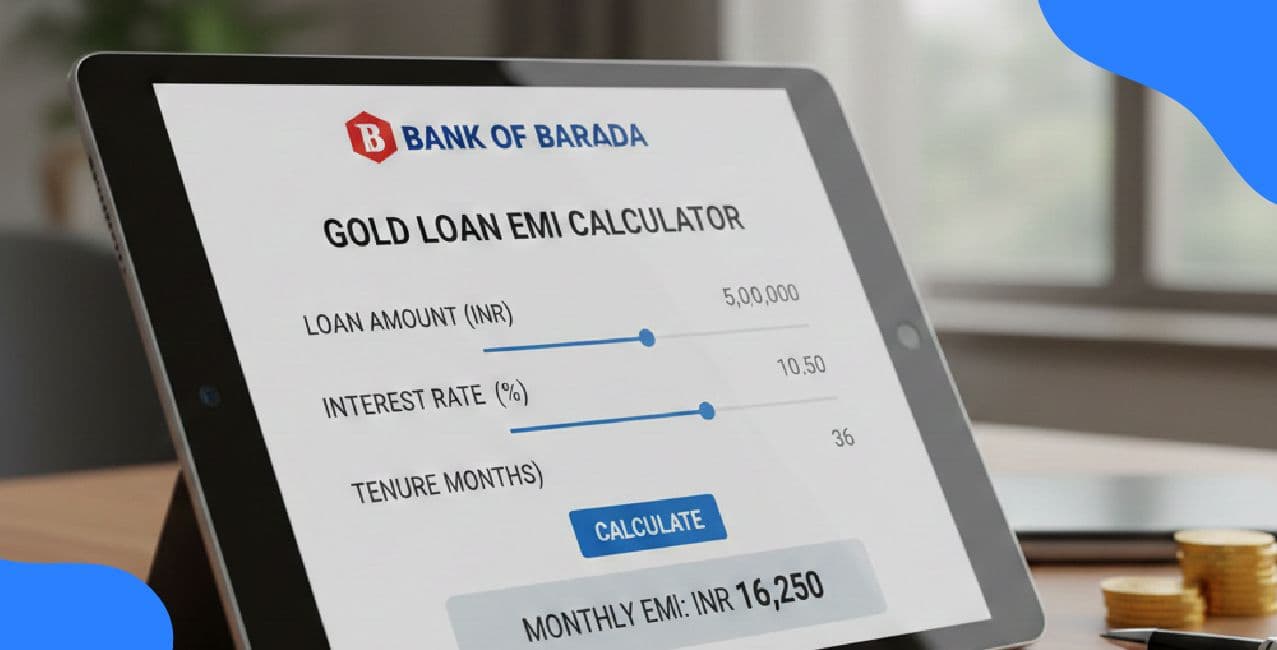
Before taking out the loan, calculate the amount of the loan that you would be eligible for based on your income and the number of EMIs you currently pay using an eligibility calculator. It is important to keep in mind that the amount of money sanctioned to you will depend upon your complete application and credit history.
In any case, even if you have existing EMIs, it doesn’t mean you cannot take another loan, although it might affect the amount you are eligible for. When you borrow responsibly, it means that you should take out a loan whose EMI you can repay from your monthly income.
Your eligibility for a loan is affected by EMIs that you have already paid because they decrease your repayment ability. But this does not mean that you are not eligible to get extra loans. Consider your monthly earnings, current financial liabilities, credit score, and repayment ability before making any decisions.
*T&C Apply
Yes, a longer tenure can reduce the EMI of the new loan, and thus make it easier to repay. It can also lead to higher interest costs over the entire period of the loan.
An additional income stream in the form of a financially sound co-applicant can boost the loan application process. The creditworthiness of the co-applicant is also considered while assessing the existing EMIs.
Yes, different banks and financial institutions have different criteria for assessing the eligibility of borrowers. Thus, an individual can obtain different offers from different lenders.
An increased salary will enhance the capacity to pay back the loan, provided that the amount of debt is not increased at the same pace. The lenders could also ask for proof of increased income.
Changing jobs frequently might cause a problem due to instability of income, especially in the case of some time period between jobs.
No, the pre-approved loan offer is usually made based on the initial data available to the lender.
Frequent applications for loans can create an impression that you are dependent on credit facilities. It would be best to compare different options before applying for a loan.
Yes, changes in interest rates can have an effect on the EMI of variable-rate loans. Higher interest can increase the burden of repayment on you.
Savings can show your preparedness for unforeseen circumstances, but generally, the lenders look for things in your application according to their criteria for eligibility and underwriting.
Yes, there are chances that your loan eligibility will change once the lender verifies the details in your application, including your income, documents, and credit status.