By continuing, you agree to LoansJagat's Credit Report Terms of Use, Terms and Conditions, Privacy Policy, and authorize contact via Call, SMS, Email, or WhatsApp
Disclaimer: The information published on LoansJagat is intended for general informational and educational purposes only and should not be considered financial, legal, or investment advice. Interest rates, loan terms, statistics, and other data may change over time and may vary by lender or source. Please verify the latest information and consult a qualified financial advisor or the respective Bank/NBFC before making any financial decisions.
Subscribe Now
About the author

Anishka Bhadly
Anishka Bhadly is a content writer with a finance and business background. She has completed her bachelor's degree with a specialisation in finance and is currently pursuing an MBA in the finance field too. The knowledge she has gained from her studies and experience working with EdTech companies helped her combine theoretical knowledge with practical industry insight. Her expertise lies in creating well-researched, informative, and reader-friendly content in various banking, personal finance, loans, insurance, and investment-related topics.
Related Blog Post
Simplify All Your Loans Into One Affordable EMI

Customers Served

Debt Consolidated

1200+ Reviews

Locations in India
Club all Loans & Credit Card Bills into Single EMI

Quick Apply Loan
Consolidate your debts into one easy EMI.

Takes less than 2 minutes. No paperwork.

10 Lakhs+
Trusted Customers

2000 Cr+
Loans Disbursed

4.7/5
Google Reviews

50+
Banks & NBFCs Offers
EMI is generally payable one month after disbursal of the loan; however, it may differ with the lender and the nature of the loan. Some lenders calculate EMI one month from the date of disbursal of the loan; on the other hand, there are some lenders who have a cut-off date after which they calculate EMI in the next or next-to-next month. Hence, you should not expect the EMI to be payable one month after the loan has been taken.
Equated Monthly Instalment (EMI) refers to a fixed sum of money which the borrower repays to the creditor each month for his/her loan. The EMI typically comprises two parts: the principle amount of the loan and the interest levied on it. While the principal amount decreases the outstanding loan amount, the interest is basically the cost of borrowing. However, the EMI usually remains constant during the tenure of the loan in case of fixed-interest loans.
EMI is a regular payment made towards the repayment of a loan within a specified period of time. This includes both the loan amount and interest.
Let's see how an EMI works:
These elements make up your monthly payments.
To put it simply, an EMI splits the repayment of the loan amount into monthly amounts that can be easily managed. The amount greatly depends on the loan amount, interest rates, and repayment tenure.
There is no single specific date on which EMI can be paid, as it might differ in the case of different loans. There are various factors that may have an impact on when the repayment starts. Factors that may have an impact on the date are:
Above-mentioned are the factors that might impact the EMI start date; however, they may not apply the same way to all the loans.
EMI depends on the amount borrowed, interest rate and tenure of repayment. This knowledge will enable you to have an idea about how much your monthly payment is.
Formula: EMI =
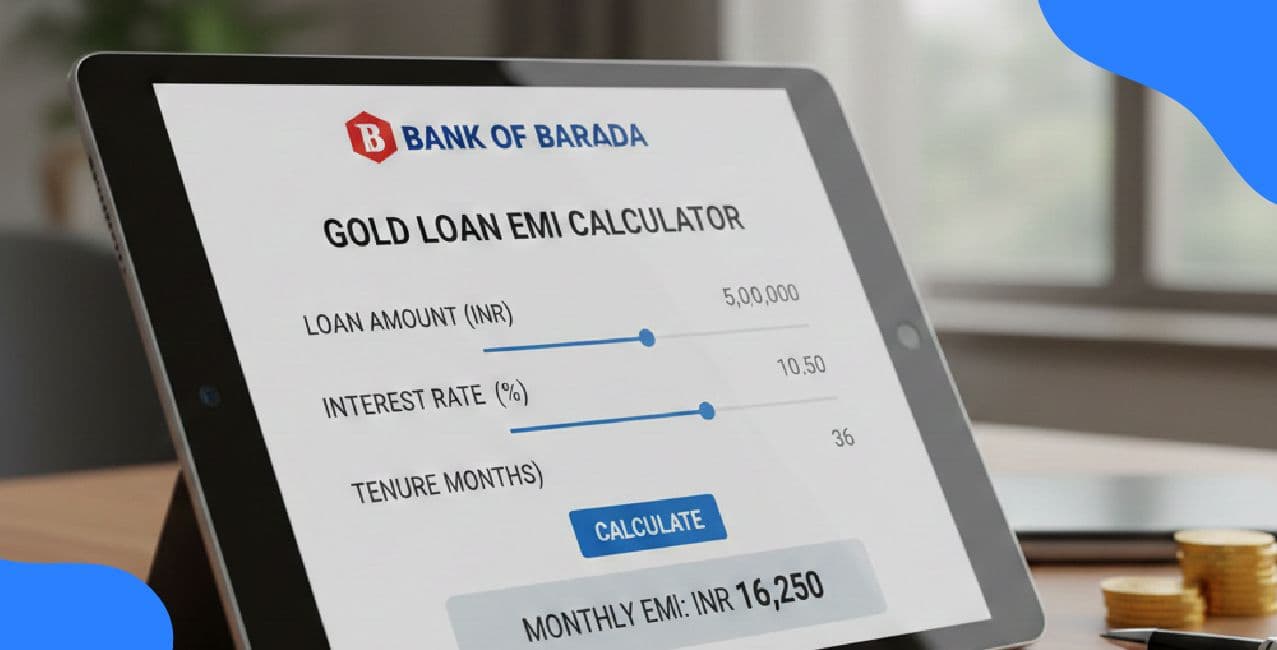
If you take a loan of ₹50,000 at a 12% interest rate per year for a tenure of 12 months. The interest rate per month will then be 1%. Using the above formula, the EMI is around ₹4,442 per month. The EMI consists of both principal and interest, with the interest component decreasing as the outstanding balance decreases.
Finally, an EMI calculator can make this task easier for you.
The first EMI date would generally be available in the documentation or messaging received from your lender. Going through these aspects in advance will allow you to know the date of deduction and arrange sufficient money.
Having the first EMI date beforehand will help in financial planning. In case there are contradictions between the dates mentioned in the various documents, you may approach your lender and get the correct EMI schedule confirmed.
The first day of EMI payments will not always be the same for all borrowers. This is because the payment schedule varies according to the repayment period of the lending institution, the date of loan disbursement, and the terms of the loan. Even though most loans have repayments starting the next month, there may be cases where repayments commence after some time. The best way would be to refer to your loan terms right after disbursing the loan.
The first EMI payment date is normally within the month following the disbursement of the loan. However, this is dependent on the lending organisation's repayment calendar.
Yes. When a loan is disbursed past the cut-off period of the lender, the first EMI repayment can be in a subsequent month.
Yes. The loan disbursement date might determine when the lender begins the repayment cycle.
The loan repayment schedule, loan agreement, disbursement note, and lending institution’s app or online banking website will give you the first EMI payment date.
Yes. You can talk to customer care to confirm the first EMI payment date.
This could be adjusted in accordance with the lender’s terms and conditions.
There may be several factors such as the nature of the loan, disbursement date, policy of the lender and other factors that could influence the first EMI due date.
Not necessarily; the first EMI may not be the same as the other EMIs.
Ensure that the date is recorded and there is sufficient money in your linked bank account before the due date.
For planning purposes and to avoid any penalties, it is important to know the exact date.