By continuing, you agree to LoansJagat's Credit Report Terms of Use, Terms and Conditions, Privacy Policy, and authorize contact via Call, SMS, Email, or WhatsApp
Disclaimer: The information published on LoansJagat is intended for general informational and educational purposes only and should not be considered financial, legal, or investment advice. Interest rates, loan terms, statistics, and other data may change over time and may vary by lender or source. Please verify the latest information and consult a qualified financial advisor or the respective Bank/NBFC before making any financial decisions.
Subscribe Now
About the author

Vidhi Chauhan
Vidhi Chauhan is a copywriter and content writer with extensive experience creating high-quality, SEO-driven content across multiple industries, with a strong focus on fintech. She has written extensively on GST, banking, personal loans, business loans, credit cards, income tax, insurance, and other financial topics, helping Indian readers understand complex concepts through clear, accurate, and engaging content.
Related Blog Post
Simplify All Your Loans Into One Affordable EMI

Customers Served

Debt Consolidated

1200+ Reviews

Locations in India
Club all Loans & Credit Card Bills into Single EMI

Quick Apply Loan
Consolidate your debts into one easy EMI.

Takes less than 2 minutes. No paperwork.

10 Lakhs+
Trusted Customers

2000 Cr+
Loans Disbursed

4.7/5
Google Reviews

50+
Banks & NBFCs Offers
Borrowing money comes with heavy obligations. Unexpected situations can easily ruin your financial roadmap. When you fail to clear your monthly dues, terms like default and settlement often come up. These words sound similar but carry entirely separate consequences for your wallet. Learning exactly how they differ is a great way to safeguard your savings and future borrowing options.
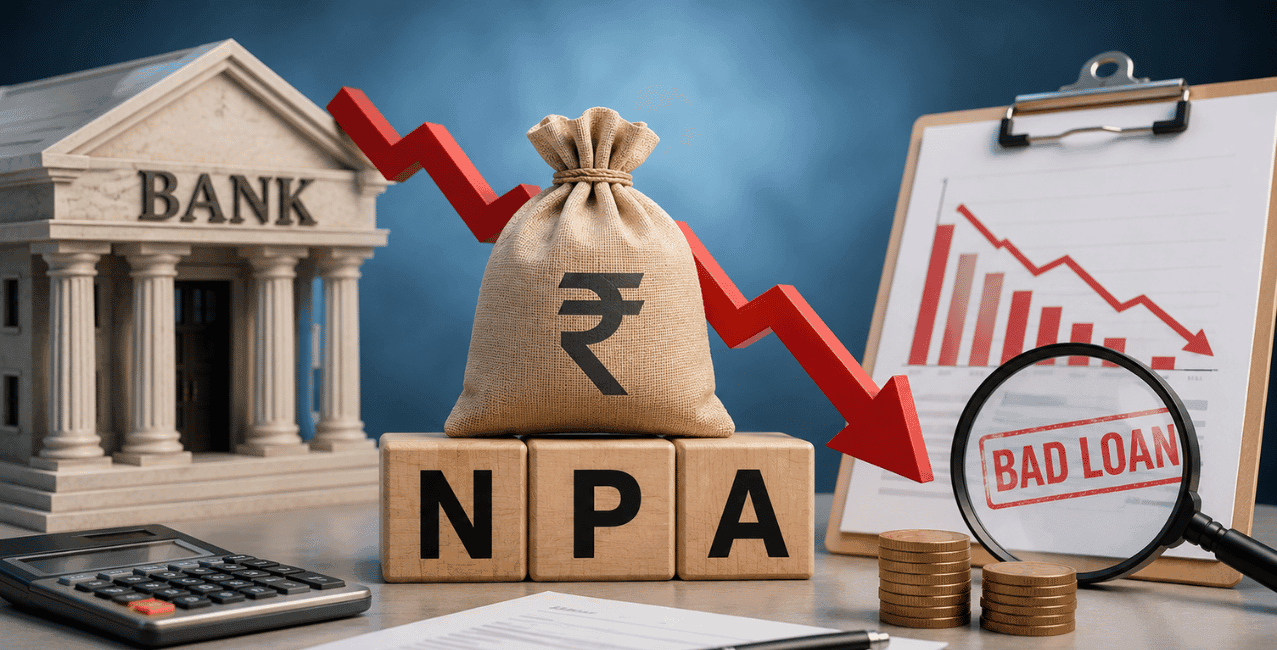
A default means you have fully stopped making your loan payments. Banks in India will mark your loan as a Non-Performing Asset, or NPA, if you miss dues for over 90 days. However, skipping just one or two early bills will already begin to drop your credit score. After an official default, the bank has the right to take legal steps, such as sending notices or filing a court case against you. You also need to remember that you still have to pay back the full loan balance, along with any extra late fees and interest.
This happens when the bank agrees to close your loan if you pay a smaller part of the total debt. Banks usually call this a One-Time Settlement. They normally give you this option only after your loan has become an NPA. The bank takes a loss on the money to avoid the long process of a court battle. Your credit file will then show the loan as settled rather than properly closed. You must get a written paper and a No Dues Certificate from the bank to prove the debt is fully gone.
Here is a quick look at how these two money problems differ from each other.
Knowing these main details helps you pick the option that hurts your wallet a lot less.
When you stop paying, the bank quickly tells credit agencies like CIBIL, Experian, Equifax, or CRIF High Mark. Credit scores in India range from 300 to 900. A default will cause your score to drop fast. This low number makes it very hard to get new credit cards or loans in the future. This bad mark stays on your file for up to seven years. Because of this bad record, banks will mostly reject your future requests or ask for very high interest rates.
Picking the settlement option will also drop your credit score, but it is better than walking away completely. The credit agencies will change your file to show the account as settled instead of fully paid. This specific tag looks slightly better to lenders than a total default. But it still shows that you could not pay back the original money you borrowed. Banks might still give you a loan later on, but they will check your form very closely. Your score drops, which means borrowing money will cost you a lot more.
If your loan is linked to a physical item like a house or a car, the bank can take that property using the SARFAESI Act. They must give you a 60-day warning before they take your items. For loans with no linked property, the bank will probably file a court case to get their money back. Recovery agents might try to call you. However, the Reserve Bank of India states that these agents cannot threaten you or call outside the hours of 8 AM to 7 PM. The police will only step in if the bank can prove you planned a fraud or hid your money on purpose, which is a crime.
Settling a debt usually keeps you out of the courtroom because both sides agree to a new plan. You just need to make sure you collect all the right documents. You absolutely need an official settlement letter and a No Dues Certificate from the lender. If you fail to get these papers, the bank might still treat you like you owe them money. Avoiding a court case does not hide the fact that you did not pay the full amount back. This final outcome still hurts your financial image.
Let us look at the good and bad sides of totally ignoring your loan payments.
Pros:
Cons:
*T&C Apply
Defaulting brings nothing but heavy stress and big money problems.
Here are the positive and negative sides of paying a smaller amount to clear the debt.
Pros:
Cons:
This choice gives you a quick fix but leaves a permanent mark on your record.
Both of these situations are bad for your wallet, but settling the debt is the better option if you have no money left. A default brings court troubles and completely breaks your credit score. A settlement at least gives you a chance to close the book and move on. Since neither path is good, paying your bills on time is always the safest thing to do. If you are struggling to pay, you should talk to your bank early on. You can try to change your payment plan or ask for more time. Acting early is the best way to stop a bad money problem from getting worse.
A loan default happens when you completely stop making your monthly payments to the bank.
You will not go to jail just for missing payments, unless the bank proves you committed fraud or purposely hid your money.
You can resolve it by talking to your bank to change your payment plan, asking for more time, or agreeing to a settlement.
Yes, because the bad mark drops off your credit record after seven years, making it easier to apply for fresh loans again.
In India, banks officially mark your account as a default, or an NPA, if you miss your payments for more than 90 days.
It is bad because it drops your credit score, but it is much better than a total default since you avoid court cases.
You negotiate with the bank to pay a smaller amount, get a formal written agreement, and collect a No Dues Certificate once paid.
Yes, but it will be very hard. Banks will check your application closely, and you will likely pay much higher interest rates.
Yes, it is risky because the bank can reject the deal, and it will permanently leave a bad mark on your credit score.