By continuing, you agree to LoansJagat's Credit Report Terms of Use, Terms and Conditions, Privacy Policy, and authorize contact via Call, SMS, Email, or WhatsApp
The information published on LoansJagat is intended for general informational and educational purposes only and should not be considered financial, legal, or investment advice. Interest rates, loan terms, statistics, and other data may change over time and may vary by lender or source. Please verify the latest information and consult a qualified financial advisor or the respective Bank/NBFC before making any financial decisions.
Subscribe Now
About the author

Diwaker Sharma is a finance content specialist with expertise in banking, personal finance, credit cards, loans, fintech, and financial news. An MBA in Finance with prior experience in the banking sector, he combines industry knowledge with SEO and content strategy to produce insightful, research-backed articles. Passionate about making finance accessible, he transforms complex financial concepts into clear, engaging content that empowers readers to make smarter financial decisions with confidence.
Related Blog Post
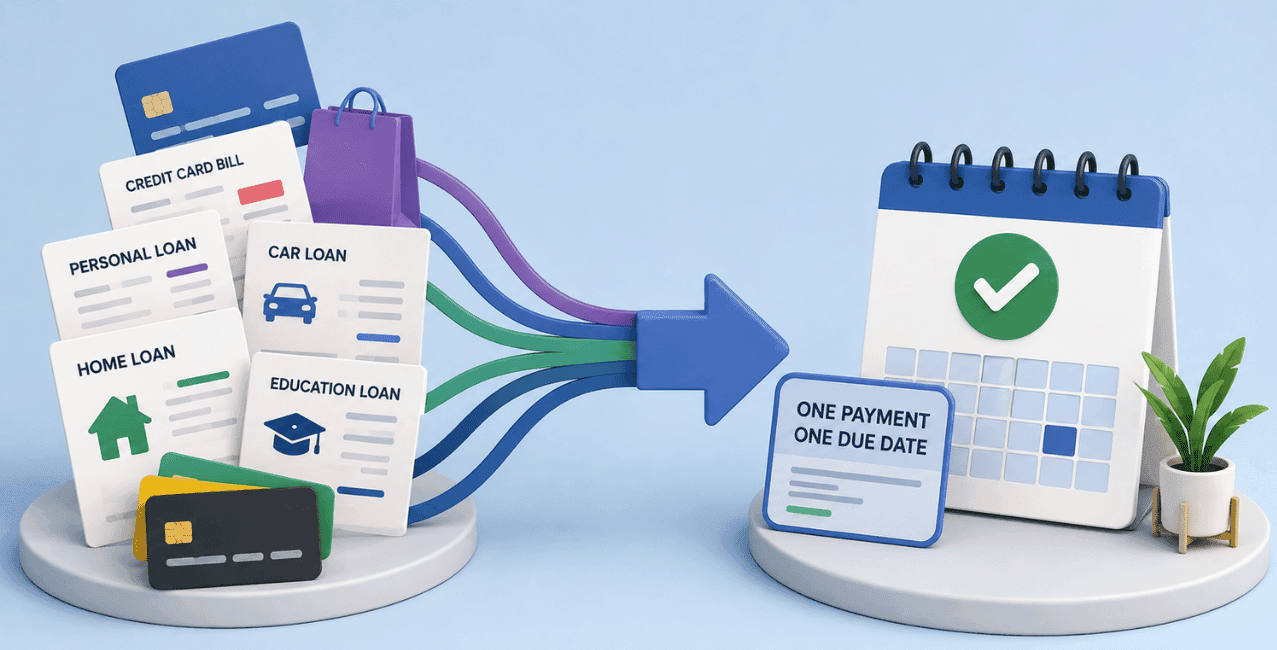
Simplify All Your Loans Into One Affordable EMI

Customers Served

Debt Consolidated

1200+ Reviews

Locations in India
Club all Loans & Credit Card Bills into Single EMI

Quick Apply Loan
Consolidate your debts into one easy EMI.

Takes less than 2 minutes. No paperwork.

10 Lakhs+
Trusted Customers

2000 Cr+
Loans Disbursed

4.7/5
Google Reviews

50+
Banks & NBFCs Offers
Yes, a loan recovery agent can show up at your door, but only within specific rules laid out under RBI's own Fair Practices Code, which requires the agent to carry proper ID and behave professionally throughout. The bank stays legally on the hook for how that agent conducts themselves, whether they're a direct employee or working through an outsourced recovery agency.
Miss a few EMIs, and suddenly you're wondering if someone's actually going to knock on your door, a worry plenty of borrowers across India share. This one walks through exactly when a recovery agent's allowed to visit your home, what rules they're bound by, and what you can actually do if that visit crosses a line.
Yes, once your account's fallen far enough behind, a recovery agent can genuinely visit your home, but that visit has to follow specific conduct rules under RBI's regulatory framework.
Banks and NBFCs are allowed to bring in recovery agents to chase down overdue accounts, and a home visit's a recognised, legitimate part of that. What actually matters is how the visit unfolds, since the lender stays accountable for making sure the agent sticks to proper conduct throughout. The visit itself isn't the problem, it's the manner it's carried out in, timing, tone, documentation, that's where your protection actually kicks in.
A recovery agent's home visit has to stick to the conduct standards set out under RBI's Fair Practices Code, which spells out exactly how banks and NBFCs must instruct their agents to behave.
Per RBI's own Master Circular on Fair Practices Code, lenders have to keep recovery practices fair, transparent, and free from harassment. Here's roughly what applies to any home visit:
Since the bank carries responsibility for the agent's conduct, any deviation from these standards during a home visit is something you can genuinely raise with the lender directly.
The bank or NBFC that brought in the recovery agent stays responsible for their conduct, whether that agent's a direct employee or working through a third-party outsourced agency.
This trips up a lot of borrowers who don't realise it. Outsourcing recovery to an outside agency doesn't shift the accountability away from the lender at all. RBI's own framework puts the obligation squarely on the bank to make sure its agents, in-house or outsourced, follow the Fair Practices Code. So if an agent behaves badly during a home visit, your complaint genuinely belongs with the bank itself, not just whichever individual or agency actually showed up.
You have got legal protection against aggressive recovery tactics through both RBI's regulatory framework and actual court precedent, since judges have ruled directly against coercive collection practices.
The Supreme Court's decision in ICICI Bank vs Prakash Kaur (2007) is the big one here, ruling that banks can't employ musclemen or strong-arm tactics to recover loans, and that doing so can put liability on the bank itself. This backs up exactly what RBI's Fair Practices Code already demands, recovery has to happen through legitimate, respectful means, not intimidation or force. Put these two together, regulatory and judicial, and a home visit that tips into harassment isn't something you're expected to just put up with.
Check the agent's ID, their written authorisation from the bank, and confirm the exact details of what you actually owe before you get into any repayment discussion.
Here's a practical checklist for whenever someone claiming to be a recovery agent shows up:
Anything about the visit feels off, aggressive, or you just can't verify the agent's authorisation, you're well within your rights to decline further conversation until you've checked directly with your bank.
If a home visit turns into harassment, file a formal complaint with your bank's nodal officer, and push it further to RBI's grievance redressal channels if it's still not sorted.
Here's roughly how that escalation goes:
Keep detailed records the whole way through, dates, times, agent names, exactly what went wrong, and your position gets a lot stronger if you end up needing to escalate formally.
Getting this distinction clear helps you spot exactly when a visit's crossed from legitimate recovery into something that violates your rights.
*T&C Apply
Take a borrower who's fallen behind on personal loan EMIs and gets a knock at the door from someone claiming to represent the bank. Before engaging at all, they ask for ID and written authorisation confirming this is legitimate. The agent hands both over, and the borrower goes ahead and discusses what's actually owed, calmly confirming the exact figure.
Since the whole interaction stays professional and respectful, sticking to the standards under RBI's Fair Practices Code, the borrower agrees to a revised repayment date and the visit wraps up without any issue. Had the agent instead refused to show ID or resorted to threats, the borrower would've had clear grounds to end the conversation and escalate a complaint straight to the bank.
A loan recovery agent can genuinely show up at your home once your account's fallen far enough behind, but that visit has to follow clear conduct standards under RBI's Fair Practices Code, proper ID, respectful behaviour, no harassment or intimidation. Since the bank stays responsible for its agent's conduct no matter whether that agent's in-house or outsourced, you've got a legitimate path to complain directly to your lender, and push further if needed, should any visit cross into inappropriate territory. Knowing your rights before this ever happens puts you in a far stronger position to handle it calmly.