By continuing, you agree to LoansJagat's Credit Report Terms of Use, Terms and Conditions, Privacy Policy, and authorize contact via Call, SMS, Email, or WhatsApp
Disclaimer: The information published on LoansJagat is intended for general informational and educational purposes only and should not be considered financial, legal, or investment advice. Interest rates, loan terms, statistics, and other data may change over time and may vary by lender or source. Please verify the latest information and consult a qualified financial advisor or the respective Bank/NBFC before making any financial decisions.
Subscribe Now
About the author

Anishka Bhadly
Anishka Bhadly is a content writer with a finance and business background. She has completed her bachelor's degree with a specialisation in finance and is currently pursuing an MBA in the finance field too. The knowledge she has gained from her studies and experience working with EdTech companies helped her combine theoretical knowledge with practical industry insight. Her expertise lies in creating well-researched, informative, and reader-friendly content in various banking, personal finance, loans, insurance, and investment-related topics.
Related Blog Post
Simplify All Your Loans Into One Affordable EMI

Customers Served

Debt Consolidated

1200+ Reviews

Locations in India
Club all Loans & Credit Card Bills into Single EMI

Quick Apply Loan
Consolidate your debts into one easy EMI.

Takes less than 2 minutes. No paperwork.

10 Lakhs+
Trusted Customers

2000 Cr+
Loans Disbursed

4.7/5
Google Reviews

50+
Banks & NBFCs Offers
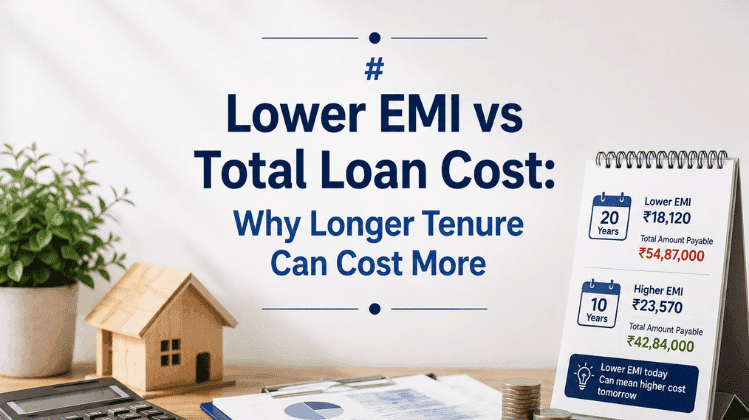
Sometimes, having a lower EMI can be costly since having a lower EMI means that the time you will take to repay the loan is going to be more. Having the same loan divided into a longer period means that your monthly payments will be smaller, but interest will continue accumulating for longer. You will end up paying a higher amount of interest. For instance, having a loan for 5 years and then increasing it to 7 years means that the monthly EMI will be smaller, but you will pay a higher amount of money in the long run.
Low EMIs can make one pay more in the long run, as it could be the effect of selecting a longer loan tenure. Although low EMIs mean easy payments, the downside is that it takes longer to repay the loan. Throughout the duration of the loan, interest keeps on accumulating on the principal borrowed by the individual. For instance, when one takes a loan of ₹500,000, and it has a low EMI, this could cost much more interest than taking the same loan and repaying it within a short tenure period.
Lowering EMI and lowering tenure both help improve loan management in their own ways but yield different financial advantages. Tables shown below give an idea about how each one of the above-mentioned measures might benefit you financially.
Lower EMI means savings in the monthly budget, whereas shorter loan tenure helps save on total interest payments. It all depends on one’s personal financial situation.
Deciding which one to opt for, be it lower EMI or lower loan tenure, depends on one's financial requirements. Lower EMI will ease the monthly budget, and a lower loan tenure will help in saving interest and becoming debt-free quickly.
In conclusion, both are not always preferable for all. It all depends on an individual's needs.
Your EMI and the interest that you will pay depend on your loan tenure. The longer the loan tenure means that the loan amount will be split into monthly instalments. Hence, the EMI will become smaller. However, you will be in debt for a larger number of months. As the interest rate is charged according to the remaining loan amount, the interest that you will have to pay will be higher over the course of the entire loan duration. In other words, a small EMI may lead to higher interest payments.
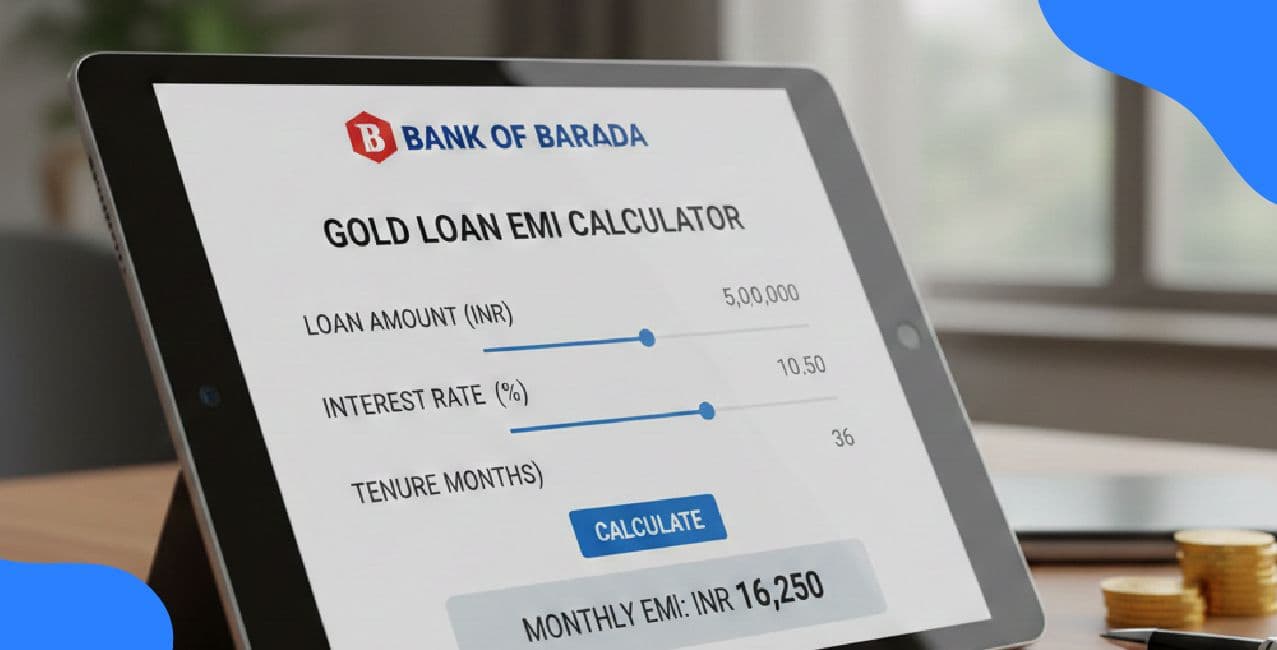
To illustrate this point, let us consider a case of taking a loan of ₹500,000 with an interest rate of 12%. If you choose 3 years of tenure, then your EMI will be ₹16,607, and the total interest paid will be ₹97,852. If the tenure is 5 years, then the EMI will be ₹11,122, and the total interest will amount to ₹167,320. Finally, choosing 7 years of tenure will result in an EMI of ₹8,829 and total interest of ₹241,636.
The above example illustrates well the trade-offs between tenure and interest payments. In comparison with a 3-year tenure, choosing 7 years of tenure allows you to reduce EMI by ₹7,778 per month. However, in this case, the total interest that you will pay becomes higher by ₹143,784. Thus, one option cannot be recommended over another since each situation may require a different approach.
A small EMI does not always mean a cheap loan. It might be easier for budgeting purposes, but the longer you extend the loan period, the more interest you will pay. There should be a consideration based on your ability to repay the loan, income stability, and financial plans. When taking a loan, you need to calculate the total amount you will pay back.
When the EMI is low, it indicates that there is an extended loan tenure. Even though the amount of money that has to be repaid is low, the duration within which the interest accrues is increased.
In most cases, a lower EMI makes life easy from the point of view of financial planning, but at the same time it increases the total interest payable.
When the tenure of the loan increases, then it becomes possible for one to pay lower EMIs since the repayment duration has been extended.
The EMI would become high in most cases. But at the same time, the period within which the principal amount will be repaid will become shorter.
Yes, it can relieve me from financial pressure, but it cannot really help me save money.
In case your earnings easily cover the higher EMI payment, opting for a reduced tenure will be helpful in saving interest and becoming debt-free faster.
Do not only compare the EMIs of the two loan offers. Instead, consider comparing the interest rate, tenure, interest payable, and repayment amount in totality.
Yes, eligible part prepayments reduce the outstanding balance and, in turn, the repayment charged on the balance.
While both are important, the total repayment amount indicates the true cost of financing. Select the EMI that suits you while maintaining the total repayment amount to be reasonable.
Select a loan tenure that does not increase interest charges and keeps the monthly instalment amount affordable.