By continuing, you agree to LoansJagat's Credit Report Terms of Use, Terms and Conditions, Privacy Policy, and authorize contact via Call, SMS, Email, or WhatsApp
Disclaimer: The information published on LoansJagat is intended for general informational and educational purposes only and should not be considered financial, legal, or investment advice. Interest rates, loan terms, statistics, and other data may change over time and may vary by lender or source. Please verify the latest information and consult a qualified financial advisor or the respective Bank/NBFC before making any financial decisions.
Subscribe Now
About the author

Vaishnavi is a Financial Content Writer at LoansJagat. She holds a B.Sc. and an M.Sc. She has experience in writing SEO-focused content across finance, digital marketing, education, and Ayurveda. Before joining LoansJagat, she worked with digital marketing agencies serving fintech clients and quick-commerce brands like Zepto and blinkit. At LoansJagat, Vaishnavi writes on banking, loans, personal finance, and insurance. Her work involves researching financial topics, understanding user search intent, and creating content that is clear and accurate. She has experience in SEO content writing, keyword research, content optimisation, and AEO. She enjoys simplifying complex topics into practical information that readers can easily understand and use. She believes that well-researched and reliable content plays an important role in helping people make informed financial decisions.
Related Blog Post
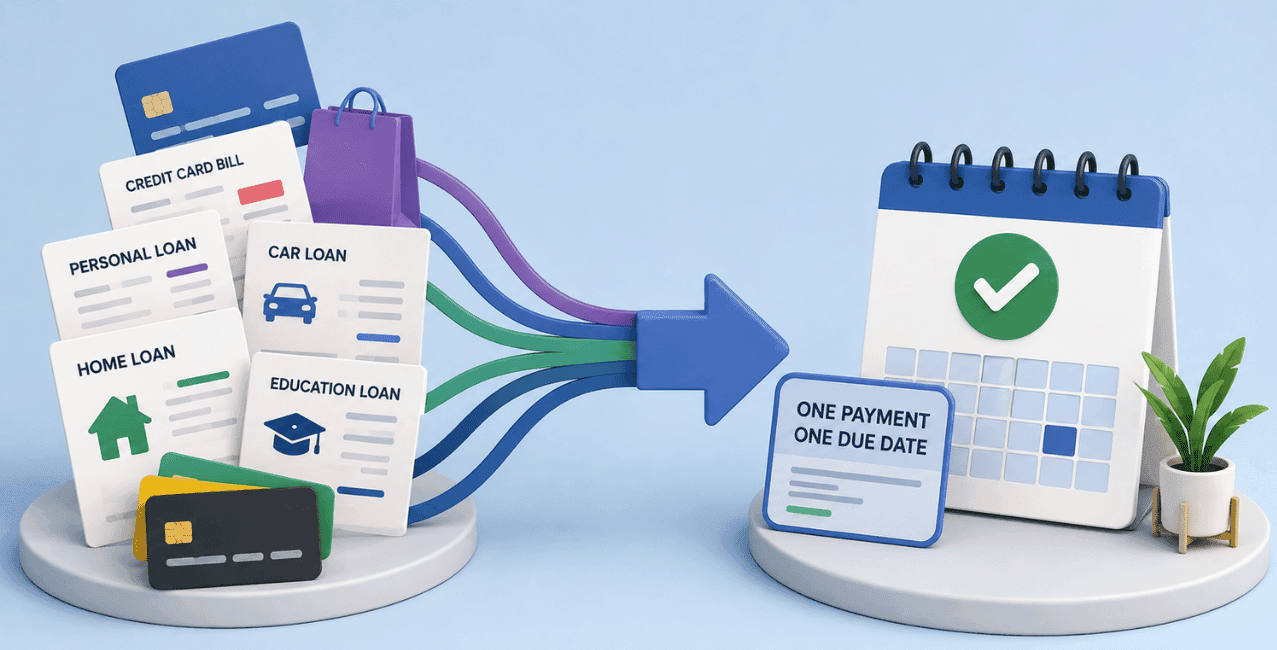
Simplify All Your Loans Into One Affordable EMI

Customers Served

Debt Consolidated

1200+ Reviews

Locations in India
Club all Loans & Credit Card Bills into Single EMI

Quick Apply Loan
Consolidate your debts into one easy EMI.

Takes less than 2 minutes. No paperwork.

10 Lakhs+
Trusted Customers

2000 Cr+
Loans Disbursed

4.7/5
Google Reviews

50+
Banks & NBFCs Offers
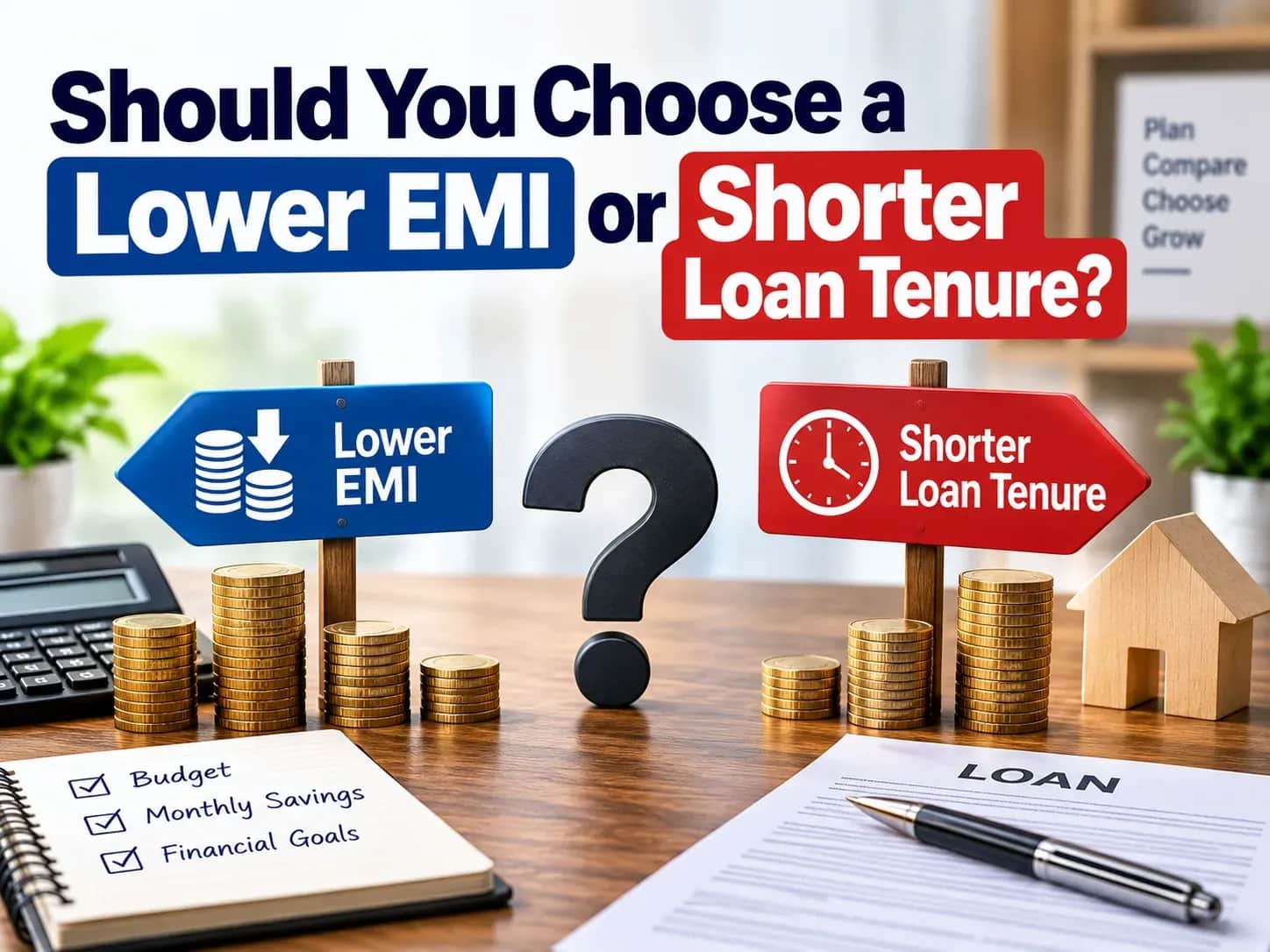
When you take any type of loan you have to repay it in EMIs. It's up to you whether you want to choose long tenure or short tenure for your EMI. If you choose a lower EMI, you have to pay a small amount every month but for a long time. If you choose a short tenure, then you have to pay a large amount of money each month but only for a short time. You can end your loan soon with shorter tenure. When you understand how loan EMI and tenure works, it helps you repay the loan easily.
Loan tenure and EMI have an opposite relationship. A longer tenure lowers your monthly EMI, while a shorter tenure increases it.
Equated Monthly Instalment (EMI) has two main parts: the principal amount and the interest charged on the loan.
Here is how EMI and loan tenure work together:
If you are choosing a Long-term loan, your loan's larger part goes towards interest instead of reducing the principal amount.
A loan with a lower EMI can have a much higher total repayment cost when you compare it with the same loan taken for a shorter period.
If you are someone with responsibility and want money for other expenses and spend a little money on EMI, you can go for a longer tenure.
Here are the main situations where choosing a lower EMI makes sense:
Building Emergency Funds: When you need extra money to build and maintain an emergency fund instead of paying a very high EMI every month.
If you have stable and enough income which is sufficient for expenses and can spend a high amount on EMI then you should definitely choose a shorter loan tenure. This way your loan repayment will end soon.
Here are the key situations where a shorter tenure can be useful:
Before choosing tenure for EMI payment you should always compare both of these types. It helps you to understand the pros and cons of each tenure.
If you have stable and enough income go for short tenure and if you have many financial responsibilities and want to spend only a small amount of income on EMI then go for longer tenure.
Suppose you take a 50 Lakh Home Loan at 8.50% Interest. Now you don't know which type of loan you should choose. Here is the difference.
Choosing a 30-year tenure reduces your monthly EMI by Rs. 10,791, but it increases your total interest payment by almost Rs. 50 Lakh.
After getting a loan, you are liable to repay the debt on EMI basis. It is up to you to choose the EMI type. You can choose it depending on the time period. If you have many financial responsibilities and leave only a small amount of money for other expenses, you can choose a longer tenure for loan repayment. And if you have no such responsibilities and have enough money to pay EMI, you should definitely choose a shorter tenure.
If you choose a longer tenure you pay less money monthly but have to pay more interest at the end of repayment. While, if you choose a shorter tenure, you have to pay a large amount of money monthly but your loan repayment will end soon. Before choosing any option you should consider your monthly income and expenses. This approach can help you keep your monthly EMI manageable while reducing your loan period and interest cost over time.
The main benefit of choosing a shorter EMI is that you save a large amount of money on total interest. Apart from this you end the repayment very soon. But before choosing this option you should consider things like monthly income and financial liabilities.
No, it doesn't work like this. If you choose a longer EMI, you need to pay less monthly as EMI but have to pay for a longer time. You have to pay more interest on the remaining balance every month.
Some banks allow borrowers to change their loan tenure or increase their EMI during the repayment period. This depends on the lender's terms and approval.
A longer tenure usually gives you a lower EMI. This can reduce your monthly fixed obligations and may help lower your FOIR when you apply for a loan.
There is no prepayment penalty on floating-rate home loans. You can make partial prepayments or close the entire loan early without paying any extra amount.
The 50/30/20 rule is a general budgeting method that divides income into needs, wants, and savings. It is not an RBI rule for setting your EMI. You should choose an EMI based on your income, expenses, existing loans, and savings.
An extra payment can reduce your outstanding principal. This can help you reduce the loan tenure and total interest, depending on the lender's terms.
It depends on your financial situation. If your investment earns better post-tax returns than your loan's interest cost, investing may be an option. However, investments carry risk. Prepaying the loan gives you a more certain saving on future interest.
Personal loans usually have higher interest rates than many secured loans. If you can comfortably pay a higher EMI, choosing a shorter tenure can help you reduce the total interest cost.
Yes, some lenders offer Step-Up repayment options. You can also ask your lender if you can increase your EMI every year as your income increases.