By continuing, you agree to LoansJagat's Credit Report Terms of Use, Terms and Conditions, Privacy Policy, and authorize contact via Call, SMS, Email, or WhatsApp
Disclaimer: The information published on LoansJagat is intended for general informational and educational purposes only and should not be considered financial, legal, or investment advice. Interest rates, loan terms, statistics, and other data may change over time and may vary by lender or source. Please verify the latest information and consult a qualified financial advisor or the respective Bank/NBFC before making any financial decisions.
Subscribe Now
About the author

Vaishnavi is a Financial Content Writer at LoansJagat. She holds a B.Sc. and an M.Sc. She has experience in writing SEO-focused content across finance, digital marketing, education, and Ayurveda. Before joining LoansJagat, she worked with digital marketing agencies serving fintech clients and quick-commerce brands like Zepto and blinkit. At LoansJagat, Vaishnavi writes on banking, loans, personal finance, and insurance. Her work involves researching financial topics, understanding user search intent, and creating content that is clear and accurate. She has experience in SEO content writing, keyword research, content optimisation, and AEO. She enjoys simplifying complex topics into practical information that readers can easily understand and use. She believes that well-researched and reliable content plays an important role in helping people make informed financial decisions.
Related Blog Post
Simplify All Your Loans Into One Affordable EMI

Customers Served

Debt Consolidated

1200+ Reviews

Locations in India
Club all Loans & Credit Card Bills into Single EMI

Quick Apply Loan
Consolidate your debts into one easy EMI.

Takes less than 2 minutes. No paperwork.

10 Lakhs+
Trusted Customers

2000 Cr+
Loans Disbursed

4.7/5
Google Reviews

50+
Banks & NBFCs Offers
Other services mentioned in this article
The outstanding amount on a loan refers to the total remaining amount you still need to repay to the lender. This amount includes the remaining principal and any unpaid interest, fees, or charges, depending on the loan terms.
However, as you repay your monthly EMIs, this amount reduces gradually until the loan is fully paid. When you have an idea about your outstanding loan amount, it helps you to understand how much money you have to pay and how much is left. This can help you plan your finances, calculate foreclosure costs, manage repayments more easily, and avoid missed or late payments. There are various mobile apps and online websites through which borrowers can check their outstanding amount easily.
Key Takeaways:
As soon as you opt for a loan, your lender gives you a certain amount that you need to repay through monthly EMIs. As time passes, this amount keeps on reducing as you make payments. The loan outstanding refers to the balance that is still left to be paid to the lender and is one of the most important figures in a statement because it shows your current loan liability.
This outstanding money applies to every loan, whether it is a home loan, personal loan, car loan, education loan, or business loan, and the meaning still remains the same in all of them. Understanding the meaning of this helps you plan loan repayment, manage your budget, and avoid unnecessary charges.
Basically, if we talk in simple terms, an outstanding loan amount is the total amount you owe to the lender. This amount generally includes:
When the borrowers continue paying their EMIs consistently, the outstanding amount decreases until the loan is paid completely.
Most borrowers get confused by so many financial terms, with outstanding and principal amounts being two of them. Let’s clear this confusion once and for all:
The main difference between outstanding amount and principal amount is that the principal amount is the original borrowed amount, and the outstanding amount is the amount still payable.
For example:
Read More - How to Reduce EMI of an Existing Personal Loan?
The principal amount is ₹20,00,000, and the outstanding amount is ₹16,00,000.
Just like any other loan features, some major components of the outstanding loan balance can help us understand this topic much better:
The term outstanding principal refers to the portion of a loan that remains unpaid.
For Example: You borrowed ₹5,00,000 and repaid ₹1,00,000 of principal; the outstanding principal will be ₹4,00,000.
The lending institution, bank, or individual charges a certain amount of interest on the outstanding principal that keeps on accumulating until the next EMI is paid. Which means:
Higher Interest Rate = Higher Interest Component
These additional charges include:
There is a way to calculate the outstanding balance; here is a formula that will make the calculation easier:
Running Outstanding Balance:
Outstanding principal = disbursed loan amount - Total principal repaid via EMIs.
Full Foreclosure / Settlement Amount:
Example:
Loan Balance: ₹6,05,000
Accrued Broken-Period Interest (e.g., 10 days): ₹5,800
Pending Late/Bounce Charges: ₹700
Total to Close the Loan Today: ₹6,11,500
As we have already learned before, the outstanding balance does not remain fixed; it keeps on changing because every EMI contains two main parts:
In the first few years of the loan, a large part of the EMI is used for paying only the interest, whereas the other part goes towards paying the principal. This is why the outstanding balance keeps reducing slowly at first and then faster later.
If you have a high outstanding loan amount, it means that you have to pay a significant portion of your loan. This affects your monthly budget. Here are some points that affect your finances.
This is how your outstanding amount can affect your finances; that's why you should properly plan loan repayment.
Floating-Rate Loans: The Reserve Bank of India (Pre-payment Charges on Loans) Directions, 2025, are in effect from January 1, 2026. According to this, lenders cannot levy foreclosure or prepayment charges on certain floating-rate loans. This protection covers floating-rate loans taken by individual Borrowers for non-business purposes and floating-rate loans taken by individuals and Micro and Small Enterprises (MSEs) for business, subject to the specified conditions. This rule applies to loans up to ₹7.5 crore that are sanctioned or renewed under the Directions for MSEs. But prepayment charges depend on the conditions set by the RBI. Borrowers should check the loan agreement, Key Facts Statement (KFS), and the applicable RBI rules.
Fixed-Rate Loans: Lenders can charge pre-closure fees on fixed-rate personal, auto, or business loans, depending on the loan terms.
Penal Charges: Lenders cannot add penal interest to the loan interest rate. Instead, they can charge reasonable and clearly disclosed penal charges for missed or delayed EMI payments.
You don’t have to calculate the amount manually every time; lenders offer various ways to check your outstanding balance:
Check Loan Statement
The loan statement contains details like:
Also Read - What is Moratorium Period
Borrowers can also download it through the mobile app or internet banking portal.
Most banks and NBFCs let borrowers view their outstanding balance instantly using their online banking platforms.
Borrowers are also provided with a customer service number through which they can call the lender’s customer support directly. You can also visit the nearest branch or send an email to request your latest outstanding loan balance.
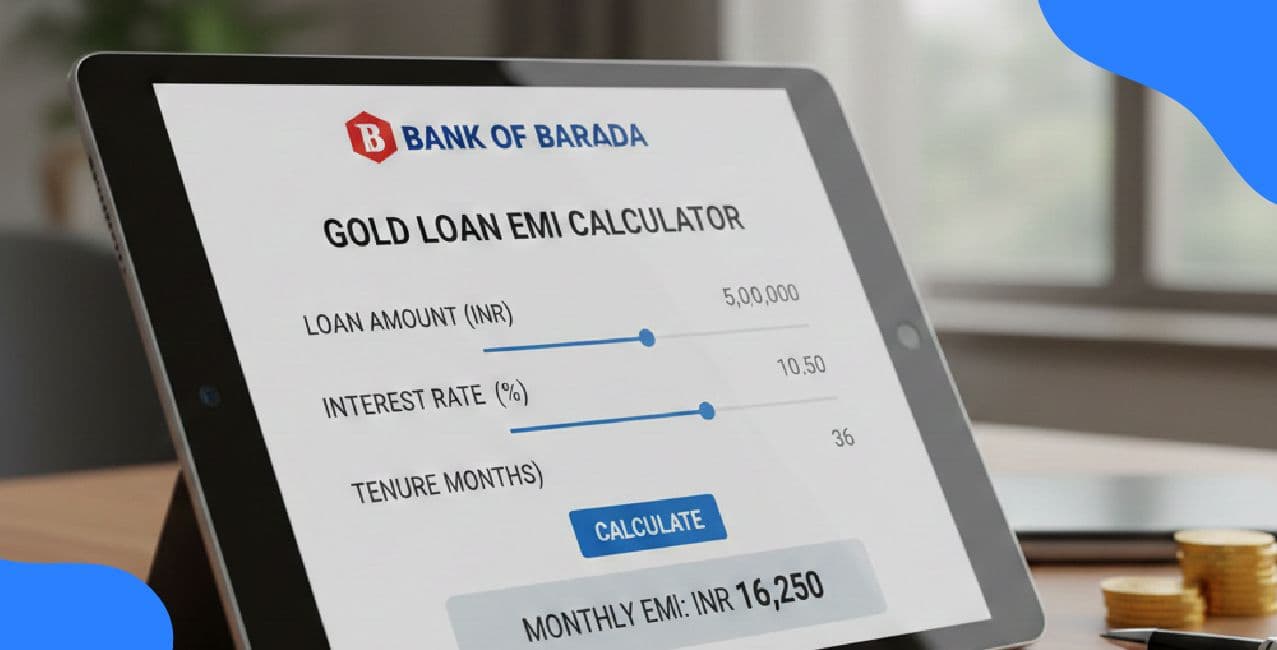
Most financial institutions offer borrowers online loan and EMI calculators through which you can calculate the outstanding amount too. You just need to enter details like:
In India, many borrowers unknowingly increase their loan burden by making these avoidable mistakes:
These are the common mistakes that you should avoid to prevent long-term effects on your finances.
Bottom Line
In conclusion, understanding your outstanding loan balance is very important because this is the only data that shows exactly how much you still owe the lender. When you know your outstanding amount, you can easily decide how to repay that money; you may need to go for refinancing or loan foreclosure. That's why you should register to check the outstanding amount.
However, if you are planning a loan repayment or repayment, you must check the latest outstanding amount, as it changes after every monthly EMI payment. Keeping track of your loan balance can actually help you stay on track, reduce debt faster, and also achieve financial stability with greater confidence.
The outstanding loan amount is the balance you still owe the lender. It includes the remaining principal, unpaid interest, and any applicable charges.
You can clear it by paying your EMIs on time, making part-prepayments, or paying the full outstanding balance through loan foreclosure.
The outstanding amount in EMI is the unpaid loan balance remaining after your previous EMI payments. It decreases with every successful EMI.
An outstanding loan means the loan has not been fully repaid. You still have an amount due to the lender.
You can check it through your bank's mobile app, internet banking, a loan statement, customer care, or by visiting the nearest branch.
Loan forgiveness is rare and depends on the lender or government schemes. Most loans must be repaid according to the agreed terms.
Yes. Outstanding refers to the amount that is still unpaid and remains due to the lender.
How to see outstanding loans?
There are different ways to check your outstanding loans. You can check it via a credit bureau like TransUnion CIBIL. You just need to open their website, add your email, mobile number, and PAN card number and see the credit report. You can see all your outstanding amounts on the credit report. Another way to check outstanding loan amounts is the lender's website. Like if you have taken a loan from SBI, you can visit their portal and check the amount.
There is no fixed rule for bad and good CIBIL scores. If your CIBIL score is high, it is considered a good one, and if it is low, it is considered a bad one. But in general, if you have a CIBIL score less than 650, it is a bad score. You may face difficulties in getting a future loan. And a CIBIL score of 750 or more is considered a good one.
Pay the pending balance through regular EMIs, prepayments, or a full settlement after confirming the payable amount with your lender.