By continuing, you agree to LoansJagat's Credit Report Terms of Use, Terms and Conditions, Privacy Policy, and authorize contact via Call, SMS, Email, or WhatsApp
Disclaimer: The information published on LoansJagat is intended for general informational and educational purposes only and should not be considered financial, legal, or investment advice. Interest rates, loan terms, statistics, and other data may change over time and may vary by lender or source. Please verify the latest information and consult a qualified financial advisor or the respective Bank/NBFC before making any financial decisions.
Subscribe Now
About the author

LoansJagat Team
‘Simplify Finance for Everyone.’ This is the common goal of our team, as we try to explain any topic with relatable examples. From personal to business finance, managing EMIs to becoming debt-free, we do extensive research on each and every parameter, so you don’t have to. Scroll up and have a look at what 15+ years of experience in the BFSI sector looks like.
Related News
Simplify All Your Loans Into One Affordable EMI

Customers Served

Debt Consolidated

1200+ Reviews

Locations in India
Club all Loans & Credit Card Bills into Single EMI

Quick Apply Loan
Consolidate your debts into one easy EMI.

Takes less than 2 minutes. No paperwork.

10 Lakhs+
Trusted Customers

2000 Cr+
Loans Disbursed

4.7/5
Google Reviews

50+
Banks & NBFCs Offers
Other services mentioned in this article
Key Takeaways
The 16th Finance Commission recommended a grant of ₹4,35,236 crore to the rural local bodies during its award period from 2026-27 to 2030-31.
He expressed this recommendation during a national conference and said it represents the central government's desire for grass roots democracy.
Overall, the 16th Finance Commission has suggested grants of ₹4.4 lakh crore and ₹3.6 lakh crore to rural and urban local bodies respectively.
Total grant for local bodies during the next five years come to ₹8 lakh crore.
When there’s an obvious win here more money flowing straight to panchayats starting April 2026 it’s not all sunshine and rainbows.
Experts warn that the impressive-sounding 84% boost might not mean as much in actual buying power.
That's because the annual grants were set without accounting for inflation.
Making matters worse, unlike what happened before, panchayats won’t get any extra benefit as central tax revenue grows with the economy.
So the actual value addition to the financially stressed local bodies may be much less than the headlines may suggest.
The table here shows how the Finance Commission outlays for rural local bodies has increased from one award period to another, using data from the Ministry of Panchayati Raj and PRS India.
In terms of releasing funds efficiently, the commissions seem to be improving consistently-90.5% during 13th FC and 91% during 14th FC.
If this continues, a major portion of ₹4.35 lakh crore should be finding its way to village bodies, instead of being blocked, which has always been a big issue.
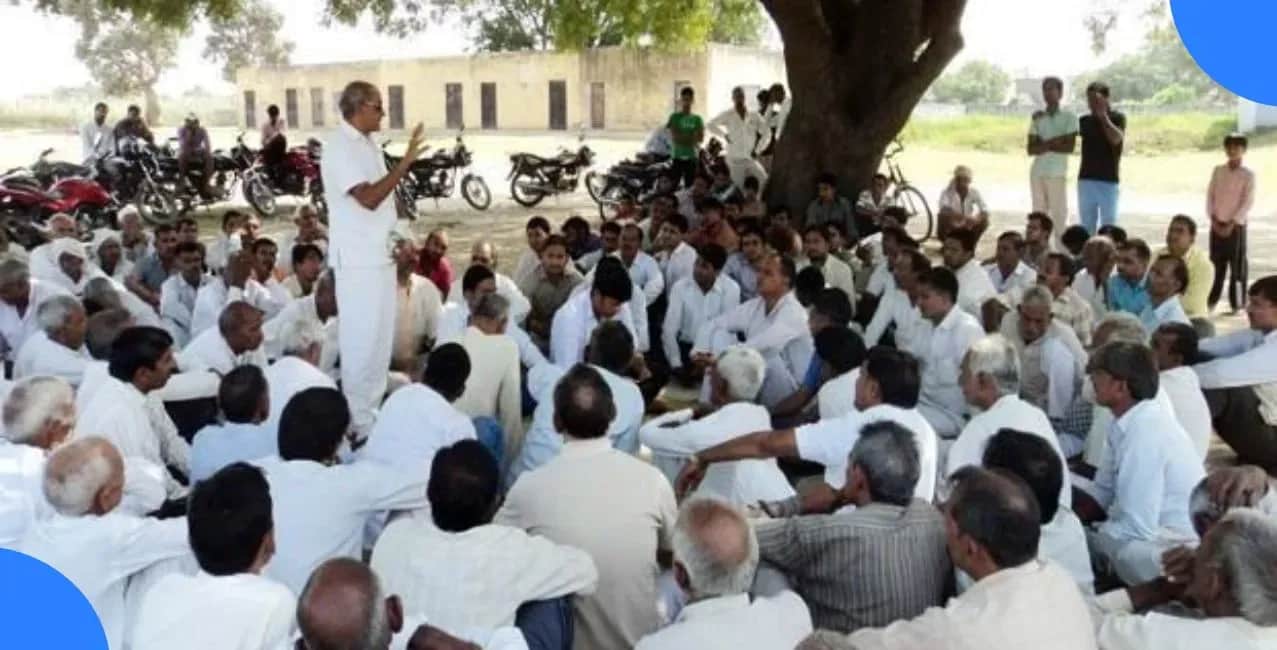
The higher amount received through Panchayat grants by the rural families corresponds to more local infrastructure.
Infrastructure sectors such as road, drainage, water supply and community halls are among the basic services.
From the total grants amount, 90% of the money will be channelled to the gram panchayats while block and district panchayats would receive 10% each.
This makes for a front-loading of the resource at the village level itself so as to have the most immediate impact on their livelihoods.
There's a regular increase in yearly funding too. It starts at ₹55,909 crore in 2026-27 and grows to ₹1,13,558 crore by 2030-31.
*T&C Apply
Timing couldn't be better for women in local offices. Around 14.5 lakh elected women reps are active now, making up 46% of all elected officials.
They'll have the chance to really make an impact with all this additional cash coming in.
Analysts from the Indian Institute of Public Administration say there are some structural weaknesses.
Basic grant component has been fixed at 80% of the entire panchayat allocation of ₹3.48 lakh crore. This may not be sufficient for the financially distressed panchayats.
The performance-linked 20% requires panchayats to meet certain compliance benchmarks. Many rural bodies find this tough right now.
For local body grants, panchayats need to fulfil three entry-level criteria first, including properly constituting local bodies as the Constitution lays out.
The 16th Finance Commission highlighted the prime responsibility of states to provide local bodies with sufficient funds.
It requested the Ministry of Panchayati Raj to devise and implement a suitable capacity-building system for the panchayats.
It is the view of experts that unless and until gram panchayat-level instruments for e-governance and financial audit are improved, large amounts of funds are likely to be poorly spent even if the local bodies are well-financed.
India's rural governance has never seen this much committed funding before. The big question is whether panchayats can handle, use, and report these resources well over the next five years.
What is the 16th Finance Commission Report?
The Report was presented to the Parliament on 1st February 2026 and this report tell us about the Centre-state financial relationship and the road map to achieve the required finance over the period 2026-31.
From where does the Government of India obtain funds if only 2% of the population is paying the income tax?
The Government of India obtain the fund from the income tax of corporations, indirect taxes (such as GST) and loan facilities.









.png&w=3840&q=75)



