By continuing, you agree to LoansJagat's Credit Report Terms of Use, Terms and Conditions, Privacy Policy, and authorize contact via Call, SMS, Email, or WhatsApp
Disclaimer: The information published on LoansJagat is intended for general informational and educational purposes only and should not be considered financial, legal, or investment advice. Interest rates, loan terms, statistics, and other data may change over time and may vary by lender or source. Please verify the latest information and consult a qualified financial advisor or the respective Bank/NBFC before making any financial decisions.
Subscribe Now
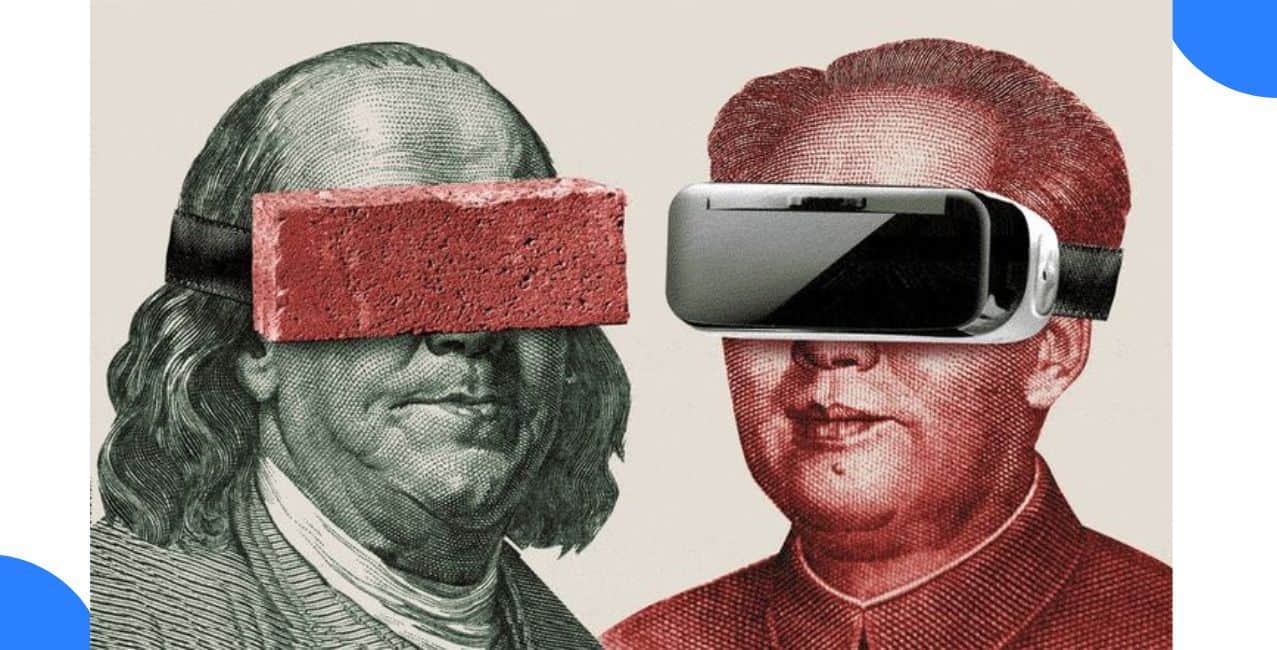
The EU was in agreement in April 2026 to put up new quotas and double the tariffs on global steel imports, led by the over-capacity produced by China, as the chemical industry is currently under scrutiny following an increase of 81% in Chinese chemical imports in five years.
Exports from China to Europe of electric vehicles grew by around 50% to reach above 800,000 units in 2025, as EU vehicle exports to China fell by over 30%, with Germany importing more cars from China than exporting to that country.
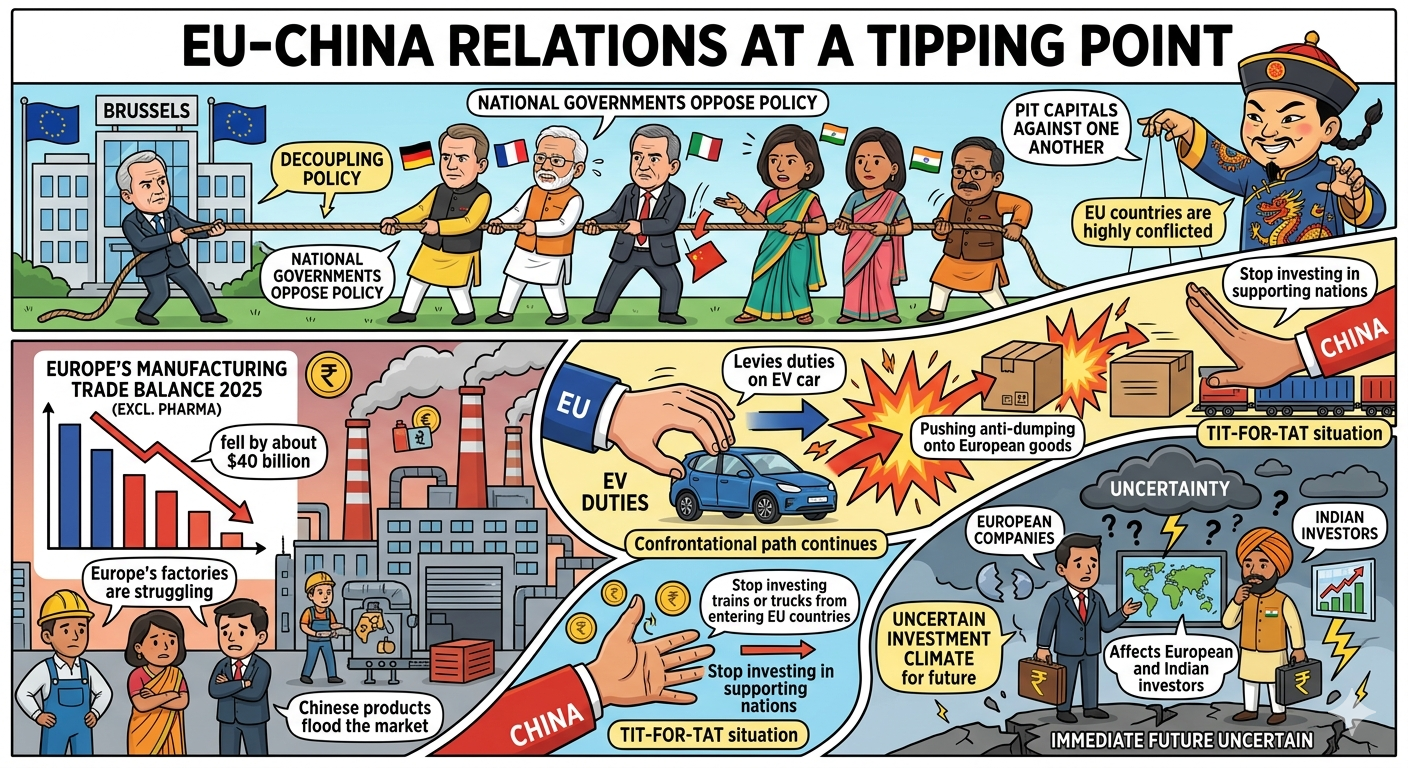
Brussels must be wary of the likelihood that the decoupling policy could meet opposition at the national government level.
Because EU countries are highly conflicted when dealing with China, giving Beijing opportunities to pit European capitals against one another.
In addition, Europe's total manufacturing trade balance fell by about $40 billion in 2025, excluding any pharma-related transactions, due to the increasing challenge China poses in the European marketplace.
The path forward will continue to become more confrontational.
After the EU decided to levy EV duties, China countered by initiating anti-dumping measures on EU brands, and news emerged of China telling carmakers to stop plans of investing in EU nations supporting the levied duties.
The tit-for-tat situation creates an uncertain climate for investment for European companies, not just for emerging economies such as India, for the immediate future.
The EU-China trade dispute spans multiple sectors simultaneously. The table below captures the key friction points and their scale.
The EU chemical sector's dilemma is particularly sharp. Chinese chemical imports have surged 81% over five years.
The sector also depends heavily on China as an export destination, making blanket restrictions commercially self-defeating.
In 2026, India inked a significant free trade pact with the EU, with more geopolitical concerns than economic ones, which fuelled this development.
The reason behind the two parties' exposure to the unpredictability of global trade dynamics is clear.
The reduced European interest in Chinese products provides a real opportunity for Indian producers in the steel, chemical, textile, and electric vehicle sectors.
Under the terms of the India-EU FTA, goods can be freely traded from India to 27 European Union countries.
Both entities together comprise 25% of the world's GDP and one-third of its total international business volume, according to estimates made by the Indian government.
Given the fact that the two entities had a combined bilateral trade value of $137 billion in fiscal year 2025, the FTA carries a lot of potential.
India is going to slash or abolish tariffs for 96.6% of products from the EU, whereas the EU plans to eliminate or slash tariffs for 99.5% of Indian exports by trade value.
The EU deal fits perfectly within Brussels' strategy of achieving strategic independence by minimising its dependence on both the US and China.
On the other hand, the rationale behind the decision made by India was similar; that is, it does not want to become dependent on any single market.
In a trade war between Europe and China, the former country is experiencing the greatest shift in its supply chains ever witnessed over the past decades. And although India has managed to seal an incredible trade deal with the EU, it must be capable of converting geopolitical gains into fast manufacturing capabilities to reap the most benefits.
Have you heard that the Chinese are going to kill the traditional industries in Europe?
There are serious fears that China is destroying traditional industries in Europe, a process commonly known as “a China shock 2.0”.
How similar are the trade concerns of Europe toward China compared to those of the US?
Trade issues in Europe regarding China are very much like those in the US.
Related Financial News | |||
Why Investors Are Shifting from Bank Deposits to Mutual Funds | |||
About the author

LoansJagat Team
‘Simplify Finance for Everyone.’ This is the common goal of our team, as we try to explain any topic with relatable examples. From personal to business finance, managing EMIs to becoming debt-free, we do extensive research on each and every parameter, so you don’t have to. Scroll up and have a look at what 15+ years of experience in the BFSI sector looks like.
Related News
Simplify All Your Loans Into One Affordable EMI

Customers Served

Debt Consolidated

1200+ Reviews

Locations in India
Club all Loans & Credit Card Bills into Single EMI

Quick Apply Loan
Consolidate your debts into one easy EMI.

Takes less than 2 minutes. No paperwork.

10 Lakhs+
Trusted Customers

2000 Cr+
Loans Disbursed

4.7/5
Google Reviews

50+
Banks & NBFCs Offers
Other services mentioned in this article







.png&w=3840&q=75)