By continuing, you agree to LoansJagat's Credit Report Terms of Use, Terms and Conditions, Privacy Policy, and authorize contact via Call, SMS, Email, or WhatsApp
Disclaimer: The information published on LoansJagat is intended for general informational and educational purposes only and should not be considered financial, legal, or investment advice. Interest rates, loan terms, statistics, and other data may change over time and may vary by lender or source. Please verify the latest information and consult a qualified financial advisor or the respective Bank/NBFC before making any financial decisions.
Subscribe Now
About the author

LoansJagat Team
‘Simplify Finance for Everyone.’ This is the common goal of our team, as we try to explain any topic with relatable examples. From personal to business finance, managing EMIs to becoming debt-free, we do extensive research on each and every parameter, so you don’t have to. Scroll up and have a look at what 15+ years of experience in the BFSI sector looks like.
Related Blog Post
Simplify All Your Loans Into One Affordable EMI

Customers Served

Debt Consolidated

1200+ Reviews

Locations in India
Club all Loans & Credit Card Bills into Single EMI

Quick Apply Loan
Consolidate your debts into one easy EMI.

Takes less than 2 minutes. No paperwork.

10 Lakhs+
Trusted Customers

2000 Cr+
Loans Disbursed

4.7/5
Google Reviews

50+
Banks & NBFCs Offers
Other services mentioned in this article
In an era of frozen reserves and geopolitical shocks, sovereignty over gold has never mattered more
Key Insights
Bringing the Bullion Back and Fast
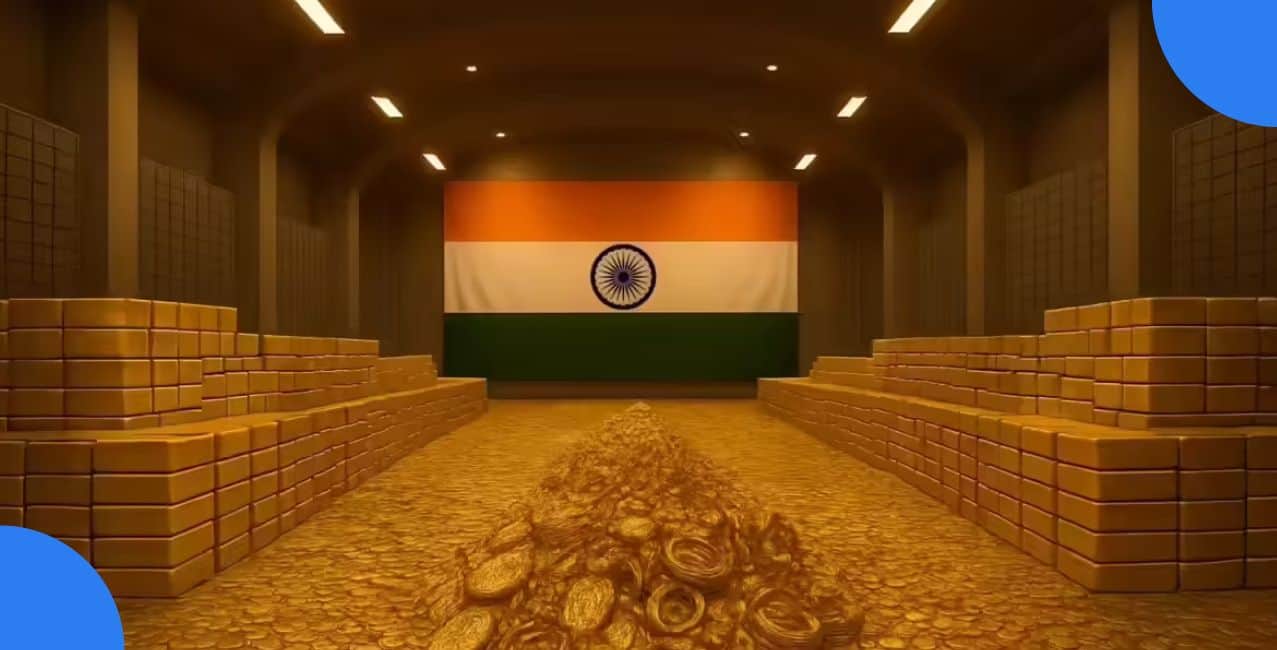
Since 2023, the RBI has repatriated approximately 274 to 280 metric tonnes of gold to India, a substantial shift in reserve management strategy.
Gold stored overseas, mainly with institutions such as the Bank for International Settlements, fell from 290.4 metric tonnes to 197.7 metric tonnes.
The pace of this transfer is deliberate and strategically timed. India is not simply accumulating gold; it is repositioning where that gold sits and who controls it.
The short-term implications are operational and symbolic.
The decision to repatriate gold is partly about security, partly about signalling, and partly about reducing dependence on foreign financial infrastructure at a time when global geopolitical uncertainty has increased significantly.
Longer-term, the shift carries a clear cost-benefit logic: lower custodial fees, faster access during a crisis, and reduced exposure to institutions in foreign jurisdictions that may one day restrict access.
The numbers behind the RBI's repatriation strategy are striking and tell a clear story of accelerating domestic accumulation.
In value terms, gold's share of reserves rose from 13.9% to 16.7% over the reporting period, reflecting both higher global gold prices and the RBI's continued accumulation.
The shift is not marginal; it reflects a structural reorientation of India's reserve composition.
For everyday Indians, this policy shift translates into something tangible and important.
At current gold prices of approximately ₹95,000 per 10 grams, India's total gold holding of 880.52 metric tonnes is worth roughly ₹8.36 lakh crore.
That wealth is now mostly secured on Indian soil not locked in a vault in London. In a genuine crisis, that distinction could prove critical.
More gold stored domestically gives India better protection against global currency shocks or market stress, while reducing reliance on Western financial institutions and foreign jurisdictions.
For investors, the rising share of gold in India's reserves also signals RBI confidence in gold as a long-term hedge, providing indirect support to domestic gold prices and gold-linked financial products like sovereign gold bonds and gold ETFs.
The strategic logic is not lost on market observers. The trend accelerated after Western nations froze Russia's foreign exchange reserves following the invasion of Ukraine in 2022.
Significant addition
*T&C Apply
An event that prompted many countries to reconsider the wisdom of keeping reserve assets in jurisdictions that could restrict access. India drew the right lesson early.
In the first half of 2025, global central banks bought almost 415 metric tonnes of gold, compared to far lower numbers in earlier years, reflecting a growing belief that the world is moving toward a more multipolar financial structure.
The RBI's repatriation timeline aligns precisely with that global shift.
By increasing reserves and relocating them closer to home, the RBI is reinforcing a long-term strategy aimed at stability and security ensuring this insurance is firmly within reach.
India's gold repatriation is one of the most consequential and quietly executed strategic moves in recent RBI history. As global financial fault lines deepen, holding 77% of national gold on home soil is not caution, it is clarity of purpose and a sound hedge for the decades ahead.
ELI5 Why does the RBI keep gold in its reserve? And is the government discouraging us from buying gold?
The RBI holds gold as a “rainy day” fund to ensure financial stability, serving as a safe, universally accepted asset that retains value during economic crises or periods of high inflation.
Why does the RBI buy gold in exchange for Rupees? Where do they buy gold?
The Reserve Bank of India (RBI) buys gold in exchange for Rupees to diversify its foreign exchange reserves, reduce dependency on the US dollar, hedge against inflation, and strengthen financial stability amid global economic uncertainty.
Related Finance News | |||








.png&w=3840&q=75)