By continuing, you agree to LoansJagat's Credit Report Terms of Use, Terms and Conditions, Privacy Policy, and authorize contact via Call, SMS, Email, or WhatsApp
Disclaimer: The information published on LoansJagat is intended for general informational and educational purposes only and should not be considered financial, legal, or investment advice. Interest rates, loan terms, statistics, and other data may change over time and may vary by lender or source. Please verify the latest information and consult a qualified financial advisor or the respective Bank/NBFC before making any financial decisions.
Subscribe Now
About the author

LoansJagat Team
‘Simplify Finance for Everyone.’ This is the common goal of our team, as we try to explain any topic with relatable examples. From personal to business finance, managing EMIs to becoming debt-free, we do extensive research on each and every parameter, so you don’t have to. Scroll up and have a look at what 15+ years of experience in the BFSI sector looks like.
Related Blog Post
Simplify All Your Loans Into One Affordable EMI

Customers Served

Debt Consolidated

1200+ Reviews

Locations in India
Club all Loans & Credit Card Bills into Single EMI

Quick Apply Loan
Consolidate your debts into one easy EMI.

Takes less than 2 minutes. No paperwork.

10 Lakhs+
Trusted Customers

2000 Cr+
Loans Disbursed

4.7/5
Google Reviews

50+
Banks & NBFCs Offers
Other services mentioned in this article
Key Takeaways
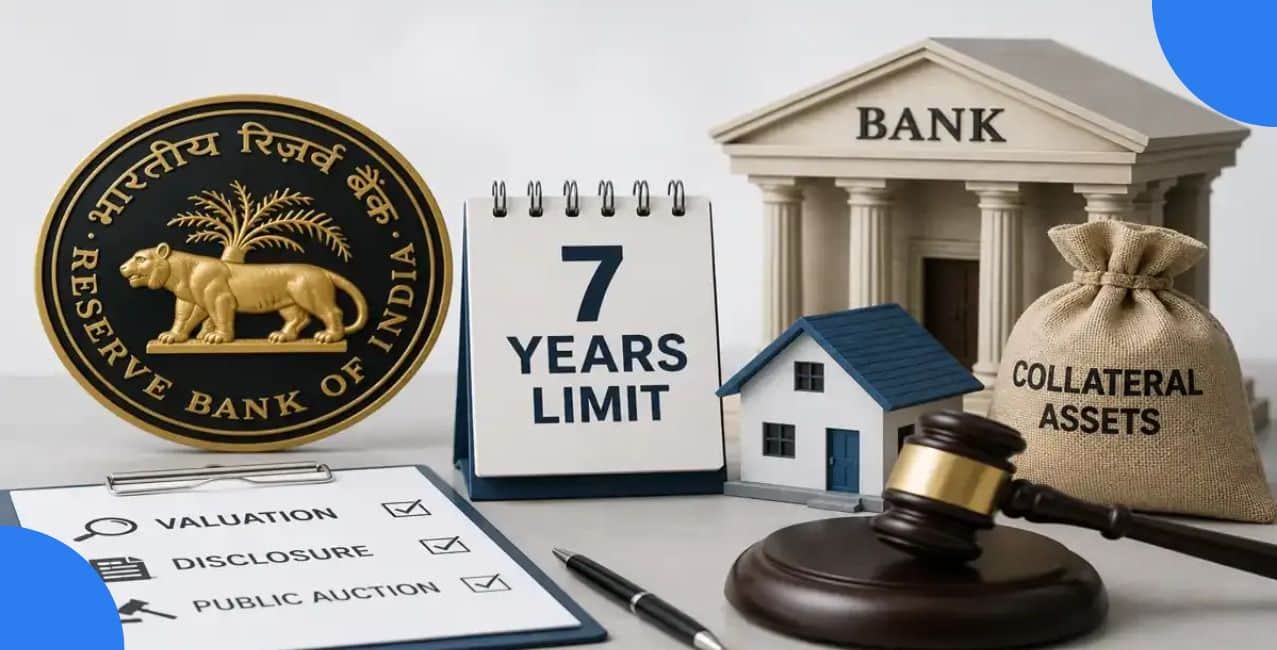
Banks often seize property kept as collateral when borrowers default on loans. But holding these assets for too long creates several risks. It locks up capital and reduces transparency in the banking system.
The RBI’s draft directions, released on May 6, 2026, aim to address this issue. However, banks in slow or illiquid real estate markets may still face challenges. Selling assets within seven years at fair prices may not always be easy.
This rule directly affects how banks recover money from loan defaulters. Here are the key rules proposed:
This move increases accountability for borrowers. Banks will now need to actively sell seized assets through public auctions. This prevents properties from remaining stuck for years without resolution.
It also means faster recovery cycles, which can ease the load of bad loans on the banking system. India’s gross NPA ratio of scheduled commercial banks had already fallen to a historic low of 2.15% as of September 2025, per PIB data. This rule can help sustain that trend.
Amey Pathak, Partner and Head of Banking at Cyril Amarchand Mangaldas, called the seven-year limit “pragmatic and commercially sensible.” He said the rule gives banks enough flexibility in slow property markets.
Rohit Jain, Managing Partner at Singhania and Co., compared the proposal with Section 29A of the Insolvency and Bankruptcy Code. This section prevents defaulting promoters from regaining assets.
However, he also warned that a complete ban on selling assets back to borrowers may hurt price discovery. This can happen if the borrower is willing to pay the highest value.
The RBI’s proposed 7-year limit on holding non-financial assets is an important reform. It introduces structure in an area that previously lacked clear rules. The proposal can help reduce long-term asset buildup in the banking system. It may also improve transparency for depositors and investors.
The deadline for feedback on the draft rules is May 26, 2026. If approved, the framework could improve stressed loan resolution outside the formal insolvency process.
RBI floating rate bonds may suit conservative investors looking for stable and government-backed returns. However, investors should still compare interest rates, inflation, and liquidity before investing.
Stressed companies usually need to show financial viability, repayment capacity, and a credible revival plan to qualify. Banks also assess cash flows, management quality, and whether the restructuring can improve loan recovery.
Immovable property seized as collateral
*T&C Apply









.png&w=3840&q=75)



