By continuing, you agree to LoansJagat's Credit Report Terms of Use, Terms and Conditions, Privacy Policy, and authorize contact via Call, SMS, Email, or WhatsApp
Disclaimer: The information published on LoansJagat is intended for general informational and educational purposes only and should not be considered financial, legal, or investment advice. Interest rates, loan terms, statistics, and other data may change over time and may vary by lender or source. Please verify the latest information and consult a qualified financial advisor or the respective Bank/NBFC before making any financial decisions.
Subscribe Now
About the author

LoansJagat Team
‘Simplify Finance for Everyone.’ This is the common goal of our team, as we try to explain any topic with relatable examples. From personal to business finance, managing EMIs to becoming debt-free, we do extensive research on each and every parameter, so you don’t have to. Scroll up and have a look at what 15+ years of experience in the BFSI sector looks like.
Related Blog Post
Simplify All Your Loans Into One Affordable EMI

Customers Served

Debt Consolidated

1200+ Reviews

Locations in India
Club all Loans & Credit Card Bills into Single EMI

Quick Apply Loan
Consolidate your debts into one easy EMI.

Takes less than 2 minutes. No paperwork.

10 Lakhs+
Trusted Customers

2000 Cr+
Loans Disbursed

4.7/5
Google Reviews

50+
Banks & NBFCs Offers
Other services mentioned in this article
India’s plastic currency plan is back, with RBI reportedly reviewing polymer notes to cut printing pressure, improve note life and manage rising cash use better.
Key Takeaways
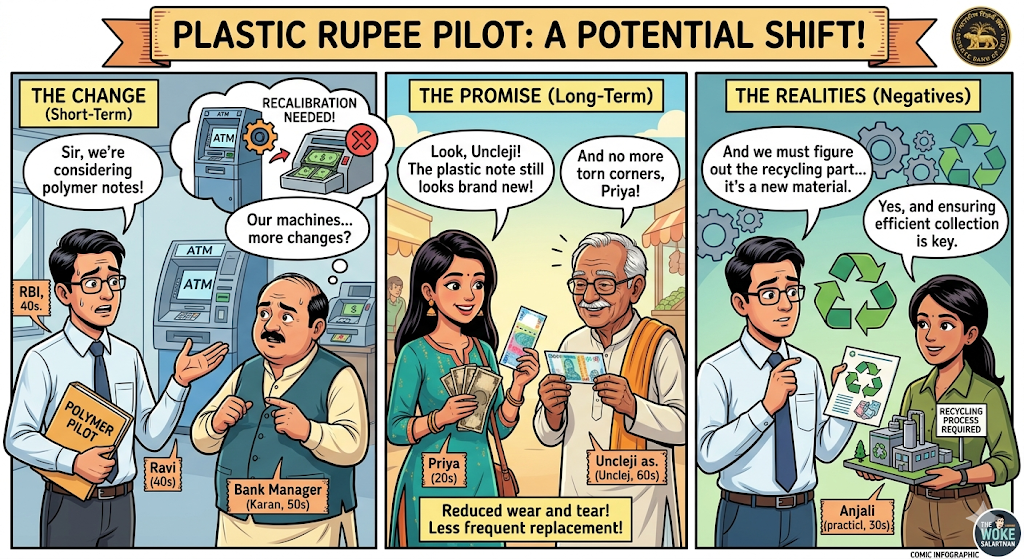
India may soon see plastic currency notes, if the latest discussions inside the Reserve Bank of India move towards a pilot. Business Standard reported on 28 May 2026 that polymer rupee notes were discussed in recent board meetings held in Patna and Mumbai.
In the short term, banks, ATMs and cash-sorting machines may need changes. For the long term, polymer notes could help reduce frequent replacement of torn and soiled notes. The negative side is also practical: machines may need recalibration, and India will need a proper recycling process for used plastic notes.
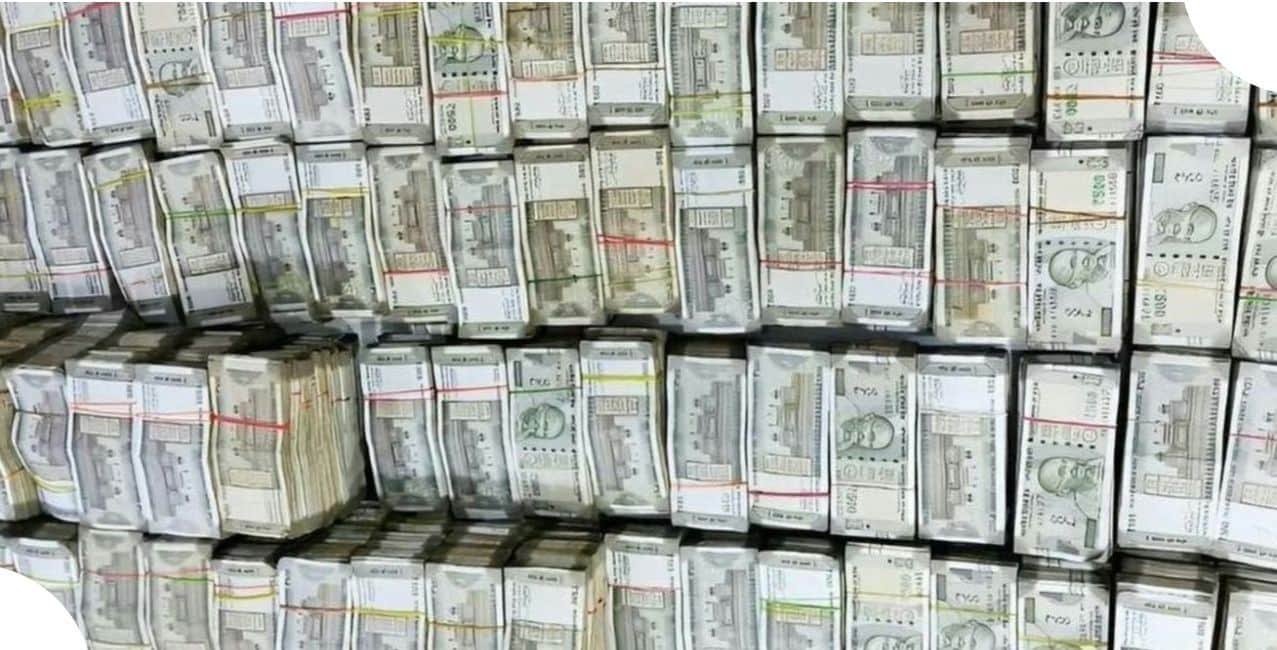
India’s cash use has not disappeared despite UPI and card payments. Business Standard reported on 29 May 2025 that security printing expenditure rose nearly 25% to ₹6,372.8 crore in FY25 from ₹5,101.4 crore in FY24.
Currency circulation also increased. Reports citing the 2024-25 annual data said banknotes in circulation rose 6.0% by value and 5.6% by volume in FY25. LoansJagat reported on 30 August 2025 that ₹500 notes formed 40.9% of total currency volume and about 86% by value.
The numbers show why the plan has returned. Plastic notes are not only about a new look. They are linked to currency life, printing cost, fake-note resistance and the problem of dirty notes in circulation.
The idea is not new. India has been testing the possibility of plastic currency for more than 10 years, especially for lower-value notes used heavily in daily transactions.
This history also explains why the current move may begin with a pilot. India has different weather zones, high cash use in small markets and heavy handling of low-value notes.
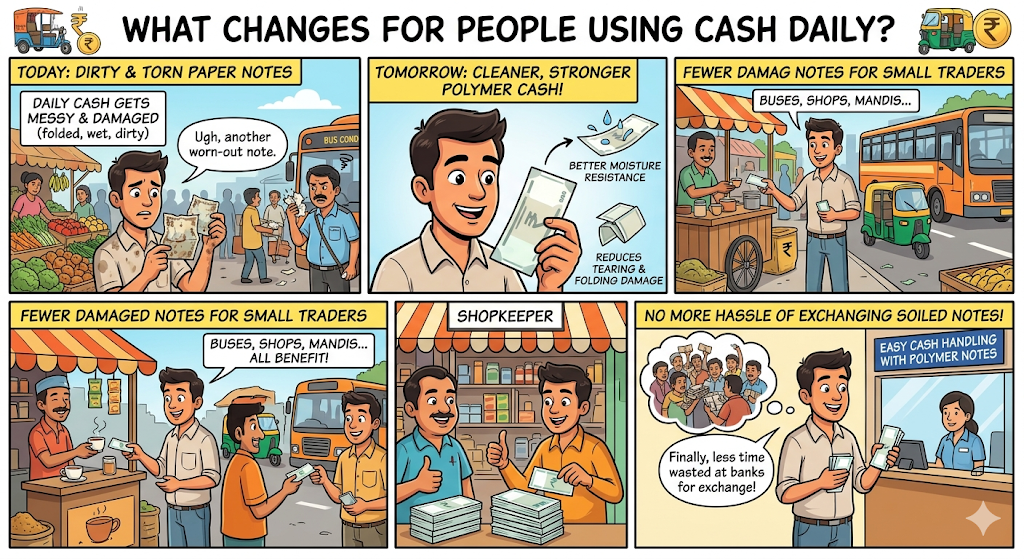
For citizens, polymer notes could mean cleaner and stronger cash. Notes used in buses, shops, tea stalls, mandis and local markets often get folded, wet, dirty or torn. Plastic notes can handle moisture better than paper notes.
If introduced first in lower denominations, the public impact could be visible faster. Fewer damaged notes may help small traders, banks and customers. It may also reduce the hassle of exchanging soiled notes.
The Bank of England says polymer notes are safer, cleaner and last 2.5 times longer than paper notes. The Bank of Canada Museum also says polymer notes allow windows, holograms and detailed printing, making counterfeiting tougher.
*T&C Apply
The best route for India would be a small pilot, machine testing and public feedback before wider use. Banks, ATM operators and cash logistics firms will need time to adjust.
Plastic notes may help India reduce dirty currency and printing pressure. The final rollout will depend on pilot results, machine readiness and recycling plans.
Why has India still not started using plastic currency notes?
India has not shifted to plastic notes yet because it is not a small printing change. Polymer notes need new raw material, machine checks, ATM adjustments and a proper recycling plan after use. India had planned a trial of 1 billion ₹10 plastic notes in 5 cities back in 2012, but it never became a full rollout.
Officials also had to see how these notes would survive heat, dust, folding and rough daily use in India. Still, many countries use polymer notes because they last longer and are harder to fake. That is why India may try them again.
Why are plastic notes better than paper notes?
Plastic notes can be useful because they usually last longer than paper notes. They do not tear quickly, and a little water or sweat does not spoil them easily. For a country where cash changes many hands every day, this can reduce the number of damaged notes going back to banks.
They are also harder to copy because the note can have a see-through part and other security marks. Another plus is that they stay cleaner for more time. The only problem is the first cost. Machines, printing systems and public use may need some changes before a full rollout.
Related Financial News | |||
Why Investors Are Shifting from Bank Deposits to Mutual Funds | |||









.png&w=3840&q=75)



