By continuing, you agree to LoansJagat's Credit Report Terms of Use, Terms and Conditions, Privacy Policy, and authorize contact via Call, SMS, Email, or WhatsApp
Disclaimer: The information published on LoansJagat is intended for general informational and educational purposes only and should not be considered financial, legal, or investment advice. Interest rates, loan terms, statistics, and other data may change over time and may vary by lender or source. Please verify the latest information and consult a qualified financial advisor or the respective Bank/NBFC before making any financial decisions.
Subscribe Now
About the author

LoansJagat Team
‘Simplify Finance for Everyone.’ This is the common goal of our team, as we try to explain any topic with relatable examples. From personal to business finance, managing EMIs to becoming debt-free, we do extensive research on each and every parameter, so you don’t have to. Scroll up and have a look at what 15+ years of experience in the BFSI sector looks like.
Related News
Simplify All Your Loans Into One Affordable EMI

Customers Served

Debt Consolidated

1200+ Reviews

Locations in India
Club all Loans & Credit Card Bills into Single EMI

Quick Apply Loan
Consolidate your debts into one easy EMI.

Takes less than 2 minutes. No paperwork.

10 Lakhs+
Trusted Customers

2000 Cr+
Loans Disbursed

4.7/5
Google Reviews

50+
Banks & NBFCs Offers
Other services mentioned in this article
Due to the increase in the price of essentials such as fuel and factory inputs, as well as food, India’s wholesale inflation showed an increase again for May 2026. This trend has resulted in more worries regarding costs for businesses and households.
Key Highlights
Some cost of inflation can be seen in daily expenses; however, that doesn’t happen right away. Trucks transporting food from Nashik to Mumbai use diesel, which is more expensive, causing the food to be more expensive.
There are also higher costs for businesses that use plastics and chemicals to make packages. Those costs are reflected in grocery prices, and the costs to send items will also be more expensive. The inflation for retail was lower at 3.93%, but inflation for wholesale will eventually be felt by the consumer.
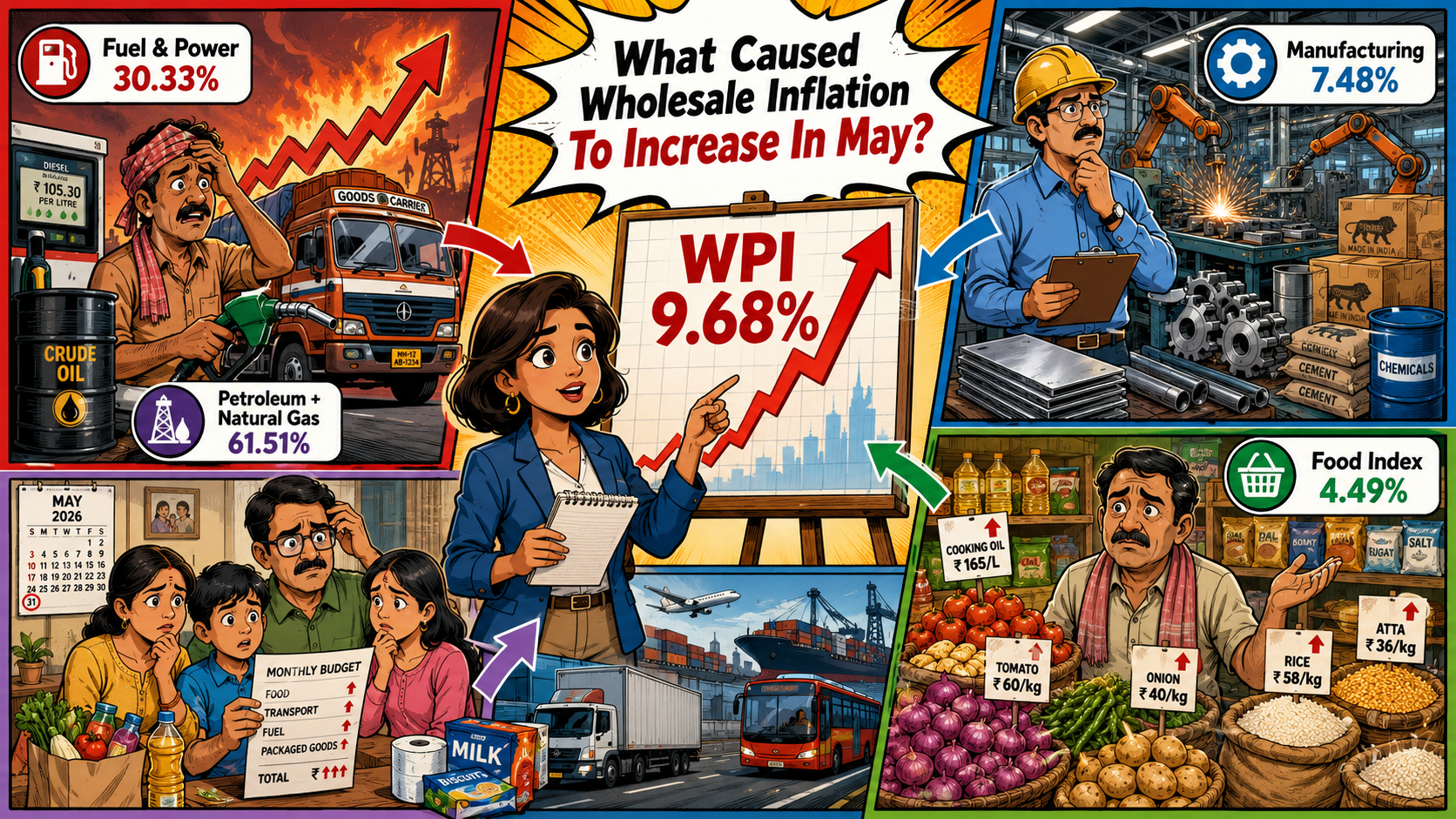
Energy caused the biggest rise. Petroleum and natural gas prices increased 61.51% year-on-year in May, up from 56.31% in April, according to LiveMint’s report published on June 15, 2026.
Food and factory prices also moved up. Manufactured product inflation rose to 7.48% from 6.68%. The wider WPI Food Index climbed to 4.49%, against 3.11% in April.
The numbers point to pressure across several supply chains, not fuel alone. Chemicals, basic metals, mineral oils and processed food all feed into products used daily.
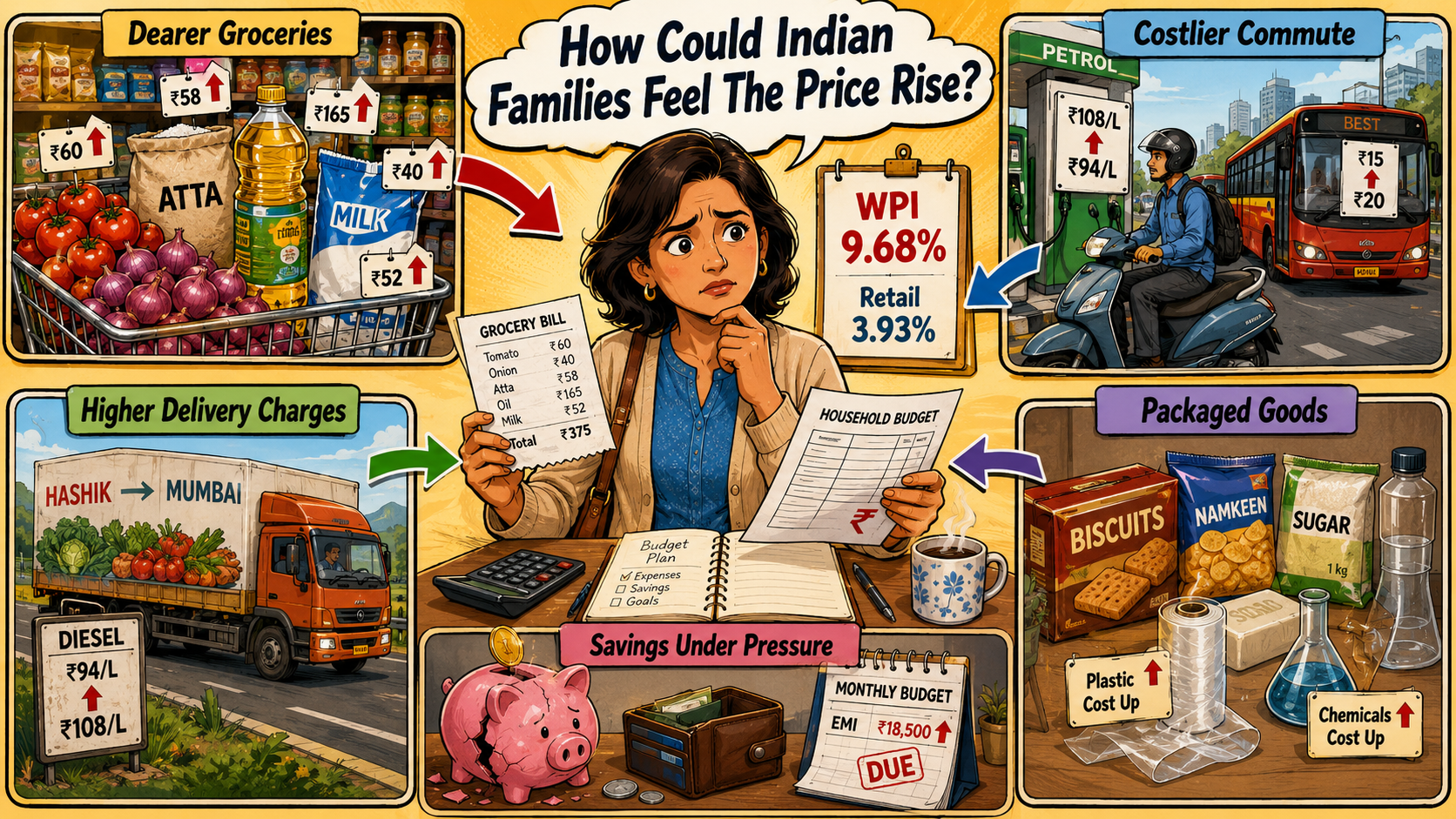
Higher diesel prices usually hit freight first. Milk tankers, buses, school vans, delivery fleets and vegetable trucks all operate on tight margins. A long spell of expensive fuel leaves operators with 2 choices, absorb the cost or increase charges.
*T&C Apply
The full impact may take a few weeks. Large retailers can hold prices for a while, using old stock or existing supply contracts. Small shops and transport operators have less room.
ICRA Principal Economist Rahul Agrawal told Reuters that softer global energy and commodity prices after reduced West Asian tensions could ease June’s WPI reading.
Relief will depend on crude prices, shipping routes and the rupee. A fresh disruption near the Strait of Hormuz could quickly raise costs again. Lower oil prices, on the other hand, may reduce pressure on transport and factory bills before the next inflation release.
May also brought a revised WPI series with 2022-23 as the base year. The basket now contains 957 items, up from 697, according to a PIB release dated June 2, 2026.
LoansJagat’s view is that higher fuel inflation can squeeze repayment capacity even when lending rates do not change. A family paying ₹22,000 in EMIs may find the pressure elsewhere, perhaps an extra ₹1,500 on travel, groceries and school transport.
A LoansJagat report published on May 14, 2026 had flagged the risk of higher petrol, diesel and household transport costs if the West Asia conflict continued.
Borrowers should watch monthly cash flow rather than only interest rates. Keeping 3 months of EMIs aside, cutting optional spending early and avoiding fresh high-cost debt may offer more protection if fuel-led inflation lasts.
May’s 9.68% WPI reading shows that the fuel shock has already reached factories, freight networks and food supply chains. There will be additional costs in June, but will the cost of crude oil be low enough to keep crude oil costs from affecting consumers? This is to be determined.
What Is/Was India’s WPI Inflation In May 2026?
India's WPI inflation for May 2026 was 9.68%, which was higher than April 2026’s figure of 8.26%.
Why did inflation rise so fast at WPI?
In May, gas, oil, natural gas, food, and industrial goods all became more expensive.
What Was Fuel And Power Inflation In May?
Fuel and power inflation reached 30.33%, compared with 24.89% in April.
What caused India’s WPI inflation to rise to 9.68% in May?
Higher fuel, food and manufactured product prices pushed India’s wholesale inflation to 9.68% in May.
How is India’s rising inflation affecting the daily expenses of ordinary citizens?
Higher fuel, food and transport costs are reducing household savings and stretching monthly family budgets.









.png&w=3840&q=75)



