By continuing, you agree to LoansJagat's Credit Report Terms of Use, Terms and Conditions, Privacy Policy, and authorize contact via Call, SMS, Email, or WhatsApp
Disclaimer: The information published on LoansJagat is intended for general informational and educational purposes only and should not be considered financial, legal, or investment advice. Interest rates, loan terms, statistics, and other data may change over time and may vary by lender or source. Please verify the latest information and consult a qualified financial advisor or the respective Bank/NBFC before making any financial decisions.
Subscribe Now
About the author

LoansJagat Team
‘Simplify Finance for Everyone.’ This is the common goal of our team, as we try to explain any topic with relatable examples. From personal to business finance, managing EMIs to becoming debt-free, we do extensive research on each and every parameter, so you don’t have to. Scroll up and have a look at what 15+ years of experience in the BFSI sector looks like.
Related Blog Post
Simplify All Your Loans Into One Affordable EMI

Customers Served

Debt Consolidated

1200+ Reviews

Locations in India
Club all Loans & Credit Card Bills into Single EMI

Quick Apply Loan
Consolidate your debts into one easy EMI.

Takes less than 2 minutes. No paperwork.

10 Lakhs+
Trusted Customers

2000 Cr+
Loans Disbursed

4.7/5
Google Reviews

50+
Banks & NBFCs Offers
Other services mentioned in this article
Indian families have started selling old jewellery after the sharp fall in global gold prices. The rush is helping households raise cash and bringing more recycled gold into the domestic market.
Key Highlights
According to the estimates provided by the India Bullion and Jewellers Association and reported by The Economic Times on June 29, Indian households sold almost 50 tonnes of old gold between April and June 2026. This gold was mostly in the form of old gold jewellery. This was a 43% increase over the previous year's sales.
Spot gold prices fell significantly in the previous year, and many families have decided to sell their gold to take advantage of the gains to be made. The global correction in gold prices also added to the urgency. Gold was reported to have fallen below $4,000 per ounce for the first time since November 2025 on June 24, 2026.
Selling old jewellery gave households quick access to money. There is a trade-off, though. Anyone selling inherited ornaments now will lose the chance to benefit if prices rise again later.
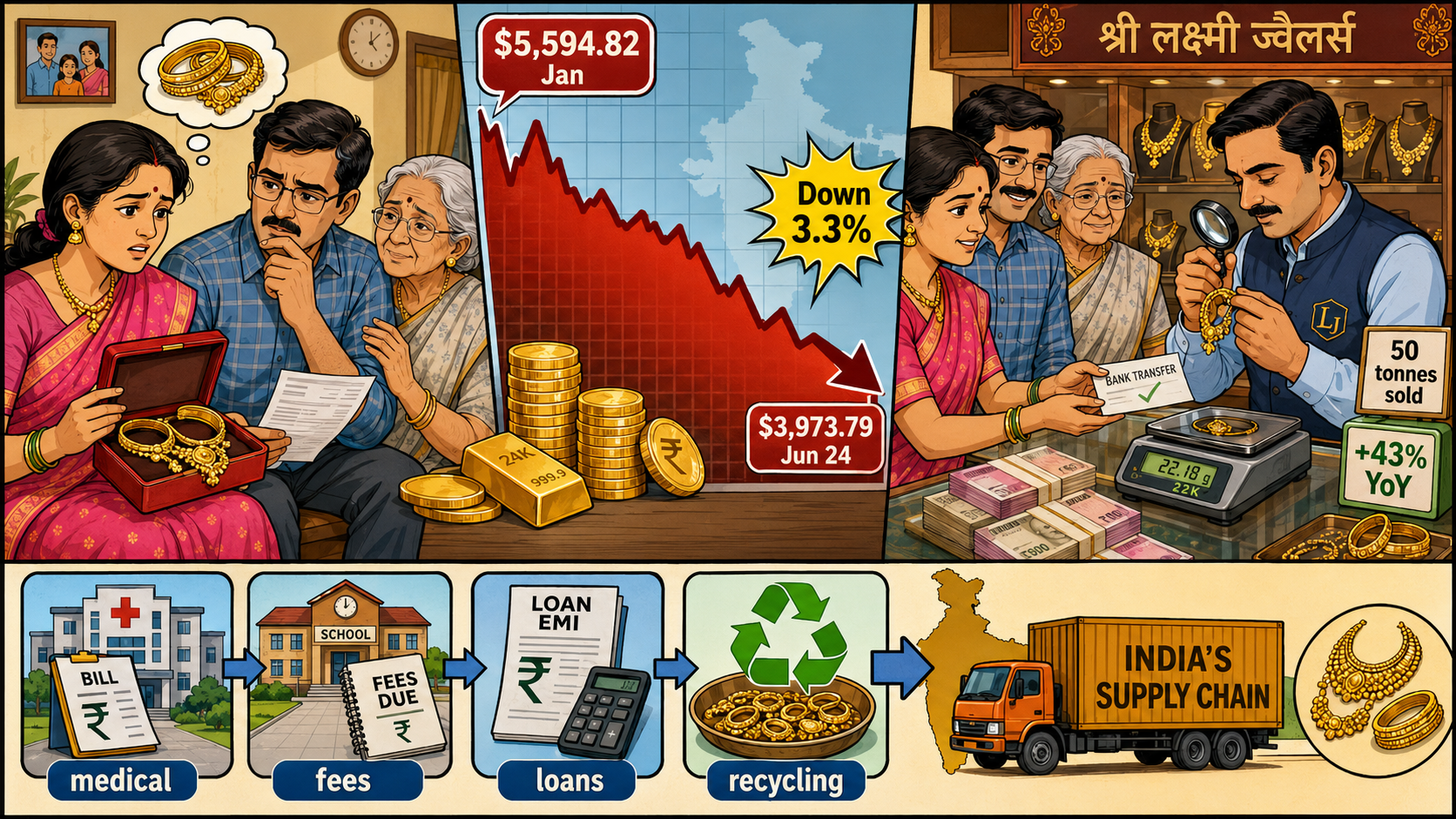
The numbers show how quickly the market changed between January and June.
Gold lost more than $1,600 per ounce from its January record. A stronger US dollar added pressure, while expectations of higher US interest rates made non-yielding assets such as gold less attractive to investors.
For a household facing medical expenses, school fees or overdue loan payments, selling old jewellery can release funds quickly. There is no EMI to manage later. The transaction also ends once the buyer makes the payment.
Organised gold buyers may offer purity testing, written valuation slips and direct bank transfers. Still, sellers should not accept the first quote. Stone weight, purity cuts and melting deductions can reduce the final amount by a wide margin.
More recycled gold entering the market can also lower India’s need for imported bullion. Jewellers and refiners can reuse metal collected from households, which may reduce pressure on imports during periods of weak demand.
The downside is permanent loss of ownership. Jewellery linked to weddings, inheritance or family history cannot be recovered once sold.
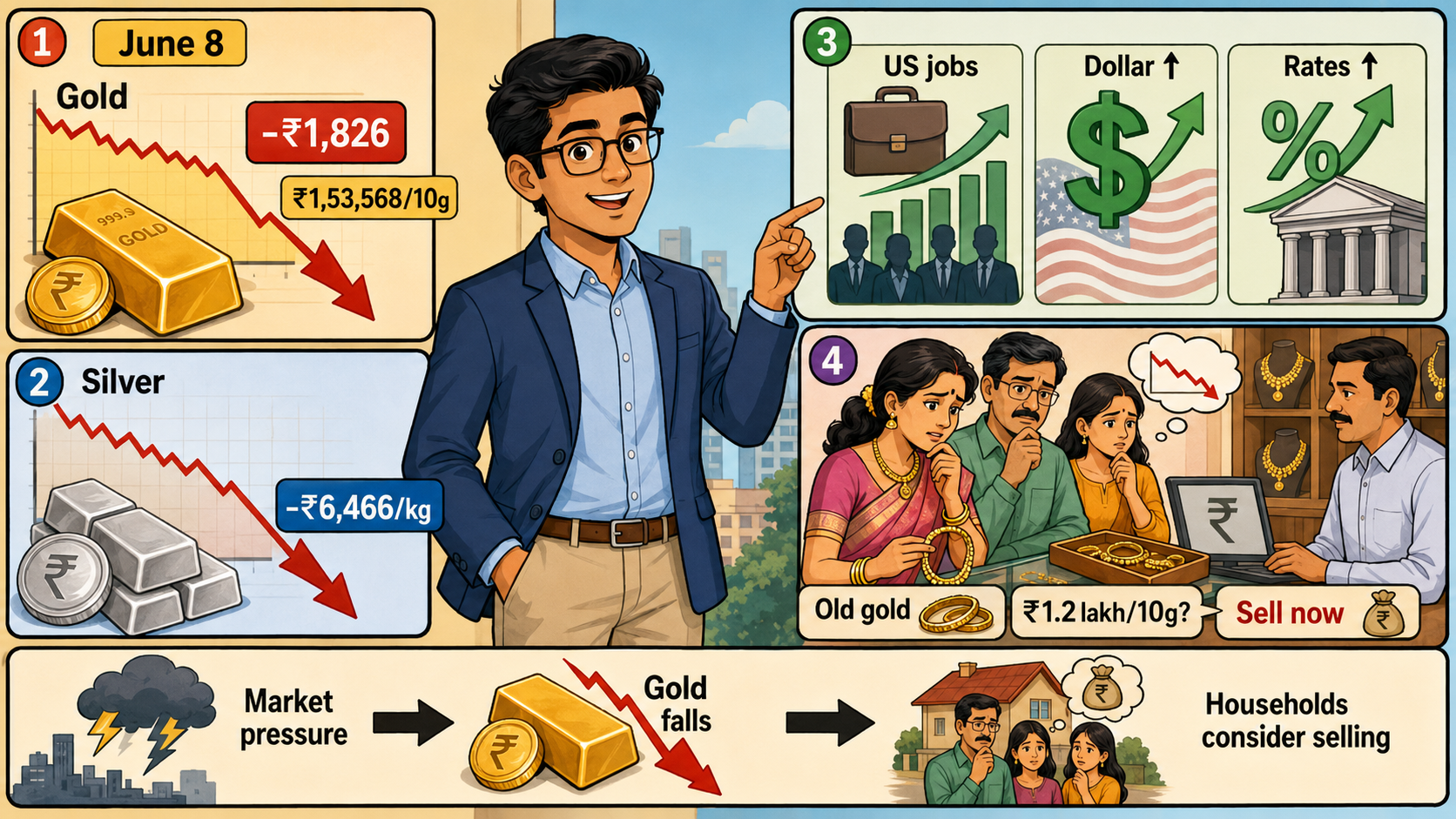
Precious metals were already under pressure earlier in June. A LoansJagat report published on June 9 recorded a steep fall in both gold and silver.
*T&C Apply
The LoansJagat report linked the fall to stronger US employment data and renewed concerns that interest rates could remain high. Those concerns continued to influence bullion prices later in the month.
Independent metals trader Tai Wong told Reuters that gold had support below $3,900. He also said central-bank buying reduced the likelihood of a complete price collapse.
ING lowered its gold forecast for the third quarter to $4,300 per ounce and its fourth-quarter estimate to $4,600. The forecasts suggest analysts still expect prices to stay well above older levels, even after the recent fall.
According to LoansJagat, families needing money for a limited period should compare a regulated gold loan with an outright sale. A loan keeps the jewellery with the borrower once repayment is complete. Selling ends ownership for good.
The choice depends on repayment ability. A borrower who misses payments may face auction risk, while a seller avoids debt but gives up the asset permanently.
High domestic prices gave Indian families a chance to raise cash even after global gold fell sharply. The next phase will depend on the rupee, US interest rates and whether gold holds near $3,900.
What caused gold to settle below $4,000?
Gold’s appeal as an investment diminished due to a more powerful US dollar and the anticipation of elevated interest rates.
How much old gold did Indian households sell?
Indian households sold nearly 50 tonnes during April–June 2026, based on the IBJA estimate.
Should families sell old jewellery now?
They should compare purity deductions, resale value, emotional value and borrowing options before taking a decision.
Is it better to sell gold or take a loan against it?
Selling provides instant money with no need to pay back. Gold loans can be a good option to meet short-term needs when the repayments are manageable.
Why should Indians keep buying gold when prices are so high?
Gold features in Indian savings and as gifts, especially during festivals and weddings.









.png&w=3840&q=75)



