By continuing, you agree to LoansJagat's Credit Report Terms of Use, Terms and Conditions, Privacy Policy, and authorize contact via Call, SMS, Email, or WhatsApp
Disclaimer: The information published on LoansJagat is intended for general informational and educational purposes only and should not be considered financial, legal, or investment advice. Interest rates, loan terms, statistics, and other data may change over time and may vary by lender or source. Please verify the latest information and consult a qualified financial advisor or the respective Bank/NBFC before making any financial decisions.
Subscribe Now
About the author

LoansJagat Team
‘Simplify Finance for Everyone.’ This is the common goal of our team, as we try to explain any topic with relatable examples. From personal to business finance, managing EMIs to becoming debt-free, we do extensive research on each and every parameter, so you don’t have to. Scroll up and have a look at what 15+ years of experience in the BFSI sector looks like.
Related News
Simplify All Your Loans Into One Affordable EMI

Customers Served

Debt Consolidated

1200+ Reviews

Locations in India
Club all Loans & Credit Card Bills into Single EMI

Quick Apply Loan
Consolidate your debts into one easy EMI.

Takes less than 2 minutes. No paperwork.

10 Lakhs+
Trusted Customers

2000 Cr+
Loans Disbursed

4.7/5
Google Reviews

50+
Banks & NBFCs Offers
Other services mentioned in this article
Important Points
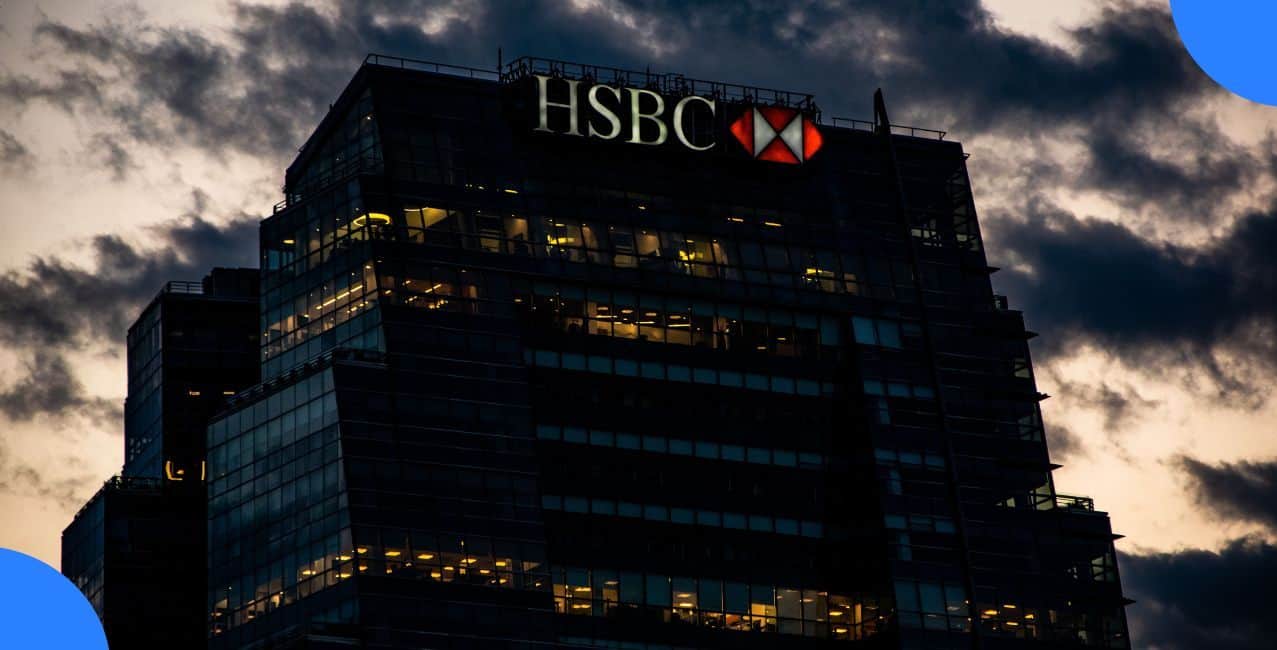
On June 23, 2026, HSBC's India Composite PMI Output Index, prepared by S&P Global, was recorded to be at 57.4 from its final value of 59.3 in May 2026. If the figures exceed 50, then it indicates that the economy is growing, and for June the economy marked 59 consecutive months above the number. In June the HSBC Flash India Manufacturing PMI stood at 54.5 against 55 in May. At the same time the Services PMI showed 17-month low of 57.3 as against 59.8 earlier.
Pranjul Bhandari, Chief India Economist at HSBC, commented, “There was an easing of private sector activity in June. Output growth in manufacturing activities moderated slightly because inventory accumulation decelerated following some busy months.” He further stated, “There was resilience in new export orders, and the order-to-inventory ratio was on the rise, indicating sustained manufacturing activities ahead.”
Job creation took a direct hit from this slowdown. Employment across the private sector rose only marginally in June 2026, the weakest gain in the current 6-month run of expansion. Hiring at both factories and service providers fell to its lowest level since December 2025. On the export side, services firms saw faster international sales growth, while manufacturers recorded their weakest rise in new export orders since March 2023.
There is a silver lining for cost-conscious households and businesses. Input cost inflation eased to its lowest level since January 2026, marking the 3rd straight month of cooling costs. Selling price inflation also softened to its weakest pace in 6 months, as some firms held back on price hikes amid weaker demand. For small businesses facing tighter credit needs during slow periods, formal lending matters more than ever. LoansJagat cites CRISIL’s SME Outlook Report showing informal borrowing still accounts for nearly 30% of MSME debt in India. Faster formal credit access could help cushion MSMEs through periods of softer demand like this one.
*T&C Apply
There has been a drop in business confidence for the month of June 2026 to levels that have been lower than the average over time. As per S&P Global, “the period of growth was broadly felt among the manufacturing and services industries, with both expanding at the slowest pace in two months and 17 months respectively.” Panel members cited competitive pressures and gas shortages as key obstacles to securing new business.
Despite the slowdown, firms remained confident about output growth over the next 12 months, citing efficiency improvements and new client inquiries. Bhandari pointed to easing input costs as a stabilising factor going forward, noting they rose at the “slowest pace in five months.” The likely path forward depends on whether new export orders, which stayed resilient even as domestic demand cooled, can offset the softer hiring and confidence numbers in the coming months.
There has been a decrease in business confidence below the long-term average for June 2026, where confidence in goods producers fell to its lowest level since 4 years ago. According to the statement by S&P Global, “The rate of expansion slowed for both the manufacturing and service sectors, the former to a two-month low and the latter to a 17-month low.” Competitive pressure and gas shortages were among the barriers for gaining new business.
Although there has been a decrease in the growth rate, companies remain optimistic about output growth for the next 12 months due to increased efficiency and inquiries from new clients. Bhandari highlighted the stabilisation in input costs, “rising at the slowest pace in five months.” The future is determined by how new export orders will be able to compensate for the softer hiring and confidence numbers despite the decreased domestic demand.
The private sector growth slowdown to 57.4 in June 2026 reflects a genuine slowdown in the Indian economy despite being mild. In light of decreasing input prices and robust exports, the key concern for July would be to restore employment and optimism.
Could it be that India’s economic growth is slower than that implied by GDP figures?
In a March 2026 article about India’s then faulty methodology used in the national account statistics, it was suggested that the country's recent growth rate has been exaggerated in the last 20 years. As of present,2026 GDP per capita of India stands at $2,813, with an increase of 5.1 per cent each year.
What makes India’s newspapers report almost nothing on unemployment or GDP slowdown?
GDP and unemployment data are released quarterly by MoSPI, but coverage stays brief because the numbers are complex and politically sensitive. India's urban unemployment rate was 6.5% in 2025, per CMIE, yet most media coverage focuses on headline GDP growth, not jobs or per capita income.









.png&w=3840&q=75)



