
By continuing, you agree to LoansJagat's Credit Report Terms of Use, Terms and Conditions, Privacy Policy, and authorize contact via Call, SMS, Email, or WhatsApp
Disclaimer: The information published on LoansJagat is intended for general informational and educational purposes only and should not be considered financial, legal, or investment advice. Interest rates, loan terms, statistics, and other data may change over time and may vary by lender or source. Please verify the latest information and consult a qualified financial advisor or the respective Bank/NBFC before making any financial decisions.
Subscribe Now
About the author

LoansJagat Team
‘Simplify Finance for Everyone.’ This is the common goal of our team, as we try to explain any topic with relatable examples. From personal to business finance, managing EMIs to becoming debt-free, we do extensive research on each and every parameter, so you don’t have to. Scroll up and have a look at what 15+ years of experience in the BFSI sector looks like.
Related Blog Post
Simplify All Your Loans Into One Affordable EMI

Customers Served

Debt Consolidated

1200+ Reviews

Locations in India
Club all Loans & Credit Card Bills into Single EMI

Quick Apply Loan
Consolidate your debts into one easy EMI.

Takes less than 2 minutes. No paperwork.

10 Lakhs+
Trusted Customers

2000 Cr+
Loans Disbursed

4.7/5
Google Reviews

50+
Banks & NBFCs Offers
Other services mentioned in this article
India’s economy is still moving faster than most large markets, though costly oil and delayed Gulf shipments could put pressure on family budgets.
Key Highlights
The International Monetary Fund said on 25 June 2026 that India remained a major contributor to global growth despite the Iran war, higher energy costs and weak overseas demand. Julie Kozack, Director of the IMF’s Communications Department, said domestic spending and recent economic performance supported the Fund’s 6.5% FY27 forecast.
The figure carries weight beyond government reports. Faster growth can keep construction sites active, support hiring in retail and financial services, and give small businesses more customers. Still, imported oil is a weak point. A longer disruption in West Asia could raise diesel, flight, fertiliser and delivery costs within weeks.
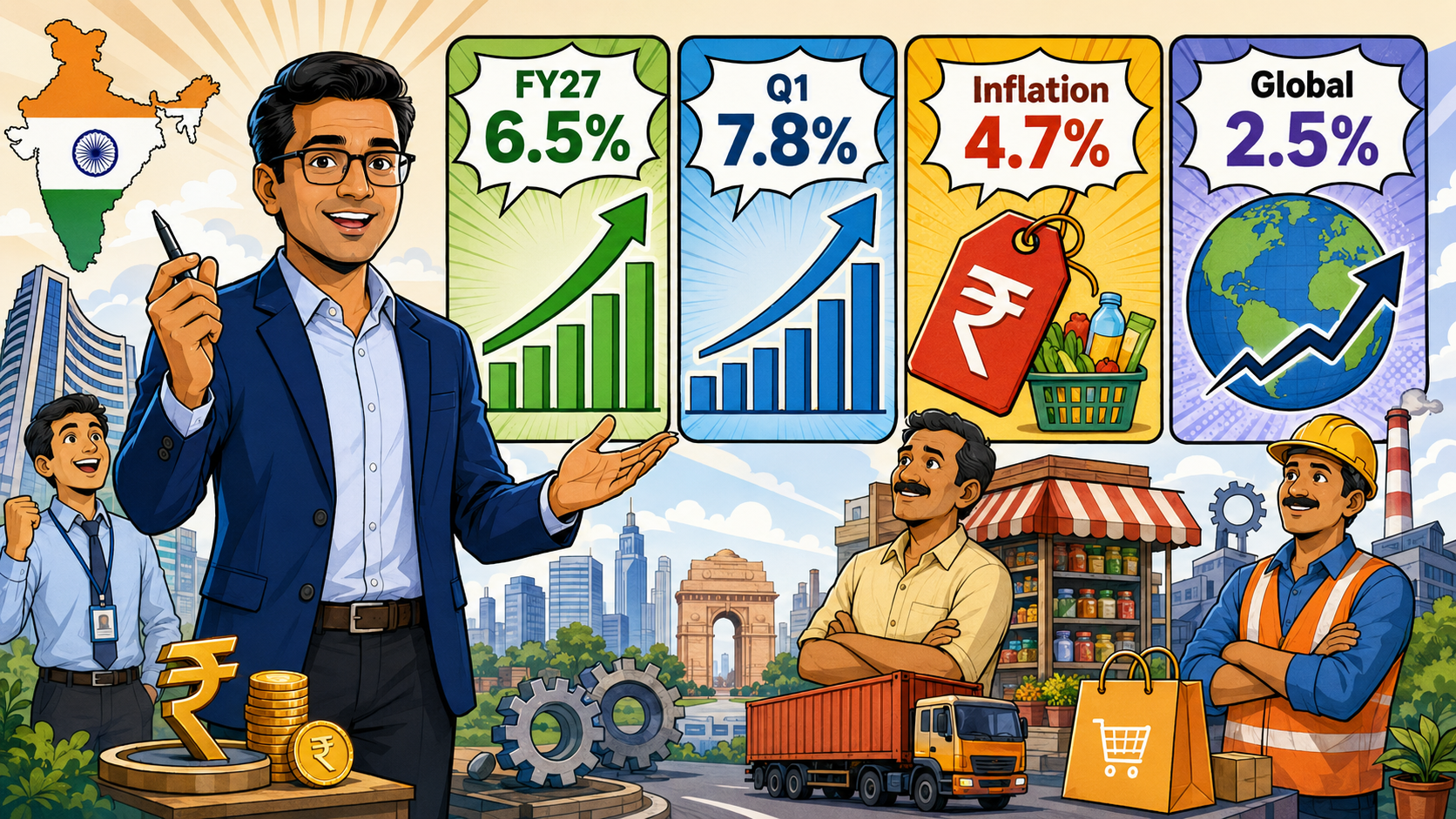
The IMF World Economic Outlook, released on 14 April 2026, placed India well ahead of the expected global growth rate.
India is expected to slow from the previous year’s pace. Even so, 6.5% remains strong when the IMF’s baseline global forecast stands near 3.1%.
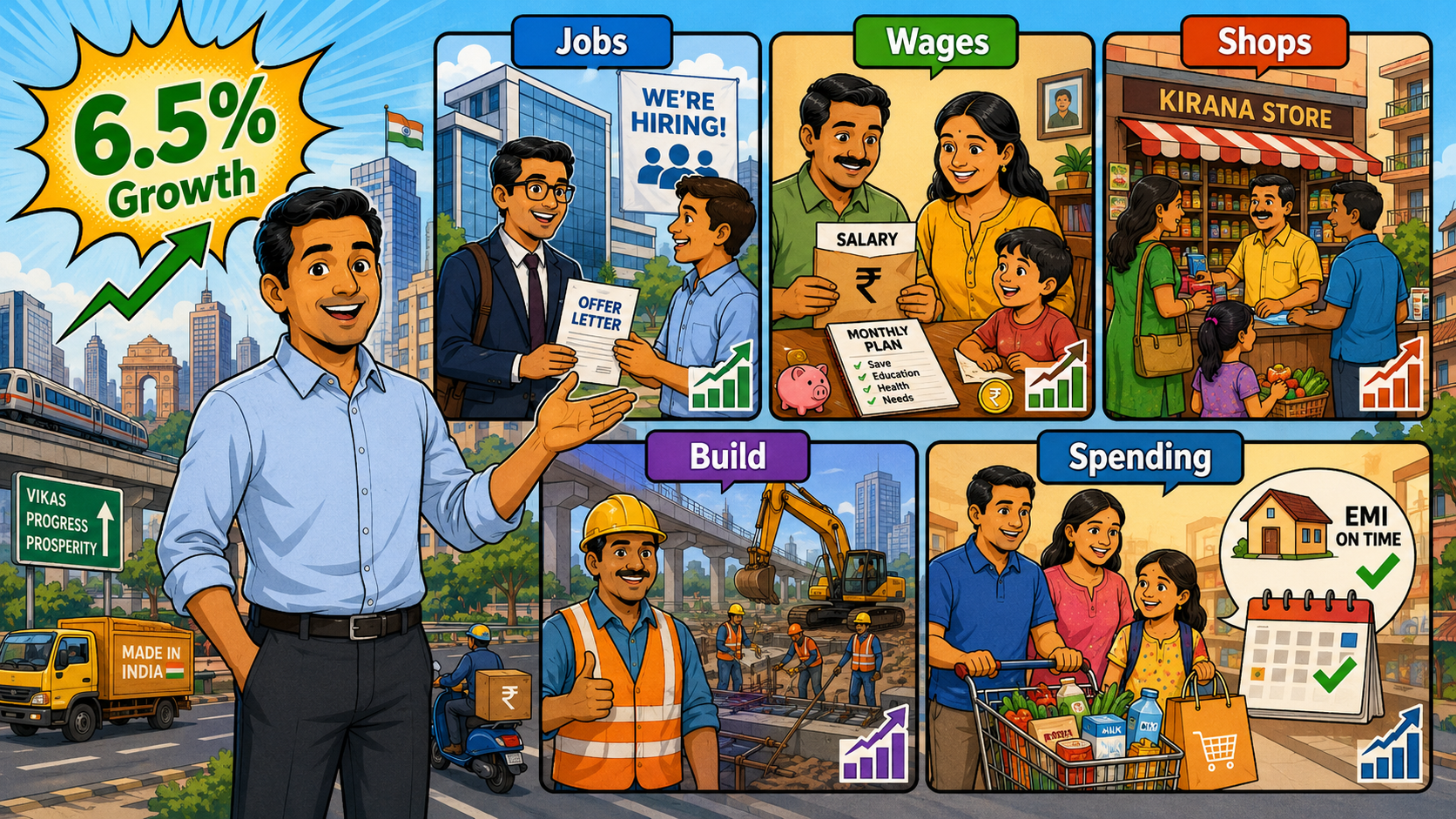
A firm economy usually supports jobs across banking, logistics, construction and consumer services. A road project, for example, does not employ only engineers. It also creates orders for cement, trucks, equipment repair, roadside food outlets and local transport.
Lower crude prices would help too. Airlines could face smaller fuel bills, transport operators may see some relief, and factories using imported chemicals could spend less. Those savings do not reach shoppers immediately. Companies often work through older fuel contracts and existing stock first.
4.7%
*T&C Apply
The downside is easy to spot in daily spending. A delivery rider pays more for petrol. A farmer may face a higher fertiliser bill. A small manufacturer could spend extra on transport and imported parts.
Kozack said India continued to support global growth because household demand remained firm and first-quarter expansion reached 7.8%. She also pointed to lower US tariffs, which fell from 50% to 10%, as a partial offset to the energy shock.
The IMF has not treated the Iran agreement as a complete reset. Energy prices fell after the deal, but normal shipping and commodity flows may take time to return. India can reduce the damage through wider crude sourcing, faster renewable-energy use and close tracking of food and freight inflation.
A LoansJagat analysis explains another household risk. Expensive oil can increase monthly expenses while leaving less money for loan repayments. Borrowers working in transport, small manufacturing and delivery services may feel that strain first.
India’s 6.5% forecast remains firm, but cheaper oil will decide how much of that growth reaches ordinary households. The 8 July IMF update will show whether easing Gulf tensions have reduced the risk for FY27.
What Is India’s IMF Growth Forecast For FY27?
The IMF expects India’s economy to expand by 6.5% in FY2026-27.
Why Has The IMF Kept The Forecast Unchanged?
Strong domestic demand and 7.8% first-quarter growth supported the existing estimate.
How Can The Iran War Affect Indian Families?
Higher oil and shipping costs can raise fuel, food, fertiliser and delivery prices.
Can Lower Oil Prices Reduce Inflation In India?
Yes. The effect may take time because freight contracts and inventories adjust gradually.
What Will India’s Economy Be Like In The Coming Months?
The IMF expects India to grow by 6.5% in FY27, though oil prices and global trade risks may affect inflation.









.png&w=3840&q=75)



