By continuing, you agree to LoansJagat's Credit Report Terms of Use, Terms and Conditions, Privacy Policy, and authorize contact via Call, SMS, Email, or WhatsApp
Disclaimer: The information published on LoansJagat is intended for general informational and educational purposes only and should not be considered financial, legal, or investment advice. Interest rates, loan terms, statistics, and other data may change over time and may vary by lender or source. Please verify the latest information and consult a qualified financial advisor or the respective Bank/NBFC before making any financial decisions.
Subscribe Now
About the author

LoansJagat Team
‘Simplify Finance for Everyone.’ This is the common goal of our team, as we try to explain any topic with relatable examples. From personal to business finance, managing EMIs to becoming debt-free, we do extensive research on each and every parameter, so you don’t have to. Scroll up and have a look at what 15+ years of experience in the BFSI sector looks like.
Related Blog Post
Simplify All Your Loans Into One Affordable EMI

Customers Served

Debt Consolidated

1200+ Reviews

Locations in India
Club all Loans & Credit Card Bills into Single EMI

Quick Apply Loan
Consolidate your debts into one easy EMI.

Takes less than 2 minutes. No paperwork.

10 Lakhs+
Trusted Customers

2000 Cr+
Loans Disbursed

4.7/5
Google Reviews

50+
Banks & NBFCs Offers
Other services mentioned in this article
Key Points
Textile Summit 2026 has been organized by the Ministry of Textiles on June 23 and 24 where representatives from 36 states and UTs have participated along with 200 consultations at district level and more than 5,000 participants. The result of the Textile Summit 2026 will be helpful in creating the National Textile Export Roadmap 2030 which would be the vision to increase the export from $37 billion to $100 billion. The concept of sustainable development was one of the key areas discussed during the Summit.
Union Textiles Minister Giriraj Singh said at the closing session, “The time has come to execute district, state textile plans with a proactive mindset.” He stressed the need for the right product-market mix, greater value addition, and effective use of Free Trade Agreements to boost India's global competitiveness. The summit had already produced 36 State Export Action Plans and 200 District Export Action Plans by the time it concluded.
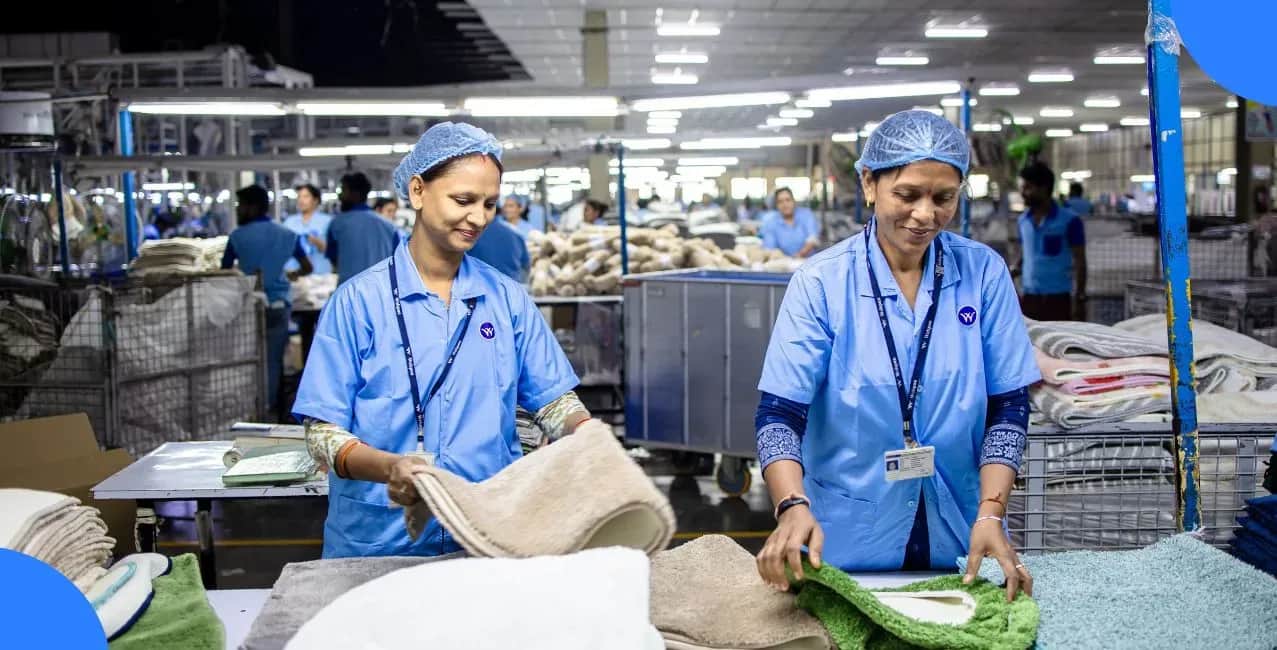
In relation to India’s textile labor force, the target is all about increasing the production level through cities such as Ludhiana, Tiruppur, Surat, and Bhadohi. According to Textile Secretary Neelam Shami Rao, India’s fibre production stands at 15 million metric tonnes. This needs to increase to around 23 million metric tonnes to achieve this target. This will be enabled by the National Fibre Mission. Minister Singh also brought out another structural problem where India’s production meets only about 8 months of worldwide garment production because of summer wearings.
This scale-up will demand stronger working-capital management for exporters. LoansJagat documents a real case from Tiruppur, where textile business owner Amit handles daily transactions of ₹1,50,000 received and ₹75,000 paid, alongside multiple ₹30,000 expense entries, a volume that required him to switch from a regular savings account to a dedicated current account. As export volumes rise toward the $100 billion target, more MSME exporters across hubs like Tiruppur will likely need similar high-transaction banking solutions to keep pace.
*T&C Apply
Commerce Secretary Rajesh Agrawal led a special session focused on leveraging recently concluded FTAs to boost textile exports. Industry representatives recommended adopting digital product passports, building textile recycling ecosystems, and simplifying compliance norms specifically for MSMEs.
Secretary Rao said the discussions marked “a transition from dialogue to action,” with recommendations from states, districts, and Export Promotion Councils set to shape the final roadmap. The Ministry also pointed to over 500 awareness workshops already conducted on trade agreements, alongside the revived “Districts as Export Hubs” programme as practical tools to close the implementation gap at the ground level.
India's textile sector now has a clear, district-anchored roadmap to nearly triple exports to $100 billion by 2030. With sustainability compliance and FTA utilisation as the 2 stated pillars, execution at the state and district level will determine whether this ambitious target becomes reality by 2030-31.
Why have India's textile exports been falling despite being one of the world's largest producers?
India's textile and garment exports fell 2.2% to $35.8 billion in FY26, per GTRI data. Cotton textiles dropped 3.9%, carpets fell 5.3%, and ready-made garments declined 1.4%. GTRI founder Ajay Srivastava noted India is earning fewer dollars globally, with apparent growth driven by rupee depreciation, not real competitiveness.
Can India really double its textile exports from $35.8B to $70B in the next 3 years?
Hard to see, as April textile exports alone saw an 11.66% jump year-on-year while the sector's overall percentage share of India’s total merchandise exports declined from 8.36 to 8.10 percent in FY26. India's rivals like Bangladesh, Vietnam, Turkey, and others are steadily taking away market share with cheaper products and quicker shipping timelines.









.png&w=3840&q=75)



