
By continuing, you agree to LoansJagat's Credit Report Terms of Use, Terms and Conditions, Privacy Policy, and authorize contact via Call, SMS, Email, or WhatsApp
Disclaimer: The information published on LoansJagat is intended for general informational and educational purposes only and should not be considered financial, legal, or investment advice. Interest rates, loan terms, statistics, and other data may change over time and may vary by lender or source. Please verify the latest information and consult a qualified financial advisor or the respective Bank/NBFC before making any financial decisions.
Subscribe Now
About the author

LoansJagat Team
‘Simplify Finance for Everyone.’ This is the common goal of our team, as we try to explain any topic with relatable examples. From personal to business finance, managing EMIs to becoming debt-free, we do extensive research on each and every parameter, so you don’t have to. Scroll up and have a look at what 15+ years of experience in the BFSI sector looks like.
Related News
Simplify All Your Loans Into One Affordable EMI

Customers Served

Debt Consolidated

1200+ Reviews

Locations in India
Club all Loans & Credit Card Bills into Single EMI

Quick Apply Loan
Consolidate your debts into one easy EMI.

Takes less than 2 minutes. No paperwork.

10 Lakhs+
Trusted Customers

2000 Cr+
Loans Disbursed

4.7/5
Google Reviews

50+
Banks & NBFCs Offers
Other services mentioned in this article
India’s ITR filings have crossed 9.2 crore, but taxpayers still do more return-checking work than peers in Singapore, the UK, and Japan.
Key Highlights
India’s income tax return filing system is under fresh attention because the number of returns has grown sharply, while the taxpayer’s workload has not reduced at the same speed. As per the Press Information Bureau, income tax returns filed increased from 6.9 crore in FY22 to 9.2 crore in FY25. The release went live on 29 January 2026 as part of the Economic Survey 2025-26 highlights.
The story involves India’s Income Tax Department, ordinary taxpayers, employers, banks, tax professionals, and global tax agencies in Singapore, the US, the UK, and Japan. The effect is immediate during filing season. A small mismatch in salary, TDS, bank interest, or capital gains can delay filing or refund. In the longer run, regular ITR filing helps Indians build formal income records for loans, visas, and financial checks. That benefit is real. The pain is real too.
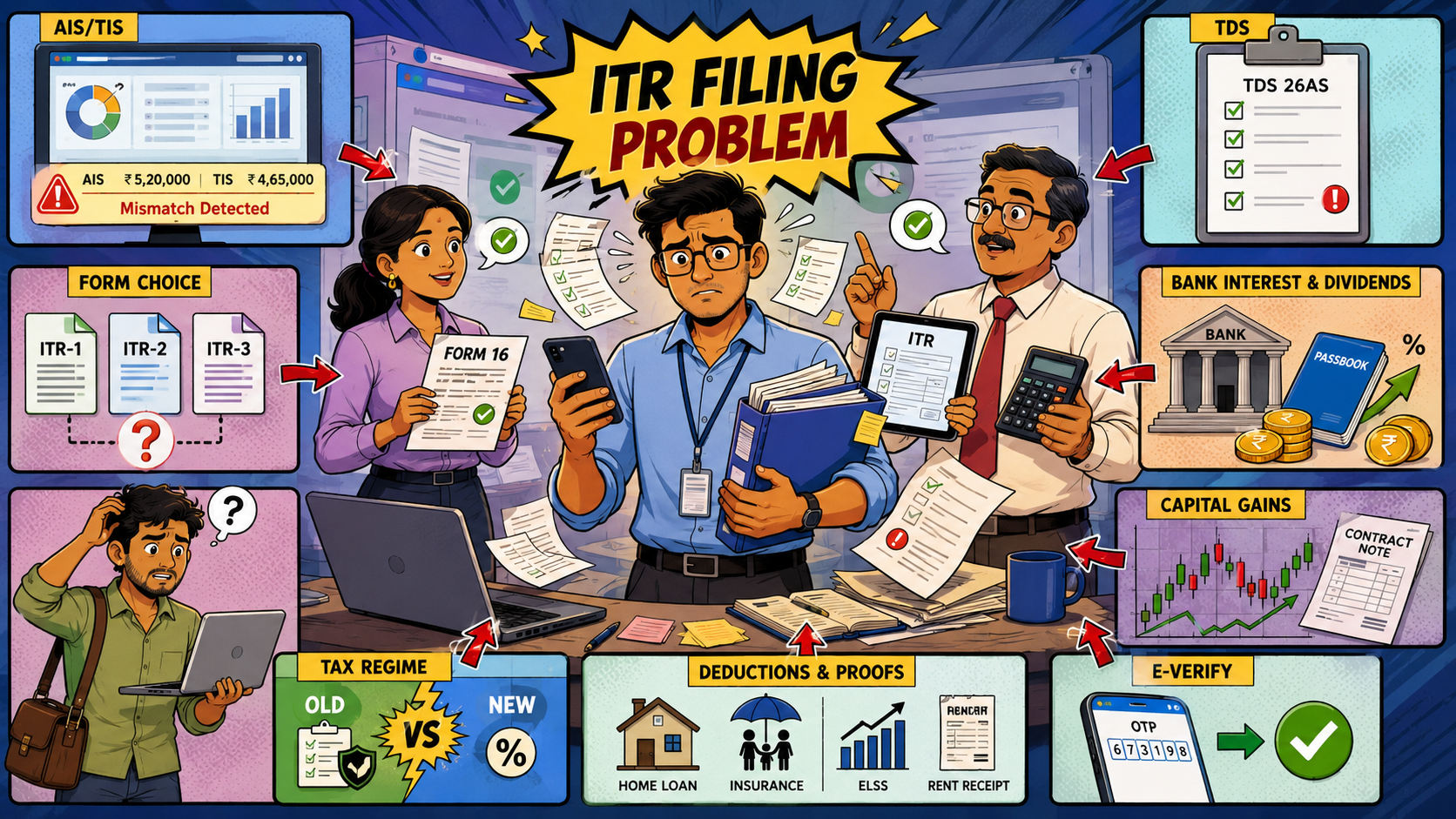
India has already moved tax filing online. Salaried taxpayers can log in, see pre-filled details, check AIS, submit the return, and verify it digitally. The process is faster than the old paper route. Still, the taxpayer remains the final checker.
This is where India looks different from Singapore, the UK, and Japan. In India, a person must check Form 16, Annual Information Statement, Taxpayer Information Summary, bank interest, dividend income, rent, capital gains, deductions, and tax regime choice before filing. According to the Income Tax Department, AIS gives a comprehensive view of taxpayer information and allows feedback on entries shown before return filing.
That helps accuracy, but it also shifts work to the taxpayer. A first-time filer may not know whether ITR-1 is enough. A salaried person with share sales may need ITR-2. A freelancer may need ITR-3 or ITR-4, depending on income type. The portal may guide the user, but the taxpayer still carries the risk of wrong selection.
Before looking at the table, one point needs care. This comparison is not about tax rates. It is about how much work a normal person must do to complete a tax return.
The table shows the real filing gap. India has tax data, but taxpayers still spend time checking it. Singapore and Japan reduce routine filing work for many wage earners before the deadline stage.
For the masses in India, the positive side is strong. A person with regular ITRs has better income documentation. Banks, NBFCs, visa offices, and property owners often ask for ITRs as proof of income. A taxpayer who files every year also has a cleaner financial trail when applying for a home loan, personal loan or business loan.
The LoansJagat ITR filing guide explains that taxpayers usually begin by visiting the official e-filing portal, logging in with PAN, selecting the filing section, choosing the assessment year and picking the taxpayer category. This borrower angle is important. ITR filing is no longer only a tax task. It also affects whether a borrower can show stable income, timely compliance and repayment capacity.
The pressure falls hardest on people with small but multiple income sources. A salaried employee may earn bank interest from 3 accounts, small dividends, mutual fund gains and rent from a second house. None of these is unusual now. Yet every extra income line adds one more check before filing.
*T&C Apply
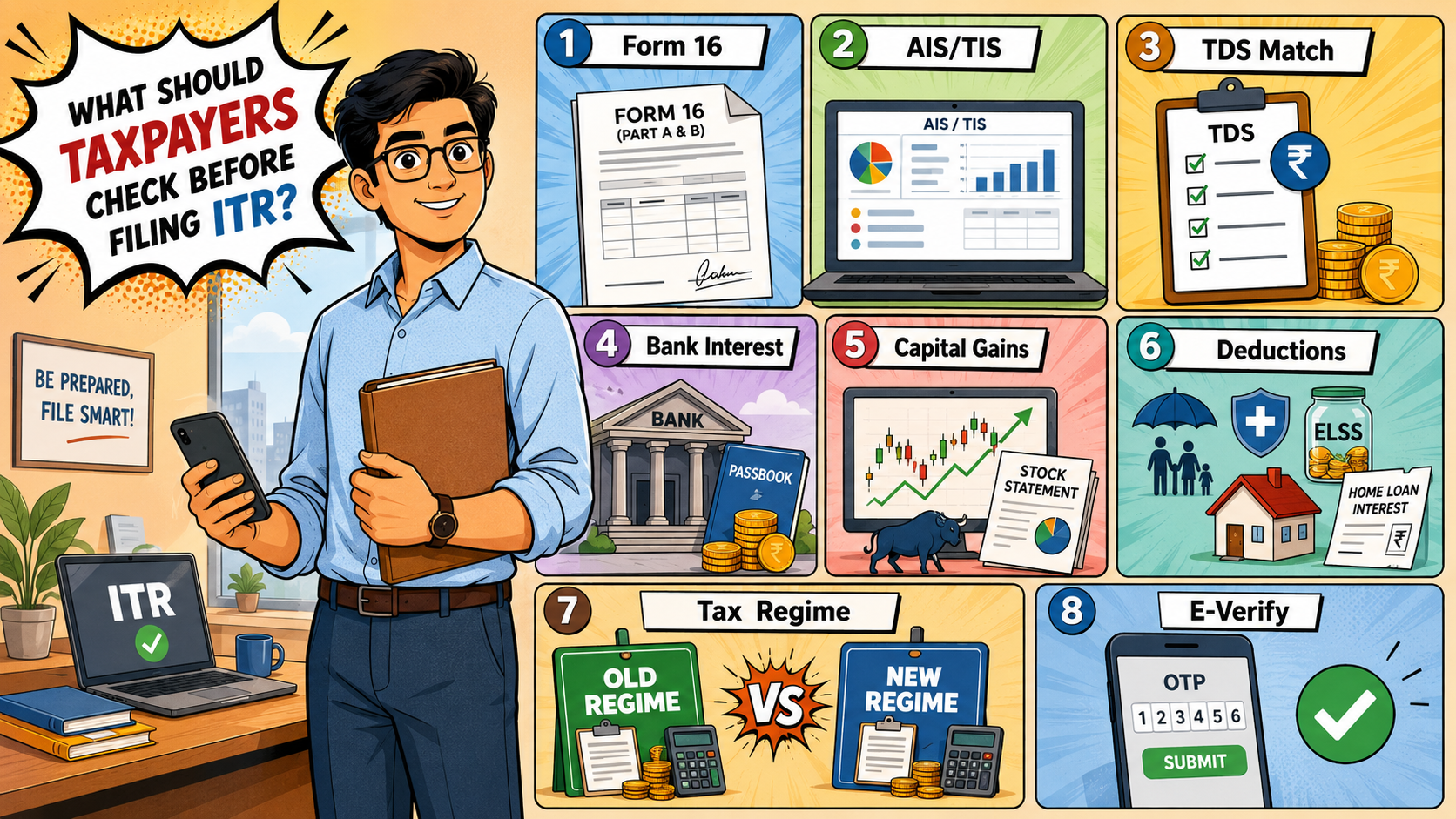
Taxpayers should first match Form 16 with the salary details shown on the portal. TDS should match employer records. Bank interest must not be ignored, even when banks already reported it. Capital gains statements from brokers or mutual fund platforms should be compared before the final return goes in.
E-verification also needs attention. Filing the return is only one part of the job. The return must be verified within the allowed time through Aadhaar OTP, net banking, electronic verification code or other accepted routes. Many taxpayers finish filing and forget this final step. That mistake can create trouble later.
Tax professionals have a simple view of the next reform. India should make filing lighter for low-risk salaried taxpayers. A person with one employer, no capital gains, no business income and no foreigner should face the same level of form-checking anxiety as a taxpayer with multiple income streams.
The solution is not blind automation. India has too many income types and informal-to-formal transitions for that. Better design can still help. The portal can show stronger warnings when AIS and Form 16 do not match. It can explain ITR form choice in simpler language. It can alert taxpayers about common misses such as savings interest, fixed deposit interest, dividend income, and capital gains before final submission.
Singapore’s model gives one useful lesson. When employer data and tax authority data are strong, many individuals do not need to file a full return. India may not reach that stage quickly, but it can create a lighter route for simple salaried taxpayers. That would reduce paid filing dependence and deadline panic.
The earlier development was India’s move from basic tax credit viewing to a fuller information statement. Form 26AS earlier played a bigger role in showing TDS and tax payment details. Now AIS and TIS offer a wider taxpayer view. That change improved transparency but also increased the number of entries people must check.
Another important shift came through digital verification. Aadhaar OTP and other e-verification options helped taxpayers avoid physical ITR-V submission in many cases. Refund tracking also became easier. Still, portal delays, wrong third-party reporting and confusion around ITR forms continue to affect ordinary users during deadline weeks.
The Income Tax Department says AIS gives taxpayers a comprehensive view of information before filing and allows feedback on entries. That shows the government’s focus on data-backed filing.
Singapore’s tax authority has taken a different approach for many individuals through the No-Filing Service and direct tax bills. That model works when employer and taxpayer data reach the tax department early and accurately.
For borrowers, the link between ITR and credit access is getting stronger. A filed return can support income proof for salaried and self-employed applicants. Lenders still check bank statements, bureau scores and repayment history, but ITRs add weight when the income profile is not fully salary-based.
India’s ITR filing system has improved fast, and the jump to 9.2 crore returns in FY25 shows that more citizens now enter the formal tax record. That helps the government, lenders and taxpayers.
The gap is in daily user effort. India has digitised filing, but Singapore and Japan have reduced routine filing work for many wage earners. The UK also keeps many employees inside PAYE. The next step for India should be easier filing for simple salaried taxpayers, faster correction of AIS errors and fewer doubts around ITR form selection. That would make tax compliance less stressful without weakening the system.
What Happened In India’s ITR Filing System?
India’s income tax return filings increased to 9.2 crore in FY25, showing wider digital tax participation.
Why Is India Being Compared With Singapore, US, UK And Japan?
The comparison shows how much return-filing work ordinary taxpayers handle across major economies.
How Does ITR Filing Help Indian Borrowers?
ITR filing helps borrowers show income proof, tax compliance and repayment ability during loan checks.
Why Does Singapore Have Easier Filing For Many Taxpayers?
Singapore uses employer data, no-filing services, and direct tax bills for many individual taxpayers.
What Should Indian Taxpayers Check Before Filing?
Taxpayers should check Form 16, AIS, TDS, bank interest, capital gains and e-verification status.









.png&w=3840&q=75)



