By continuing, you agree to LoansJagat's Credit Report Terms of Use, Terms and Conditions, Privacy Policy, and authorize contact via Call, SMS, Email, or WhatsApp
Disclaimer: The information published on LoansJagat is intended for general informational and educational purposes only and should not be considered financial, legal, or investment advice. Interest rates, loan terms, statistics, and other data may change over time and may vary by lender or source. Please verify the latest information and consult a qualified financial advisor or the respective Bank/NBFC before making any financial decisions.
Subscribe Now
About the author

LoansJagat Team
‘Simplify Finance for Everyone.’ This is the common goal of our team, as we try to explain any topic with relatable examples. From personal to business finance, managing EMIs to becoming debt-free, we do extensive research on each and every parameter, so you don’t have to. Scroll up and have a look at what 15+ years of experience in the BFSI sector looks like.
Related News
Simplify All Your Loans Into One Affordable EMI

Customers Served

Debt Consolidated

1200+ Reviews

Locations in India
Club all Loans & Credit Card Bills into Single EMI

Quick Apply Loan
Consolidate your debts into one easy EMI.

Takes less than 2 minutes. No paperwork.

10 Lakhs+
Trusted Customers

2000 Cr+
Loans Disbursed

4.7/5
Google Reviews

50+
Banks & NBFCs Offers
Other services mentioned in this article
For FY26, India registered GDP growth of 7.7%, driven by both investment and the services sector. Rising oil prices and declining global demand pose substantial risks for FY27.
Key Highlights
While addressing the BJP's Viksit Bharat event in Bengaluru, Finance Minister Nirmala Sitharaman, stated that India was the fastest growing major economy. This was in reference to the MoSPI data of June 5, reporting India's FY26 GDP recorded a growth of 7.7% and a growth of 7.8% in the January-March quarter.
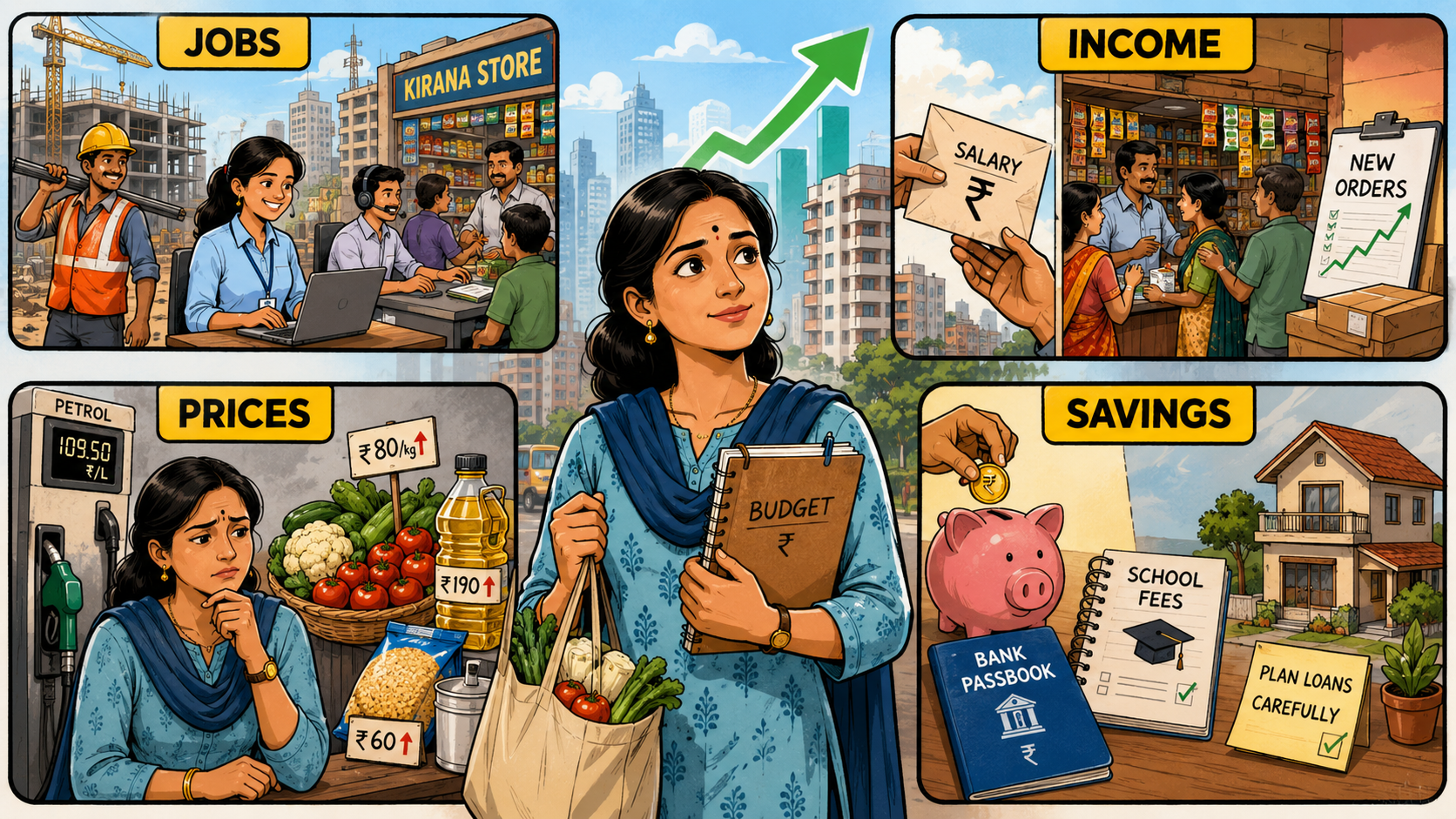
For families, the headline offers some good news. Stronger factory output, construction and services can support hiring. But crude oil prices remain a concern. A lasting rise in fuel costs can make transport, food, fertiliser and manufactured goods more expensive.
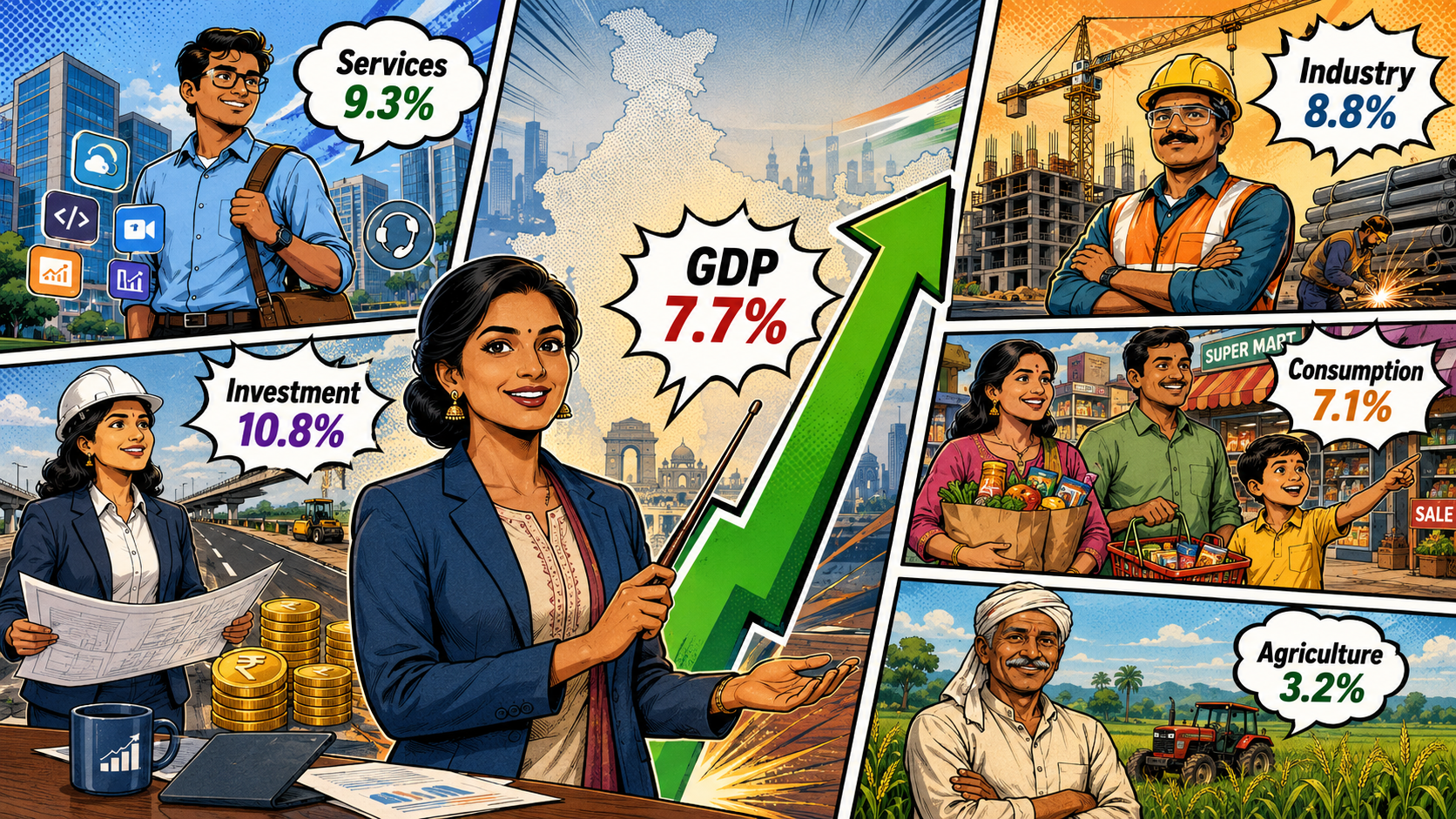
The official figures point to broad activity outside agriculture. Real GDP reached ₹323.12 lakh crore, while nominal GDP stood at ₹346.36 lakh crore.
Secondary-sector output rose 8.8%. Tertiary activities grew 9.3%, while the primary sector expanded at a slower 3.2%. That gap shows where the year’s growth came from: factories, building activity, trade and services.
In Q4, investments increased by 10.8% and private consumption by 7.1%. More roads, housing, warehouses and factories result in more complex jobs, from engineering to driving and low-skilled labor.
This growth does not benefit all households equally right away. A household that pays more for cooking gas and groceries does not feel any richer just because India's GDP grows. Regular job and wage growth is the key metric.
7.9%
*T&C Apply
The current-account swing also gives India some protection against overseas shocks. Services exports and remittances helped cover part of the merchandise trade gap.
The IMF World Economic Outlook published on April 14, 2026 projected India’s 2026 growth at 6.5%, against 3.7% for China. Its global estimate stood at 3.1%.
Economic theorist V. Anantha Nageswaran, stated that in FY27 growth would be at 7% - 7.4%. This was reported by The Economic Times. This is now dependent of oil prices, private investments and global trade.
For borrowers, increased GDP growth can raise employment and credit demand but won't necessarily lower EMIs. Households must still evaluate costs, maintain reserve savings, and avoid overcommitting to monthly repayments.
By the end of FY26, India experienced sustained growth in investment, industry, and services. FY27 will allow assessment of the impact of these gains in the form of new sustained employment, improved wages, and reduced stress on household budgets.
What is the GDP growth rate for FY26?
The growth rate in real GDP was 7.7% compared to the prior fiscal year’s (FY25) 7.1%.
What was the growth rate for India for Q4 FY26?
7.8% for the period January–March 2026
Will Higher Rate of GDP Affect Interest Rates?
Not directly. Lending rates depend on funding costs, bank policies and the borrower’s credit profile.
Is India Really The World’s Fastest-Growing Major Economy In 2026?
Yes, India’s growth rate remains higher than most large economies, according to IMF projections.
What does India’s 7.7% GDP growth mean for ordinary people?
It may bring more jobs and business activity, though household gains will differ across regions.









.png&w=3840&q=75)



