
By continuing, you agree to LoansJagat's Credit Report Terms of Use, Terms and Conditions, Privacy Policy, and authorize contact via Call, SMS, Email, or WhatsApp
Disclaimer: The information published on LoansJagat is intended for general informational and educational purposes only and should not be considered financial, legal, or investment advice. Interest rates, loan terms, statistics, and other data may change over time and may vary by lender or source. Please verify the latest information and consult a qualified financial advisor or the respective Bank/NBFC before making any financial decisions.
Subscribe Now
About the author

LoansJagat Team
‘Simplify Finance for Everyone.’ This is the common goal of our team, as we try to explain any topic with relatable examples. From personal to business finance, managing EMIs to becoming debt-free, we do extensive research on each and every parameter, so you don’t have to. Scroll up and have a look at what 15+ years of experience in the BFSI sector looks like.
Related News
Simplify All Your Loans Into One Affordable EMI

Customers Served

Debt Consolidated

1200+ Reviews

Locations in India
Club all Loans & Credit Card Bills into Single EMI

Quick Apply Loan
Consolidate your debts into one easy EMI.

Takes less than 2 minutes. No paperwork.

10 Lakhs+
Trusted Customers

2000 Cr+
Loans Disbursed

4.7/5
Google Reviews

50+
Banks & NBFCs Offers
Other services mentioned in this article
FY26 was a troublesome year for the projection of India's foreign debt, as it left corporations vulnerable to currency changes. However, relatively longer debt tenors and reduced debt service provided protection to some extent.
Key Highlights
According to Moneycontrol, India's external debt was $762.8 billion at the end of March 2026, and the debt-to-GDP ratio rose to 20.8% (19.8% the previous year). The Economic Times also noted the annual increase was $26.3 billion.
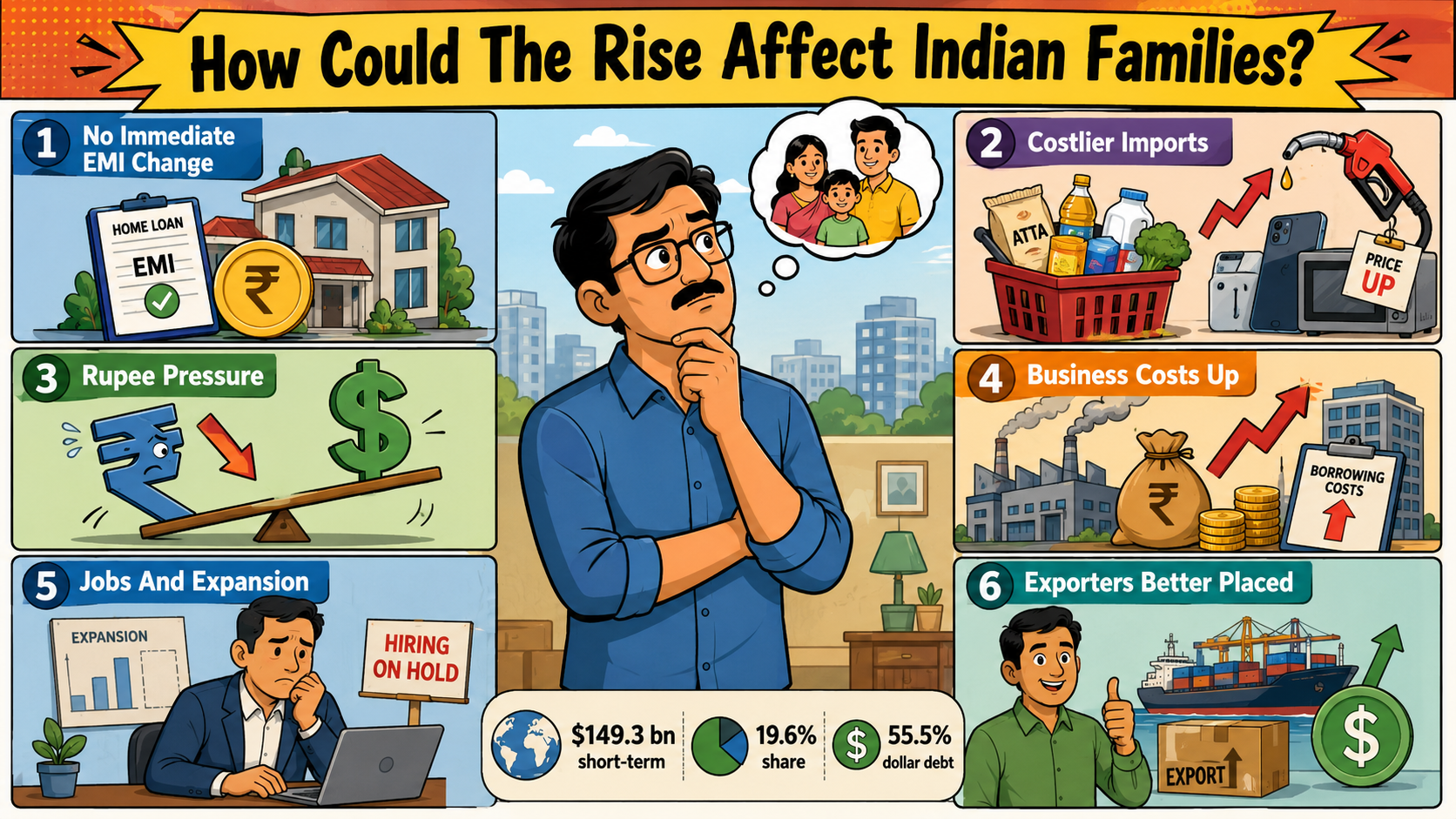
The increase in external debt will not lead to a change in household EMIs immediately, and the effect will be felt in a different way. Rupee depreciation means increased costs to service external debt for Indian firms. The high cost of external debt may also mean that firms delay expansion, hiring and capital investment. Some firms in sectors that rely on imports may pass on the cost to customers.
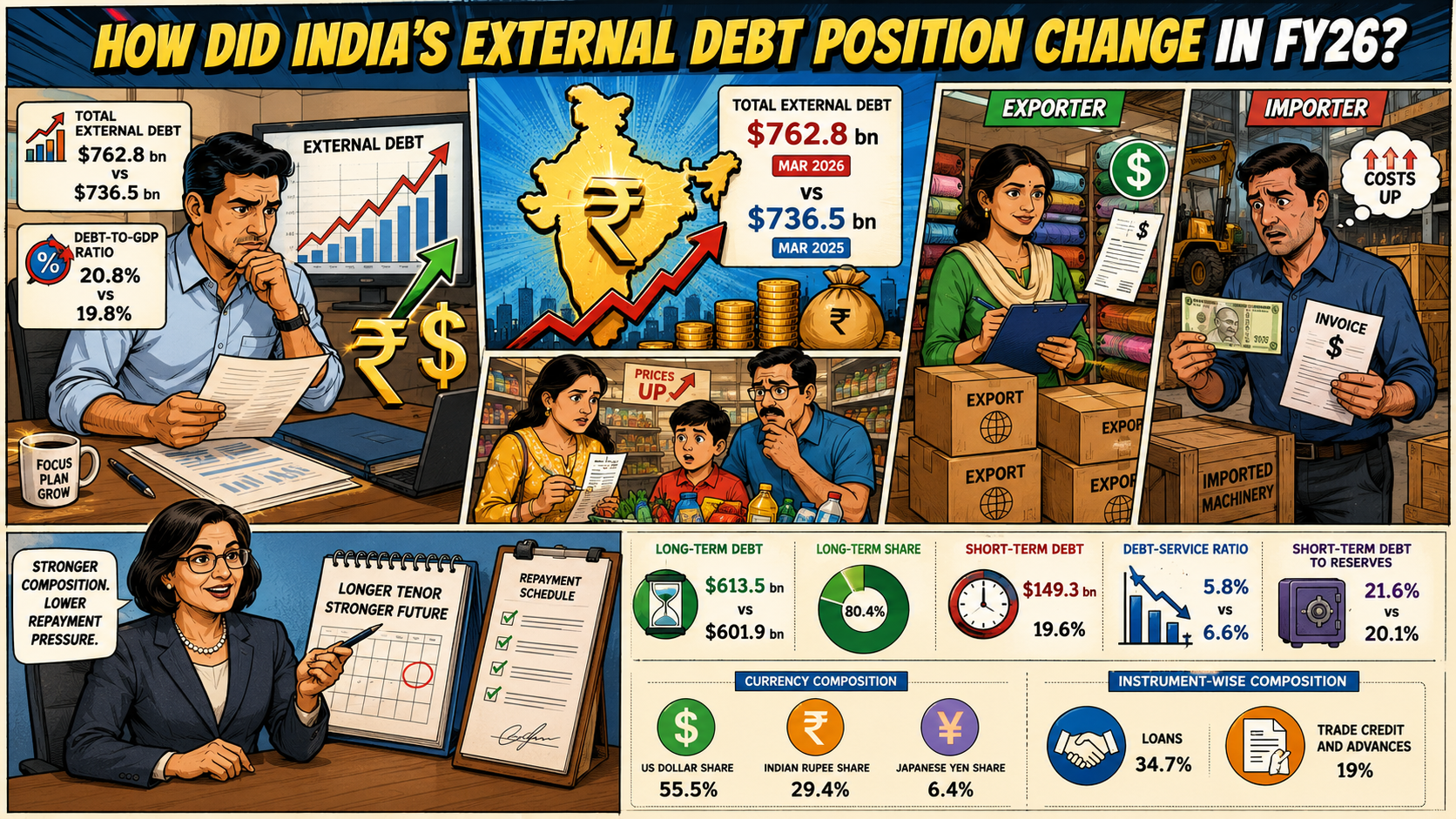
Compared to the previous year, external debt increased, but the burden to repay that debt compared to export earnings is lower.
Long-term debt still accounted for 80.4% of the total. This gives banks and businesses more time to arrange repayments instead of facing the entire bill within a few months.
Short-term external debt was nearly $149.3 billion, or 19.6% of total debt, compared with 18.3% in March 2025. Moneycontrol reported that its ratio to foreign exchange reserves also increased to 21.6% from 20.1%.
A textile exporter with a dollar loan may earn dollars and repay without a large currency gap. A domestic airline or machinery importer faces a tougher calculation because much of its income arrives in rupees. Hedging can reduce the hit, though it carries a cost.
Currency exposure remains heavily tilted towards the US dollar.
20.8%
*T&C Apply
6.4%
Government external debt declined during the year, while non-government debt increased. Companies, banks and other institutions therefore drove much of the rise.
India’s debt had already reached $765.5 billion in December 2025, equal to 20.4% of GDP. Data carried by TradingView showed that the total later fell by about $2.7 billion by March 2026, even as the GDP ratio moved higher.
A Reuters report published on February 6, 2026 said India’s foreign exchange reserves had touched $723.8 billion, enough for more than 11 months of merchandise imports. Governor Sanjay Malhotra said India could meet its external financing requirements comfortably.
According to LoansJagat, for borrowers, the response is less dramatic. Companies can increase hedging and avoid short repayment schedules. Households should compare interest rates, processing charges and foreclosure terms through platforms such as LoansJagat instead of linking every change in foreign debt to an immediate EMI increase.
India carries more external debt than it did a year ago, with short-term and dollar liabilities requiring closer tracking. Lower servicing costs and a large long-term share still provide some protection.
How much of the debt was short-term?
About $149.3 billion, representing 19.6% of India’s total external debt.
Will personal loan EMIs rise immediately?
No direct change follows from this data. Currency weakness and funding costs could influence future loan pricing.
Why does dollar-denominated debt matter?
The US dollar accounts for 55.5% of the debt. An even weaker rupee can increase the costs associated with repayment.
Why do India, China, and Russia have a lower debt-to-GDP ratio compared to the US and Europe?
Public borrowing is less common in these nations. There are also variances in government expenditure and taxation, along with domestic savings, the currency composition, and borrowing policies.
How is India’s increasing external debt likely to impact GDP?
The rupee may be under more pressure, and there may be insufficient investment, due to higher external debt and escalating repayment costs. Productive borrowing in developing sectors and large infrastructure in these sectors may help trigger growth in trade and business and overall GDP.









.png&w=3840&q=75)



