By continuing, you agree to LoansJagat's Credit Report Terms of Use, Terms and Conditions, Privacy Policy, and authorize contact via Call, SMS, Email, or WhatsApp
Disclaimer: The information published on LoansJagat is intended for general informational and educational purposes only and should not be considered financial, legal, or investment advice. Interest rates, loan terms, statistics, and other data may change over time and may vary by lender or source. Please verify the latest information and consult a qualified financial advisor or the respective Bank/NBFC before making any financial decisions.
Subscribe Now
About the author

LoansJagat Team
‘Simplify Finance for Everyone.’ This is the common goal of our team, as we try to explain any topic with relatable examples. From personal to business finance, managing EMIs to becoming debt-free, we do extensive research on each and every parameter, so you don’t have to. Scroll up and have a look at what 15+ years of experience in the BFSI sector looks like.
Related News
Simplify All Your Loans Into One Affordable EMI

Customers Served

Debt Consolidated

1200+ Reviews

Locations in India
Club all Loans & Credit Card Bills into Single EMI

Quick Apply Loan
Consolidate your debts into one easy EMI.

Takes less than 2 minutes. No paperwork.

10 Lakhs+
Trusted Customers

2000 Cr+
Loans Disbursed

4.7/5
Google Reviews

50+
Banks & NBFCs Offers
Other services mentioned in this article
Key Takeaways
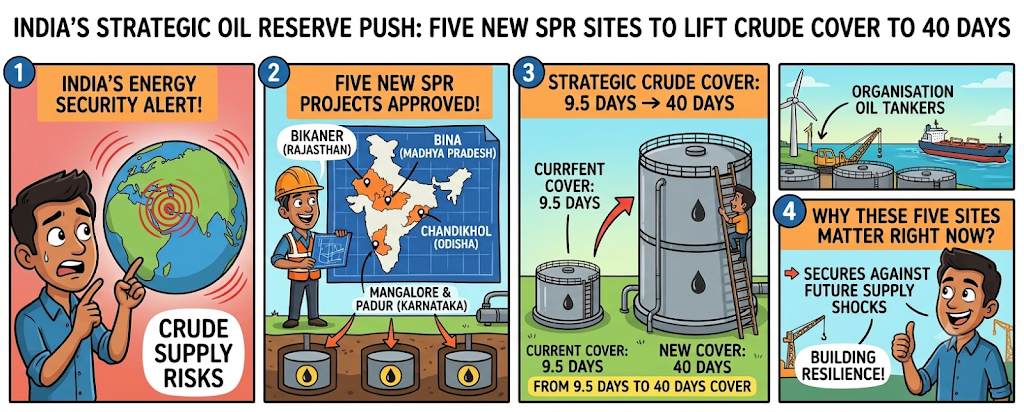
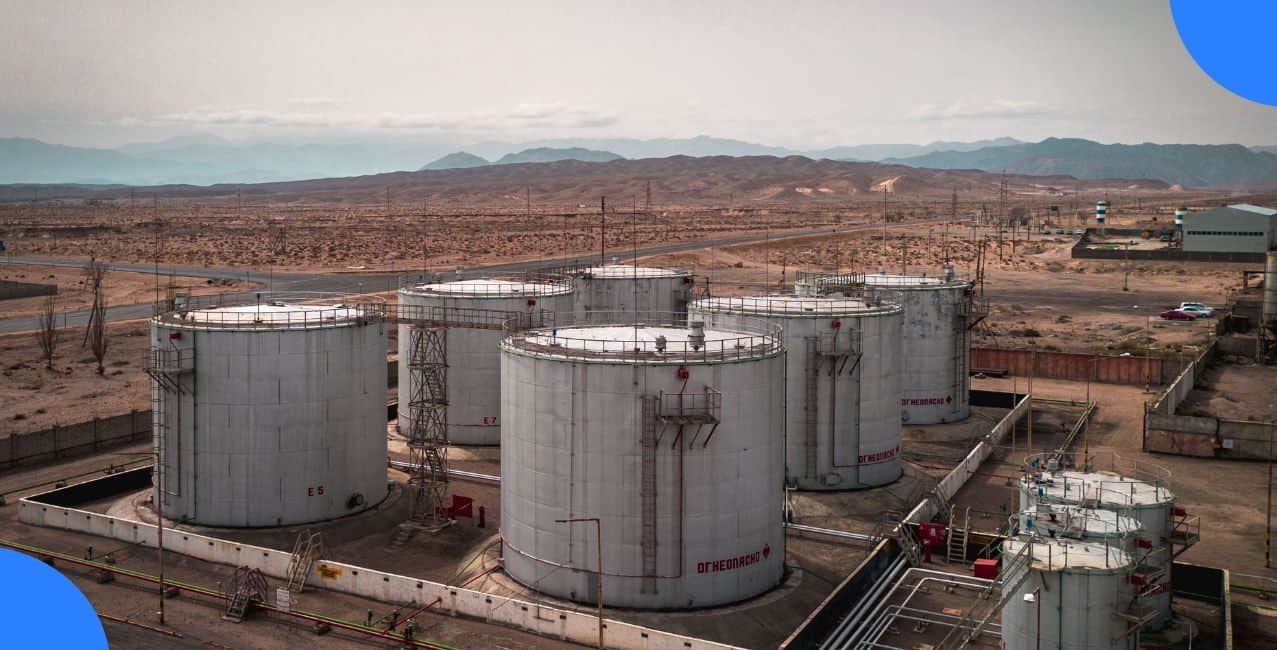
Indian authorities have sanctioned five more Strategic Petroleum Reserves in four states, sources said. These are Chandikhol in Odisha, Bina in Madhya Pradesh, Bikaner in Rajasthan, and Mangalore and Padur in Karnataka.
This move comes as a consequence of the crisis in West Asia that has been creating ripples in crude movement around the globe. The construction contract for Chandikhol is targeted for award by the end of FY27, officials said.
Once complete, these five projects could push India’s strategic crude storage cover to 40 days of consumption. That marks a fourfold jump from the current 9.5 days, India’s Petroleum and Natural Gas Ministry data shows.
Detailed feasibility reports for Bina and Bikaner will begin once approvals are secured, sources added. The expansion directly strengthens India’s energy security against future supply shocks.
For most Indian households, oil reserves rarely register as a daily concern, yet 85% of India's crude needs come from imports, per the Petroleum Planning and Analysis Cell. Any disruption in West Asia supply routes can spike pump prices within days. A 40-day buffer means the government gains more time to manage such shocks before retail fuel prices move.
There is a flip side. Building five new storage facilities requires land acquisition, capital expenditure and years of construction work. In terms of the immediate impact, the total cost may come to a lot of billions of rupees before the benefits accrue.
However, the advantages include the fact that stable prices for fuels protect transportation costs, EMI, and budget plans. LoansJagat noted that inflation-driven increases in everyday expenses have kept personal loan demand elevated in 2026, with many borrowers turning to credit for essential expenses and debt management. A more stable oil supply could gradually reduce such financial pressure on households.
*T&C Apply
Energy analysts have repeatedly flagged India’s thin reserve cushion compared to global peers. The International Energy Agency recommends member countries hold at least 90 days of net oil imports as reserves. India, not an IEA member, currently falls well short of this benchmark even after the planned expansion to 40 days.
Industry voices have called for faster execution rather than further delays in approvals. Sources close to the ministry indicate Chandikhol’s progress will set the pace for Bina and Bikaner timelines. The suggested solution is parallel processing of feasibility reports and faster land clearances across all five sites. This approach could compress what might otherwise be a decade-long rollout into a shorter execution window, officials believe.
India’s five-site SPR expansion marks its most ambitious energy security move since the original three-reserve network was built in 2018. The Chandikhol contract award, expected within FY27, will be the first real test of execution speed. With crude import dependence at 85%, per the Petroleum Planning and Analysis Cell, this buffer plan carries weight for India’s long-term fuel price stability.
Is India having strategic reserves of oil even before these five new facilities?
Yes. Currently, India has strategic reserves of petroleum at Visakhapatnam, Mangaluru, and Padur, offering 9.5 days of storage for crude oil. The five newly approved sites aim to increase this cover to 40 days.
They can help during global supply disruptions by giving the government more time to manage crude shortages. While fuel prices still depend on several factors, larger reserves can reduce the impact of sudden international oil supply shocks.









.png&w=3840&q=75)



