By continuing, you agree to LoansJagat's Credit Report Terms of Use, Terms and Conditions, Privacy Policy, and authorize contact via Call, SMS, Email, or WhatsApp
Disclaimer: The information published on LoansJagat is intended for general informational and educational purposes only and should not be considered financial, legal, or investment advice. Interest rates, loan terms, statistics, and other data may change over time and may vary by lender or source. Please verify the latest information and consult a qualified financial advisor or the respective Bank/NBFC before making any financial decisions.
Subscribe Now
About the author

LoansJagat Team
‘Simplify Finance for Everyone.’ This is the common goal of our team, as we try to explain any topic with relatable examples. From personal to business finance, managing EMIs to becoming debt-free, we do extensive research on each and every parameter, so you don’t have to. Scroll up and have a look at what 15+ years of experience in the BFSI sector looks like.
Related News
Simplify All Your Loans Into One Affordable EMI

Customers Served

Debt Consolidated

1200+ Reviews

Locations in India
Club all Loans & Credit Card Bills into Single EMI

Quick Apply Loan
Consolidate your debts into one easy EMI.

Takes less than 2 minutes. No paperwork.

10 Lakhs+
Trusted Customers

2000 Cr+
Loans Disbursed

4.7/5
Google Reviews

50+
Banks & NBFCs Offers
Other services mentioned in this article
The parliamentary review will examine whether India’s 7.7% growth can protect household spending, employment and business investment from trade disruption and expensive energy imports.
Key Highlights
According to The New Indian Express, dated June 21, 2026, as part of its 2025-26 agenda, Parliament’s Standing Committee on Finance will analyze the developments in India’s economy. A Lok Sabha bulletin documented the new issue.
The committee led by Bhartruhari Mahtab is expected to examine, among other issues, the growth of GDP, inflation, employment, the level of private investment and international trade, as well as the effects of external conflicts on the economy. It is timely for families. Increased crude oil prices will quickly trickle through to higher transport costs, food delivery and farm inputs, and companies may delay hiring as export orders weaken.
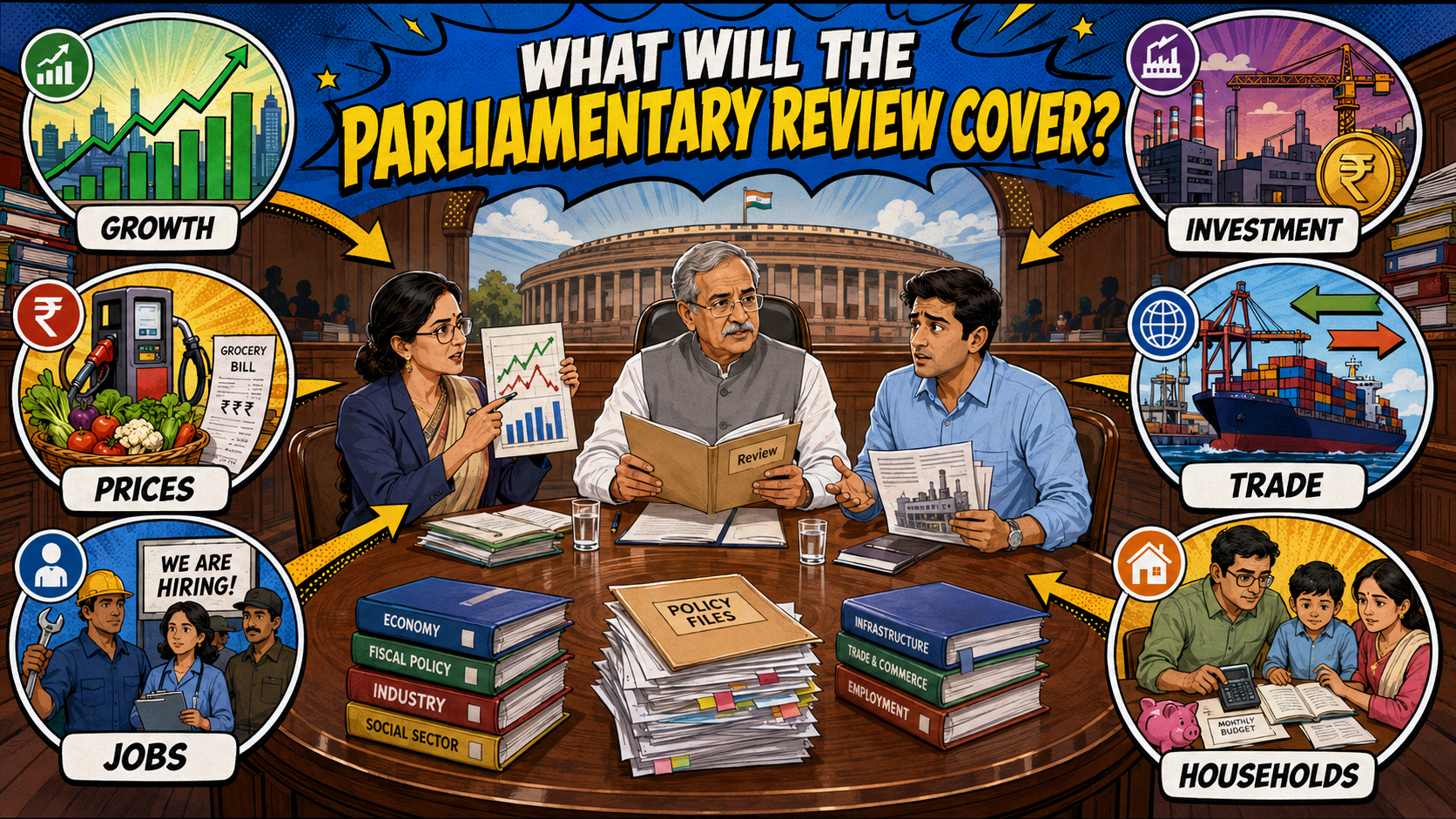
The committee can call representatives from the Finance Ministry, financial institutions, industry bodies and research organisations. After examining their submissions, it may recommend policy changes to Parliament.
India enters the review with strong headline growth figures. The position beneath those numbers is less even.
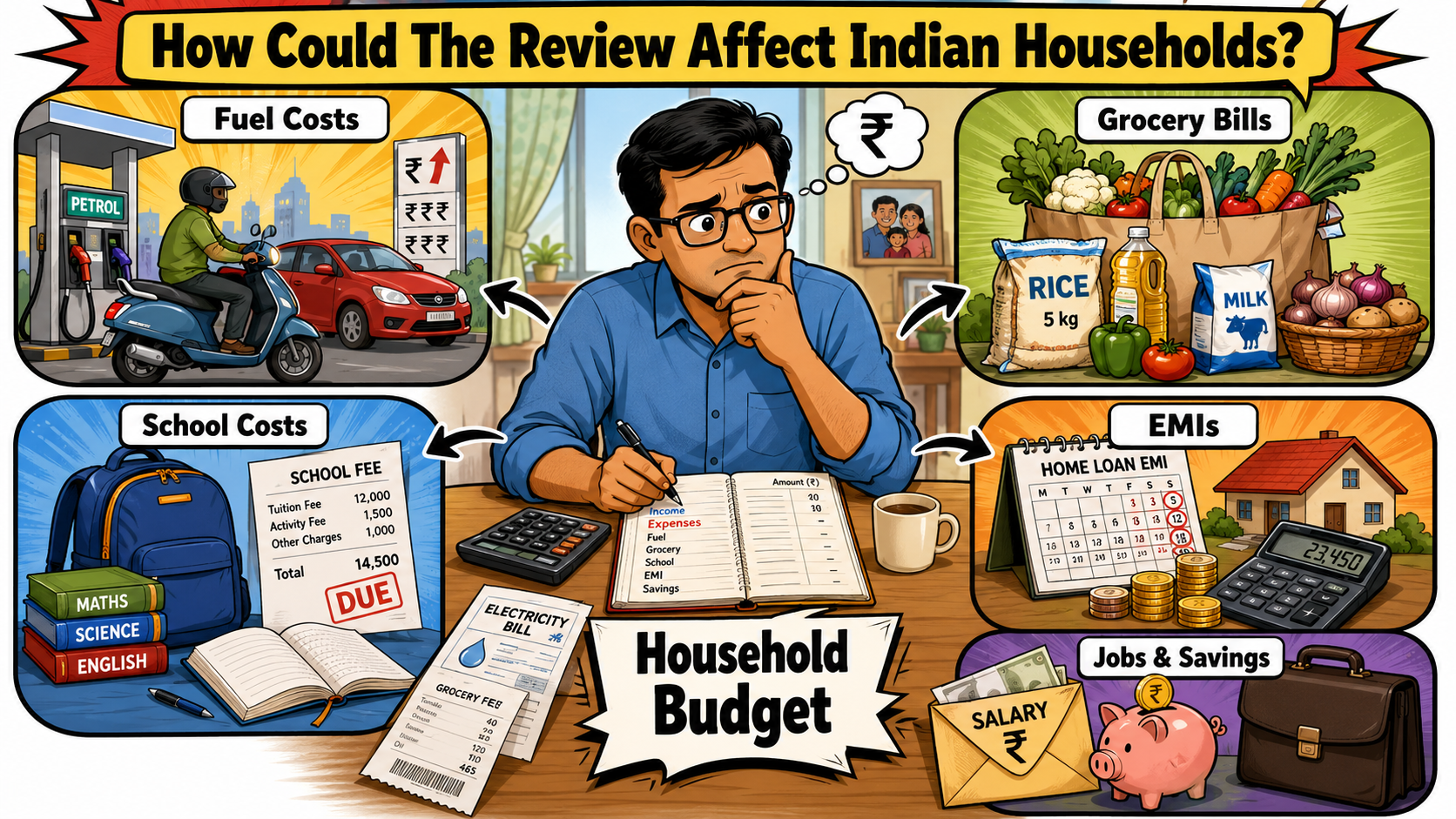
A 7.7% growth rate looks strong, but families do not experience GDP as a single number. They see petrol prices, monthly salaries, grocery bills and available jobs. The panel will need to examine those everyday outcomes alongside national output.
Policy recommendations from the committee are not binding. They can still shape later government decisions on taxes, spending, trade support and employment schemes.
For example, lower logistics costs could help a food company avoid increasing retail prices. Faster government payments may stop a small contractor from delaying wages. Stable rules can also persuade manufacturers to proceed with projects they had kept on hold.
The useful outcome would be targeted action rather than broad announcements. Freight relief, quicker MSME payments and support for job-producing industries would reach households faster.
After the June 4 meeting, Mahtab said India remained in a stronger position despite inflation, West Asia tensions, currency volatility and China-related trade pressures. He also pointed to private investment failing to keep pace with government capital expenditure.
Oxford Economics lead economist Alexandra Hermann Prasad told Reuters on June 5, 2026 that investment had offset a noticeable deterioration in private consumption.
GDP growth can remain high even as household budgets tighten. As LoansJagat reported on April 28, 2026, higher fuel, transport and grocery costs can leave families with less money for EMIs and emergency savings. The committee should therefore examine household cash flow, wage growth and repayment pressure alongside national output.
6.8%-7.2%
Imported goods and overseas payments become costlier
*T&C Apply
The committee's meeting on June 4, 2026 involved presentations by Economic Affairs Secretary Anuradha Thakur and Chief Economic Adviser V Anantha Nageswaran. Rupee, private investment, and geopolitical pressures and declining consumption were discussed by the members before the broader economic review was brought to the committee’s agenda.
The panel now has to look beyond national growth figures and examine what reaches families and employers. Jobs, wages, prices and private investment will provide the sharper test.
What was the projected growth rate for India in FY 2025-26?
India was projected to record a real GDP growth rate of 7.7%.
When was the new review subject reported?
The new review subject was reported in the Lok Sabha bulletin of June 21, 2026, in the New Indian Express.
Do the committee’s recommendations become law?
No, the recommendations may shape the debate and result in changes in the government’s future policies.
What is the reason for rapid economic growth failing to reduce unemployment in India?
The reason is that growth continues to be concentrated in a few sectors that are capital intensive, whereas manufacturing and services have the potential to offer stable employment but are not doing so.
Why do strong GDP numbers fail to reflect growth in all sectors of the economy in India?
Strong GDP numbers may coexist with stagnant wages, low consumer spending, and a lack of productive investment and job creation.
Related News Updates | ||









.png&w=3840&q=75)



