By continuing, you agree to LoansJagat's Credit Report Terms of Use, Terms and Conditions, Privacy Policy, and authorize contact via Call, SMS, Email, or WhatsApp
Disclaimer: The information published on LoansJagat is intended for general informational and educational purposes only and should not be considered financial, legal, or investment advice. Interest rates, loan terms, statistics, and other data may change over time and may vary by lender or source. Please verify the latest information and consult a qualified financial advisor or the respective Bank/NBFC before making any financial decisions.
Subscribe Now
About the author

Siddhanshi Sharma
Siddhanshi Sharma is a reader's writer, like there is a director's actor. She has trained herself to understand the reader's intent and their queries. With over 4+ years of experience in the content writing industry. Siddhanshi has authored many blogs and articles for several BFSI organisations. While you are reading this blog, she is probably reading her blogs to identify some more mistakes that she overlooked.
Related News
Simplify All Your Loans Into One Affordable EMI

Customers Served

Debt Consolidated

1200+ Reviews

Locations in India
Club all Loans & Credit Card Bills into Single EMI

Quick Apply Loan
Consolidate your debts into one easy EMI.

Takes less than 2 minutes. No paperwork.

10 Lakhs+
Trusted Customers

2000 Cr+
Loans Disbursed

4.7/5
Google Reviews

50+
Banks & NBFCs Offers
Other services mentioned in this article
Key Takeaways
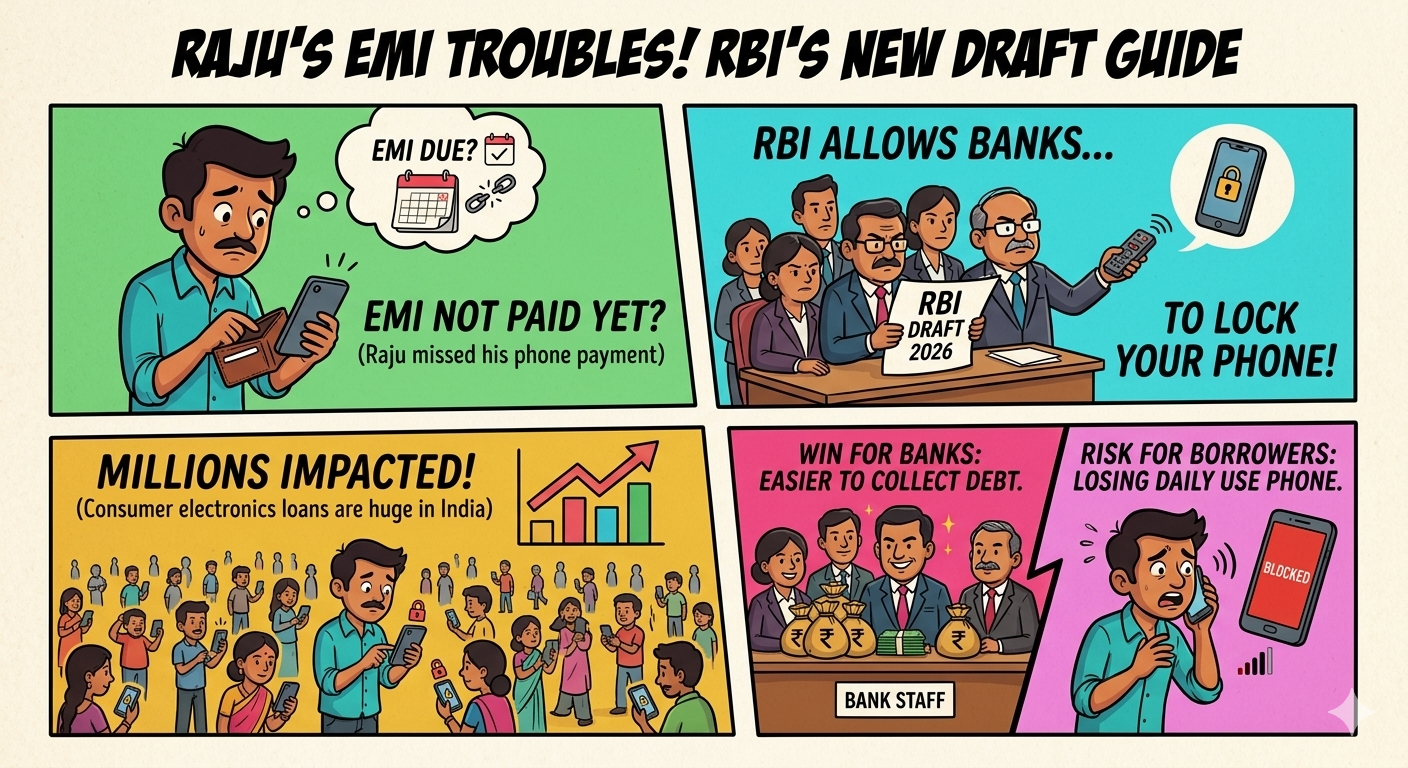
The RBI issued a draft named “Commercial Banks (Responsible Business Conduct) Amendment Directions, 2026,” which seeks permission for banks and NBFCs to remotely lock phones when the borrower fails to pay their debt due.
This move is expected to impact millions of Indians since over one-third of all consumer electronics, including smartphones, are purchased through small-ticket loans in India.
According to Home Credit Finance’s survey in 2024, a significant advantage in the short run will be the increased ability for financial institutions to collect on defaulted loans.
On the other hand, everyday borrowers will face the threat of losing their phones they use daily for personal or work purposes.
India boasts more than 1.16 billion mobile connections, and thus smartphones have become indispensable in the country’s day-to-day living. Losing partial phone accessibility means disrupting livelihood for low-income borrowers.
However, the RBI ensured borrowers’ rights with several safeguards:
*T&C Apply
Data privacy Banks would not be permitted to obtain any information from the borrower’s cell phone for loan recovery purposes.
In 2024, the RBI imposed restrictions on lenders using pre-installed device management applications to remotely lock smartphone functionality following widespread customer complaints of abuse and violations of privacy.
However, this decision has significantly raised NPAs in small-ticket consumer durable loans. The context explains why the RBI is now searching for balance.
An effective implementation of the idea may lead to advantages in the form of better loan recovery, extended access to lending, and possible lower interest rate.
Still, many experts warn about serious risks associated with locking people’s phones regarding privacy, livelihood, and misuse. The draft includes the definition of ‘Recovery Agencies’ and ‘Recovery Agents,’ and recovery agents must get certified.
The draft regulates an existing market practice, but it comes with severe implications for borrowers. The regulations seem tough, but at the heart of the matter, there lies a question about whether the lender shall be given the right to jeopardise a borrower’s livelihood. The draft norms are open to public comments till May 31, 2026.
Q1. Can banks lock my smartphone if I miss EMI payments?
Yes. Under RBI’s draft proposal, lenders may be allowed to remotely restrict some phone functions if a borrower fails to pay EMIs for more than 90 days. However, emergency calls, incoming calls, internet access, and government alerts cannot be blocked.
Q2. Will banks forgive a missed EMI automatically?
No. Missing a loan EMI does not mean the payment is forgiven. Banks usually send notices and may charge penalties or take recovery action if payments remain overdue for a long time.









.png&w=3840&q=75)



