By continuing, you agree to LoansJagat's Credit Report Terms of Use, Terms and Conditions, Privacy Policy, and authorize contact via Call, SMS, Email, or WhatsApp
Disclaimer: The information published on LoansJagat is intended for general informational and educational purposes only and should not be considered financial, legal, or investment advice. Interest rates, loan terms, statistics, and other data may change over time and may vary by lender or source. Please verify the latest information and consult a qualified financial advisor or the respective Bank/NBFC before making any financial decisions.
Subscribe Now
About the author

LoansJagat Team
‘Simplify Finance for Everyone.’ This is the common goal of our team, as we try to explain any topic with relatable examples. From personal to business finance, managing EMIs to becoming debt-free, we do extensive research on each and every parameter, so you don’t have to. Scroll up and have a look at what 15+ years of experience in the BFSI sector looks like.
Related News
Simplify All Your Loans Into One Affordable EMI

Customers Served

Debt Consolidated

1200+ Reviews

Locations in India
Club all Loans & Credit Card Bills into Single EMI

Quick Apply Loan
Consolidate your debts into one easy EMI.

Takes less than 2 minutes. No paperwork.

10 Lakhs+
Trusted Customers

2000 Cr+
Loans Disbursed

4.7/5
Google Reviews

50+
Banks & NBFCs Offers
Other services mentioned in this article
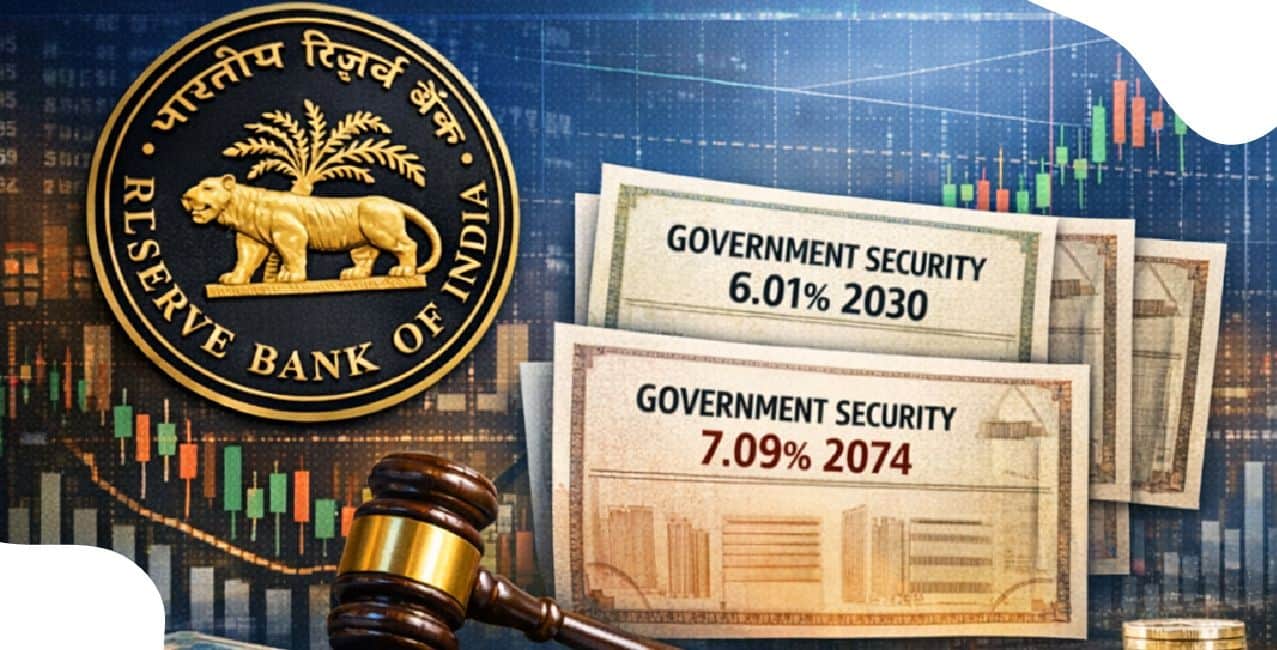
The Indian central bank is preparing to set an underwriting commission of 0.73 paisa per ₹100 for the next benchmark government bond auction as the government plans to raise at least ₹320 billion (around $3.48 billion) in fresh funds. This move comes as part of broader debt management ahead of the federal budget and reflects changing dynamics in India’s bond market.
An underwriting fee is a charge paid to financial intermediaries — usually primary dealers and banks — for agreeing to buy government securities in an auction if there is unsold supply. In simple terms, underwriters “guarantee” that the government’s borrowing target will be met even if investor demand slows down.
The fee is typically expressed as a small fraction of the value of securities underwritten. In this case, 0.73 paisa per ₹100 means that for every ₹100 worth of bonds a dealer may be committing to buy, they receive a payment of less than one rupee in fee.
Read More - RBI Floating Rate Bond At 8.05%
Underwriting fees matter because they reflect market confidence and cost pressures in the debt market. A higher fee generally signals weaker bid demand or greater risk perceived by market intermediaries, while a lower fee implies strong investor interest and less need for dealers to step in. Fees also become a small but direct cost for the government’s debt programme.
India is entering a period of heightened fiscal and borrowing activity. Official estimates show the federal government plans to borrow a record ₹17.2 trillion in the fiscal year 2026-27, underscoring the importance of smooth debt issuance.
Government bond markets have been under pressure recently. Yields on the 10-year paper have climbed, partly on weak rupee movements and pre-budget supply concerns. Investors, including banks and mutual funds, have been watching liquidity conditions closely ahead of auctions.
A lower expected underwriting fee like 0.73 paisa suggests that primary dealers believe there will be adequate demand at the auction without significant risk of devolvement — the situation where underwriters must step in and absorb unsold securities. In contrast, data on underwriting commissions in the previous fiscal year show the average rate dropped sharply to about 0.1 paisa per ₹100 as strong bidding and minimal devolvement pushed fees down.
This backdrop indicates that the market is more comfortable absorbing new issuance, reducing the pressure on underwriters.
For the government, keeping underwriting fees low helps keep the overall cost of borrowing down. Although the fee itself is modest, repeated use of higher underwriting commissions across large borrowing programmes can raise costs over time.
From a broader perspective, robust demand in government securities supports key financial conditions. It helps anchor longer-term yields, which influence lending rates, mortgage costs and corporate borrowing. If demand weakens and underwriting fees rise — signaling higher risk premiums — it could feed into wider credit conditions.
*T&C Apply
As the RBI formalises the underwriting fee for the upcoming bond sale, attention will shift to auction outcomes — including bid-to-cover ratios, yield levels, and dealer participation. These measures will offer deeper insights into how investors are positioning ahead of the Union Budget and in response to macroeconomic cues such as inflation, interest rate expectations, and currency stability.
If markets continue to show strong demand for government securities without heavy reliance on underwriting, it will signal confidence in India’s debt management strategy and financial stability framework. Conversely, rising fees could point to emerging pressures that warrant closer policy attention.









.png&w=3840&q=75)



