By continuing, you agree to LoansJagat's Credit Report Terms of Use, Terms and Conditions, Privacy Policy, and authorize contact via Call, SMS, Email, or WhatsApp
Disclaimer: The information published on LoansJagat is intended for general informational and educational purposes only and should not be considered financial, legal, or investment advice. Interest rates, loan terms, statistics, and other data may change over time and may vary by lender or source. Please verify the latest information and consult a qualified financial advisor or the respective Bank/NBFC before making any financial decisions.
Subscribe Now
About the author

LoansJagat Team
‘Simplify Finance for Everyone.’ This is the common goal of our team, as we try to explain any topic with relatable examples. From personal to business finance, managing EMIs to becoming debt-free, we do extensive research on each and every parameter, so you don’t have to. Scroll up and have a look at what 15+ years of experience in the BFSI sector looks like.
Related News
Simplify All Your Loans Into One Affordable EMI

Customers Served

Debt Consolidated

1200+ Reviews

Locations in India
Club all Loans & Credit Card Bills into Single EMI

Quick Apply Loan
Consolidate your debts into one easy EMI.

Takes less than 2 minutes. No paperwork.

10 Lakhs+
Trusted Customers

2000 Cr+
Loans Disbursed

4.7/5
Google Reviews

50+
Banks & NBFCs Offers
Other services mentioned in this article
Key Takeaways
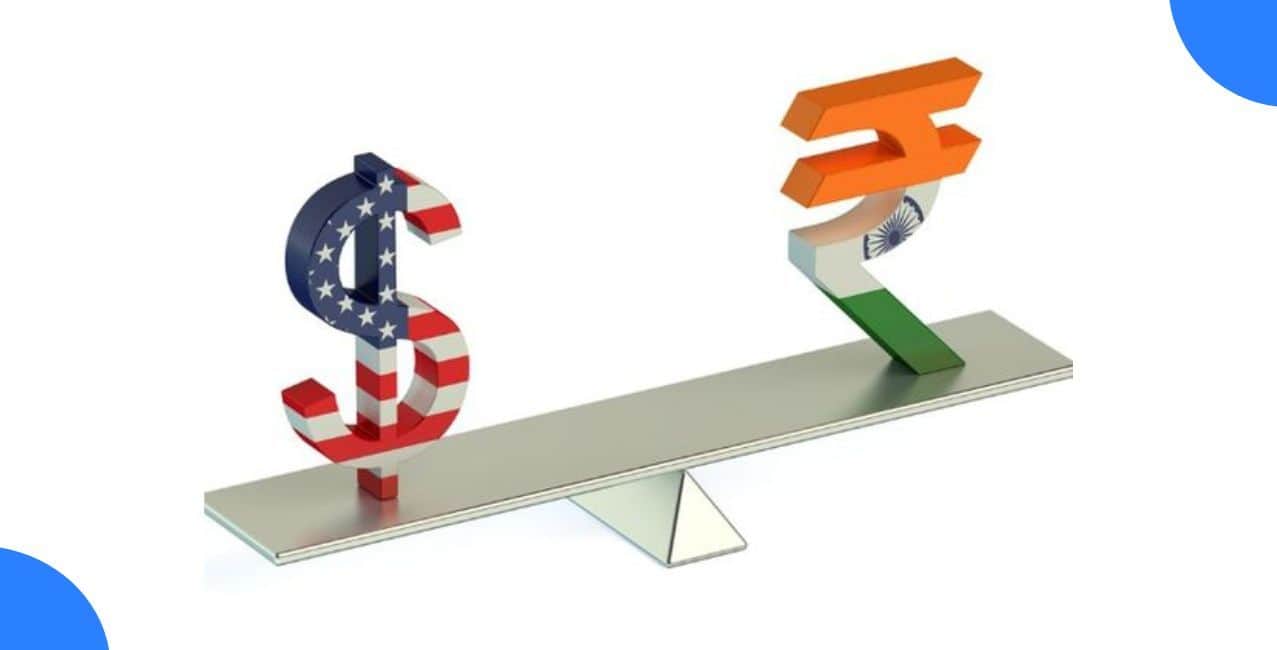
In the last 2 years, the central bank of India created 1 of the largest bearish dollar bets in the world for keeping the rupee weak. A short dollar forward position is merely an arrangement wherein the RBI will sell the US dollars in the future, thus not allowing the rupee to depreciate too much in the current times. The book has swelled to $11.4 billion in the month of May only because the RBI had increased its foreign interventions as the rupee nearly touched ₹97 against the US dollar in late May 2026.
From a total amount of $106.66 billion, the short forwards were worth $19.82 billion in 1-month contracts, $8.86 billion in 1 to 3 month contracts, $21.90 billion in 3 months to 1 year tenure, and $56.07 billion in over 1 year maturity. Short positions with over 1-year maturity have risen by $6 billion in the months of April-May.
This aggressive intervention by the RBI prevented the rupee from crashing. As of July 10, 2026, the rupee is currently being exchanged at around ₹94.68 per dollar, which is far better than the ₹97 rupees that it was hovering around in the last week of May. The stabilisation in the value of rupee means that the RBI can now afford to keep its rate policy unchanged.
LoansJagat documents exactly how rupee-linked rate pressures hit Indian households in practice. Raj, a 32-year-old IT professional from Pune, calculated that at 7.5% interest, his ₹50 lakh home loan EMI would be around
*T&C Apply
Rajeswari Sengupta, Associate Professor at Indira Gandhi Institute of Development Research, has noted that the RBI's forward book grew at a “remarkable” pace, “faster than even emerging-market central banks known for heavy FX intervention.” She told Bloomberg, “A prolonged holding of such a large book raises questions about cost and sustainability.” The risk of moving too fast is real. If the RBI unwinds too quickly, it removes a key support pillar for the rupee before fresh inflows from FCNR(B) deposits and FPI bond flows can stabilise the currency independently.
The RBI's strategy, as explained by Ayan Majumdar at Ayan Majumdar's Substack, is to "shift the burden of dollar demand from the present to the future," buying time for the Indian economy to regain competitiveness and for foreign capital inflows to organically absorb the demand. In March 2026, at the crisis peak, the RBI sold over $15 billion directly from spot reserves in 3 weeks and added $25.4 billion to its forward position in a single month. Analysts now expect the RBI's FCNR(B) push, which Goldman Sachs estimates could attract between $30 billion and $50 billion in NRI inflows, to be the cleanest exit path. Those inflows can organically retire the forward contracts instead of forcing the RBI to roll them over at cost.
A renewed flare-up in US-Iran tensions pushing oil prices higher remains the single biggest near-term risk to this plan. Higher crude means higher import bills, renewed rupee weakness, and more pressure on the forward book, potentially reversing the progress made since June 2026.
The RBI's $106.66 billion forward dollar book is the most visible legacy of one of the most aggressive currency defence operations in emerging market history. Getting out of it cleanly requires 3 things, sustained foreign capital inflows, a stable oil price, and patient, data-driven unwind timing. India's borrowers, exporters, and the broader economy are all watching how this plays out through the rest of FY27.\
Why did the RBI's net short dollar position in the forward market jump to $68.42 billion in January 2026, and what does it actually mean?
The RBI's net short dollar position rose to $68.42 billion by end of January 2026, up from $62.35 billion in December, with long-tenure contracts above 1 year accounting for $40 billion of the total. It means the RBI has promised to sell that many dollars in the future to stabilise the rupee, without draining its spot reserves today.
If the RBI spends another $100 billion defending the rupee, will India's forex reserves still be in a safe position?
The RBI's net short dollar book has already crossed $110 billion by mid-June 2026, while India's forex reserves dropped from $728.49 billion in February to roughly $688 billion by late March, a $40 billion decline in a single month. India's reserves still cover 11 months of imports, so the position remains manageable but not without pressure.









.png&w=3840&q=75)



