
By continuing, you agree to LoansJagat's Credit Report Terms of Use, Terms and Conditions, Privacy Policy, and authorize contact via Call, SMS, Email, or WhatsApp
Disclaimer: The information published on LoansJagat is intended for general informational and educational purposes only and should not be considered financial, legal, or investment advice. Interest rates, loan terms, statistics, and other data may change over time and may vary by lender or source. Please verify the latest information and consult a qualified financial advisor or the respective Bank/NBFC before making any financial decisions.
Subscribe Now
About the author

LoansJagat Team
‘Simplify Finance for Everyone.’ This is the common goal of our team, as we try to explain any topic with relatable examples. From personal to business finance, managing EMIs to becoming debt-free, we do extensive research on each and every parameter, so you don’t have to. Scroll up and have a look at what 15+ years of experience in the BFSI sector looks like.
Related Blog Post
Simplify All Your Loans Into One Affordable EMI

Customers Served

Debt Consolidated

1200+ Reviews

Locations in India
Club all Loans & Credit Card Bills into Single EMI

Quick Apply Loan
Consolidate your debts into one easy EMI.

Takes less than 2 minutes. No paperwork.

10 Lakhs+
Trusted Customers

2000 Cr+
Loans Disbursed

4.7/5
Google Reviews

50+
Banks & NBFCs Offers
Other services mentioned in this article
China built 15.68 million DWT of ships in Q1 2026, marking a 46% increase year on year. This has kept demand for steel plates in Chinese yards high and has left miners to seek large markets for their iron ore in India and the countries of Southeast Asia.
Key Highlights
According to data on CGTN on 10 May 2026, China built 15.68 million deadweight tonnes of ships in the first three months of the year, and Chinese yards won 84.9% of the new global orders in that quarter.
The increase is good for steel mills because of the lack of housing construction. Since shipyards purchase heavy steel plates and to produce them you need to mine iron ore and coking coal, bulker operators have an advantage when those materials are transported by sea. However, the advantage is short lived because once the new ships start operation, too many vessels will be competing to transport goods in a slow growing cargo market.
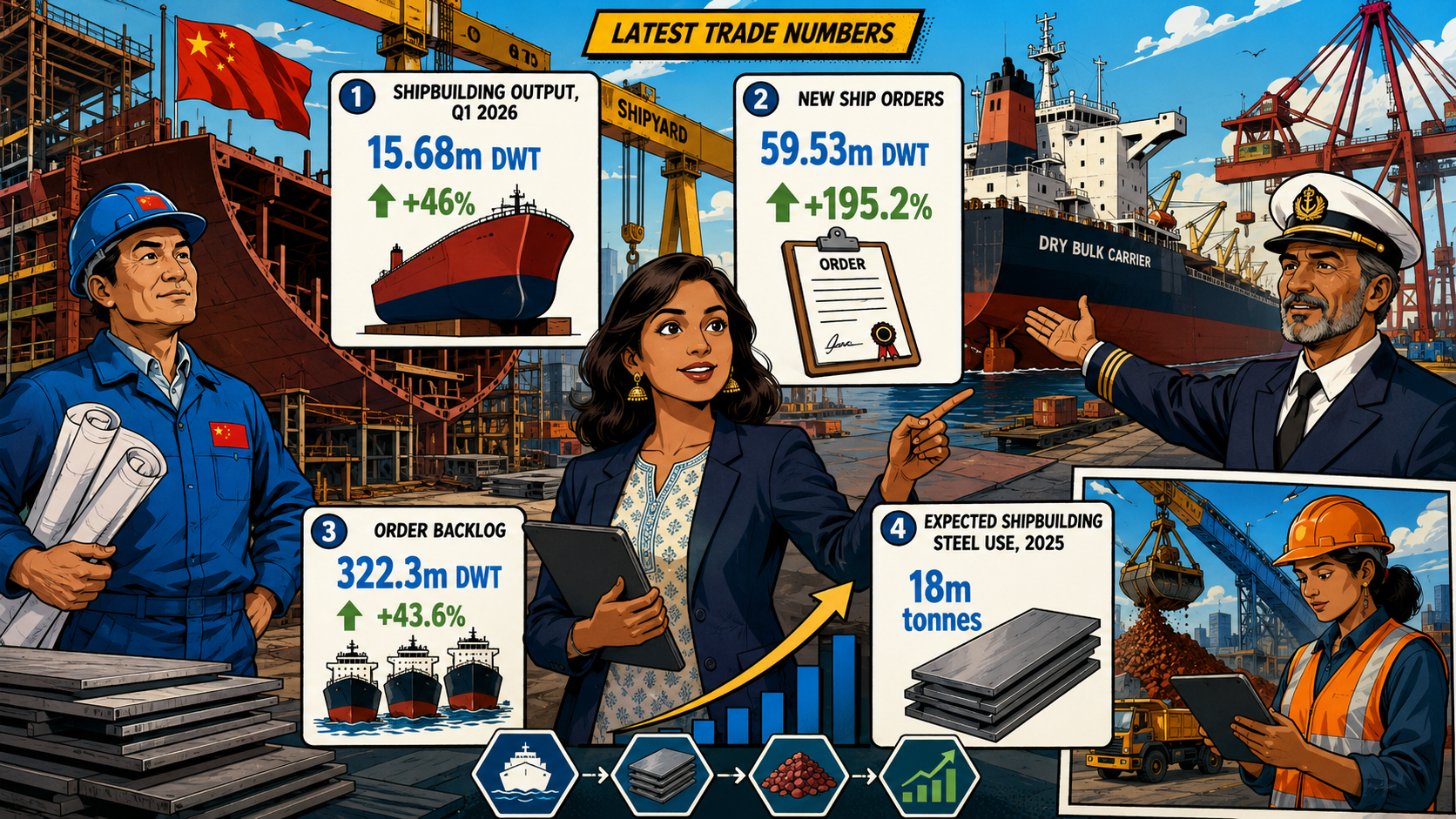
Shipbuilding alone cannot replace all the steel once used by Chinese property developers. Still, 18 million tonnes of expected steel use in one industrial segment is not a small order book for plate mills.
S&P Global placed 2024 shipbuilding steel consumption at 16 million tonnes. Its 2025 forecast implied a 12.5% rise. For a steel mill making plate for hulls, decks and engine-room structures, that order flow offers relief from weak building demand.
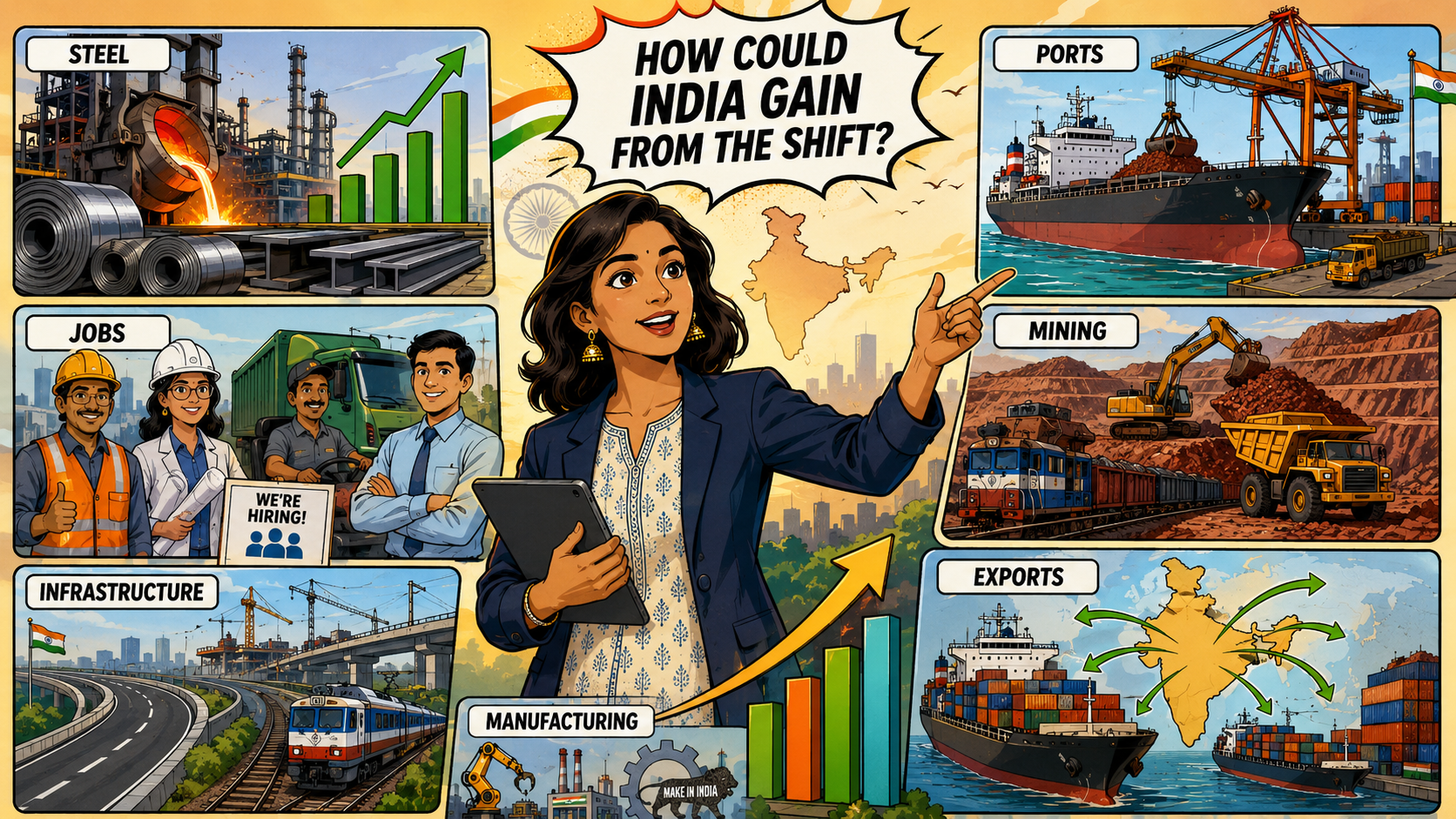
India wants to raise steel production from about 168 million tonnes to 400 million tonnes by 2035-36, Reuters reported on June 16, 2026. That scale of expansion would require more mines, freight corridors, port capacity and steelmaking equipment.
Households may see both sides. Higher domestic production can improve supplies for homes, railways, cars and public works. Imported premium ore, however, adds freight costs that steelmakers may pass to buyers.
*T&C Apply
Cargoes from Brazil, Oman or Guinea travel farther than many regional shipments. Each longer voyage keeps a Capesize or Panamax vessel employed for extra days.
Rio Tinto expects India, Vietnam, Indonesia and Thailand to offset part of China’s slower growth. BHP expects Indian metallurgical coal demand to double by 2050, according to Reuters.
BIMCO said on March 24, 2026 that global iron ore shipments increased 5% during the first 12 weeks of 2026. Chinese port stocks reached 179.5 million tonnes on March 12. Large inventories could reduce later purchases if mills begin using ore already stored at ports.
The practical fix for India is fairly direct: raise premium-grade mining, improve rail links from mines to ports, and add handling capacity before new steel plants begin full production. A LoansJagat steel market analysis also linked India’s rising output with stronger industrial demand and possible cost pressure.
Chinese yards are supporting steel demand now, but India and Southeast Asia are shaping the next phase of iron ore trade. Longer voyages offer bulker owners an opening. The expanding fleet remains the risk.
Why Does Shipbuilding Increase Iron Ore Demand?
Shipyards purchase steel plate. Steel mills use iron ore and coking coal to produce that plate.
Which Ships Could Benefit From Increased Route Lengths?
Capesize vessels would experience the most gain, with Panamax and Kamsarmax vessels with less cargo capacity following them.
How Does Decreasing Demand From China And India Impact The Dry Bulk Sector?
Decreasing demand means a decrease in cargo capacity for dry bulk commodities like iron ore and coal. This results in fewer shipments, leading to a decrease in freight and vessel utilization. This is particularly the case for Capesize and Panamax bulk carriers.
How Does China's Demand For Iron Ore Positively Impact The Economy Of Australia?
Owing to China's demand for iron ore, Australia has benefitted from increased mining investment and employment, and an increase in government royalties. In the case of a China's demand for steel decreasing, Australia has to bear the burden of lower prices for commodities and reduced mining operations.









.png&w=3840&q=75)



