By continuing, you agree to LoansJagat's Credit Report Terms of Use, Terms and Conditions, Privacy Policy, and authorize contact via Call, SMS, Email, or WhatsApp
Disclaimer: The information published on LoansJagat is intended for general informational and educational purposes only and should not be considered financial, legal, or investment advice. Interest rates, loan terms, statistics, and other data may change over time and may vary by lender or source. Please verify the latest information and consult a qualified financial advisor or the respective Bank/NBFC before making any financial decisions.
Subscribe Now
About the author

LoansJagat Team
‘Simplify Finance for Everyone.’ This is the common goal of our team, as we try to explain any topic with relatable examples. From personal to business finance, managing EMIs to becoming debt-free, we do extensive research on each and every parameter, so you don’t have to. Scroll up and have a look at what 15+ years of experience in the BFSI sector looks like.
Related News
Simplify All Your Loans Into One Affordable EMI

Customers Served

Debt Consolidated

1200+ Reviews

Locations in India
Club all Loans & Credit Card Bills into Single EMI

Quick Apply Loan
Consolidate your debts into one easy EMI.

Takes less than 2 minutes. No paperwork.

10 Lakhs+
Trusted Customers

2000 Cr+
Loans Disbursed

4.7/5
Google Reviews

50+
Banks & NBFCs Offers
Other services mentioned in this article
Key Takeaways
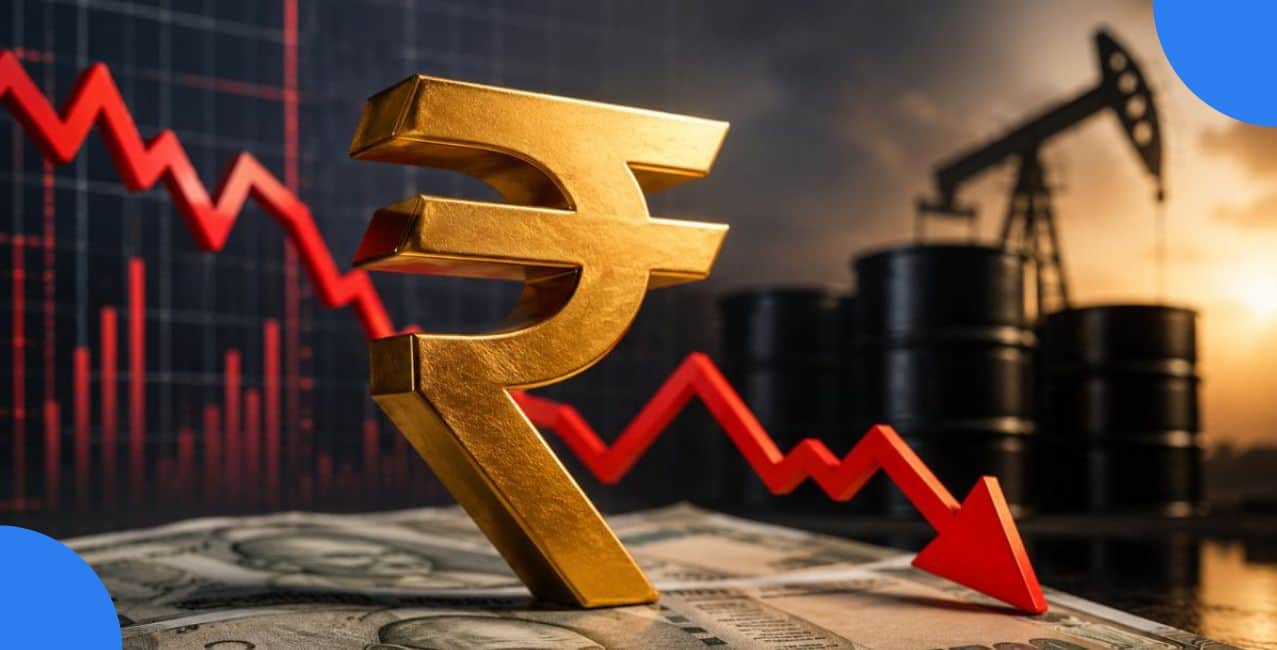
The rupee is at its all-time low level of under 96 against the US dollar due to the collapse in value. The reasons behind the crash include the increase in the cost of crude oil, the widening of the trade deficit, and capital outflow.
The Brent crude futures witnessed an increase of over 3% to touch above $109 on Friday. The impact of a price increase in crude oil will directly affect the imports of crude oil for India.
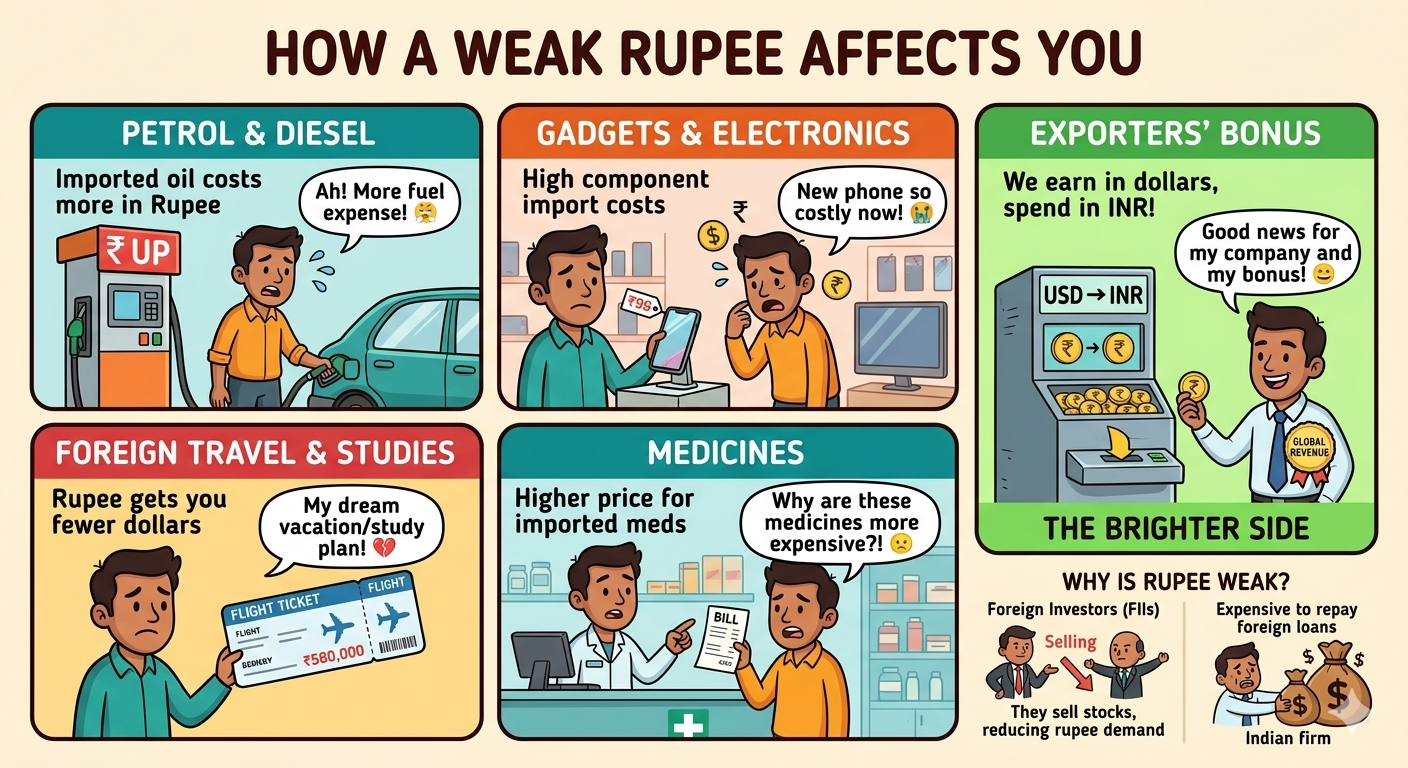
Here is how a weak rupee might affect the lives of common Indians:
Read More - Rupee Hits Record Low of 96.25
As per news reports, foreign institutional investors (FIIs) have been selling stocks in India. This makes the rupee weaker. Besides, it is expensive for Indian firms to repay their foreign borrowings with a weakening currency.
On the brighter side, Indian exporters such as IT, pharmaceutical, and textile companies get to benefit from this trend. They make their revenue in dollars, which are converted to rupees for domestic purposes. A weaker rupee ensures higher profits for them in terms of the domestic currency.
Dilip Parmar, Sr. Research Analyst at HDFC Securities, elaborated on the present state of affairs.
He stated, “Indian rupee tumbled to new lows as the country reported a trade deficit higher than the expectations. Global crude prices and the USD index gained after the US rejected Iran’s 14-point plan for peace, causing geopolitical tensions to escalate. Weak capital inflows and elevated energy prices will keep pressure on the currency in the near term.”
Anuj Choudhary, Research Analyst at Mirae Asset Sharekhan, pointed out measures that could stabilise the rupee.
He said, “Demand for the US dollar from India and foreign institutional investors’ outflows may continue to weigh on the rupee, but RBI intervention and a rise in import duties on gold and silver could offer support.”
Also Read -
Rising cost of the dollar
*T&C Apply
Here are the steps the Reserve Bank of India (RBI) could take to strengthen the rupee:
These measures could help reduce pressure on the rupee and improve stability in India’s currency market over the coming months.
India saw a fresh all-time low of the rupee below the 96 per dollar level. The move indicates the global unrest and the sensitivity of the rupee to oil prices. Expert views suggest continued near-term rupee weakness. In the future, it would be wise to monitor the RBI’s reaction to the recent change in crude oil prices.
1. Why did the Indian Rupee hit an all-time low against the US Dollar?
It is primarily due to the rise in the price of crude oil and the uncertainties generated by the geopolitical tensions in West Asia. Foreign investors withdrew their money from India, which causes demand for the US dollar to increase.
2. Is a record low rupee good or bad for the Indian economy?
It is positive as well as negative. It will make imports such as oil, gadgets, and foreign trips expensive. On the other hand, the Indian exporters who deal in Information Technology and Pharmaceuticals can gain from it since their earnings will be in US dollars.









.png&w=3840&q=75)



