
By continuing, you agree to LoansJagat's Credit Report Terms of Use, Terms and Conditions, Privacy Policy, and authorize contact via Call, SMS, Email, or WhatsApp
Disclaimer: The information published on LoansJagat is intended for general informational and educational purposes only and should not be considered financial, legal, or investment advice. Interest rates, loan terms, statistics, and other data may change over time and may vary by lender or source. Please verify the latest information and consult a qualified financial advisor or the respective Bank/NBFC before making any financial decisions.
Subscribe Now
About the author

LoansJagat Team
‘Simplify Finance for Everyone.’ This is the common goal of our team, as we try to explain any topic with relatable examples. From personal to business finance, managing EMIs to becoming debt-free, we do extensive research on each and every parameter, so you don’t have to. Scroll up and have a look at what 15+ years of experience in the BFSI sector looks like.
Related Blog Post
Simplify All Your Loans Into One Affordable EMI

Customers Served

Debt Consolidated

1200+ Reviews

Locations in India
Club all Loans & Credit Card Bills into Single EMI

Quick Apply Loan
Consolidate your debts into one easy EMI.

Takes less than 2 minutes. No paperwork.

10 Lakhs+
Trusted Customers

2000 Cr+
Loans Disbursed

4.7/5
Google Reviews

50+
Banks & NBFCs Offers
Other services mentioned in this article
Key Takeaways
The Rupee is Under Attack: Why India’s Cuts Might Be Backfiring?
India’s rupee has been experiencing considerable pressure. The rupee recently fell below the 90-rupee-to-a-US-dollar level – over 5.1% decline year-to-date. It hurts all Indians who rely on imported goods, petrol, or travel abroad.
At the moment, the RBI is not doing enough to address this issue. The RBI left the repo rate unchanged at 5.25% for the second consecutive time in a row, maintaining neutrality despite a weak rupee and increasing bond yields.
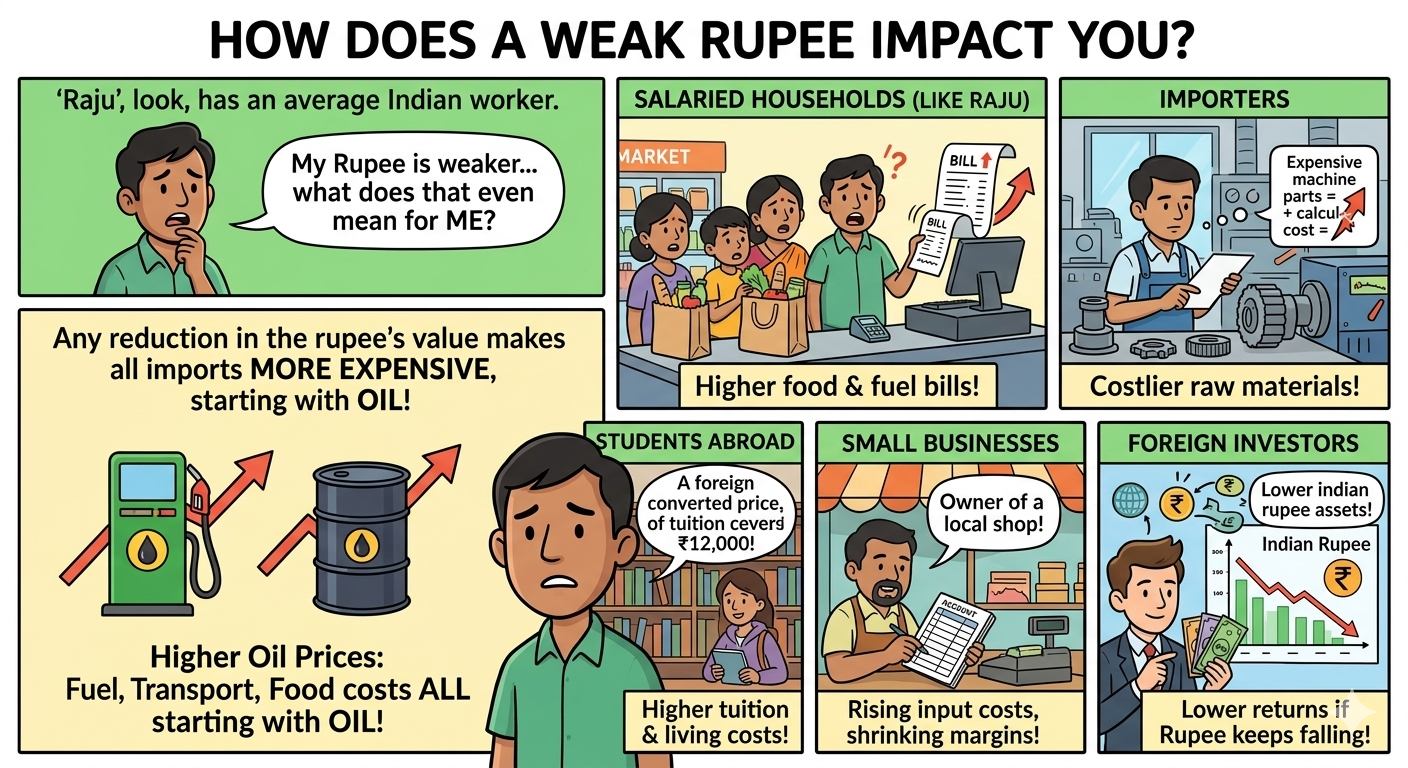
Any reduction in the rupee’s value means that any imports become more expensive, in particular oil. As a result, the price of fuel, transport, and food increases. Everyone feels this in their everyday expenses.
Take a look at how people are affected:
India’s Nominal Effective Exchange Rate (NEER) fell by nearly 8% last year, meaning that the rupee weakened against a range of foreign currencies, not just the US dollar. Thus, the problem seems to have deeper roots than just rupee-dollar exchange dynamics.
Senior Economist of Natixis, Trinh Nguyen, has been quite outspoken regarding the RBI's actions recently. She says that India should stop suppressing energy prices for consumers, because as long as consumers see cheap fuel, their demand stays high, thus increasing the current account deficit and hurting the rupee even more.
According to Trinh Nguyen, “If the rupee comes under excessive selling pressure or sees a huge sell-off, monetary policy can be utilised to reduce volatility and restore market confidence.”
The economist suggests that the RBI should increase interest rates in order to attract more capital and mitigate inflation risks.
Interest rate hikes make India a more appealing destination for foreign investors who seek better returns on fixed-income securities. This, in turn, helps the rupee stay stable. What must be done is clear: let energy prices reflect the actual costs, then hike rates.
Conclusion
The fall of the rupee was expected. It was caused by certain policy measures meeting the challenges of the day. Analysts such as Trinh Nguyen are unanimous that the RBI should do something now. A prompt rate hike can bring foreign capital, reduce inflation risks, and stabilise the rupee. Delay will only make corrections costlier for common people.
Q1. Will the RBI raise interest rates again to stop the rupee from falling?
Many analysts believe the RBI may consider raising interest rates if the rupee continues to weaken and inflation risks increase. Higher rates can help attract foreign investment and support the rupee, but the RBI will also look at economic growth and global market conditions before making any decision.
Q2. What can India do if USD/INR moves closer to ₹95?
India can strengthen the rupee by increasing interest rates, controlling inflation, reducing pressure from expensive oil imports, and attracting more foreign investment. Analysts also believe that allowing fuel prices to reflect actual costs could help reduce demand and improve the country’s trade balance.
*T&C Apply









.png&w=3840&q=75)



