
By continuing, you agree to LoansJagat's Credit Report Terms of Use, Terms and Conditions, Privacy Policy, and authorize contact via Call, SMS, Email, or WhatsApp
Disclaimer: The information published on LoansJagat is intended for general informational and educational purposes only and should not be considered financial, legal, or investment advice. Interest rates, loan terms, statistics, and other data may change over time and may vary by lender or source. Please verify the latest information and consult a qualified financial advisor or the respective Bank/NBFC before making any financial decisions.
Subscribe Now
About the author

LoansJagat Team
‘Simplify Finance for Everyone.’ This is the common goal of our team, as we try to explain any topic with relatable examples. From personal to business finance, managing EMIs to becoming debt-free, we do extensive research on each and every parameter, so you don’t have to. Scroll up and have a look at what 15+ years of experience in the BFSI sector looks like.
Related News
Simplify All Your Loans Into One Affordable EMI

Customers Served

Debt Consolidated

1200+ Reviews

Locations in India
Club all Loans & Credit Card Bills into Single EMI

Quick Apply Loan
Consolidate your debts into one easy EMI.

Takes less than 2 minutes. No paperwork.

10 Lakhs+
Trusted Customers

2000 Cr+
Loans Disbursed

4.7/5
Google Reviews

50+
Banks & NBFCs Offers
Other services mentioned in this article
S&P Global has said tariff and investment regulation remains essential as competition cuts power transmission costs by up to 40%, reshaping India’s electricity debate now.
Key Highlights
S&P Global has called for tariff and investment regulation as competition in the power market reduces transmission costs by up to 40%, according to Utility Dive. The issue involves power regulators, transmission companies, discoms, investors and consumers.
In the short term, cheaper transmission can reduce cost pressure on electricity suppliers. In the long term, weak regulation may slow grid investment, especially when India’s peak power demand touched 270.73 GW on 21 May 2026, according to Reuters.
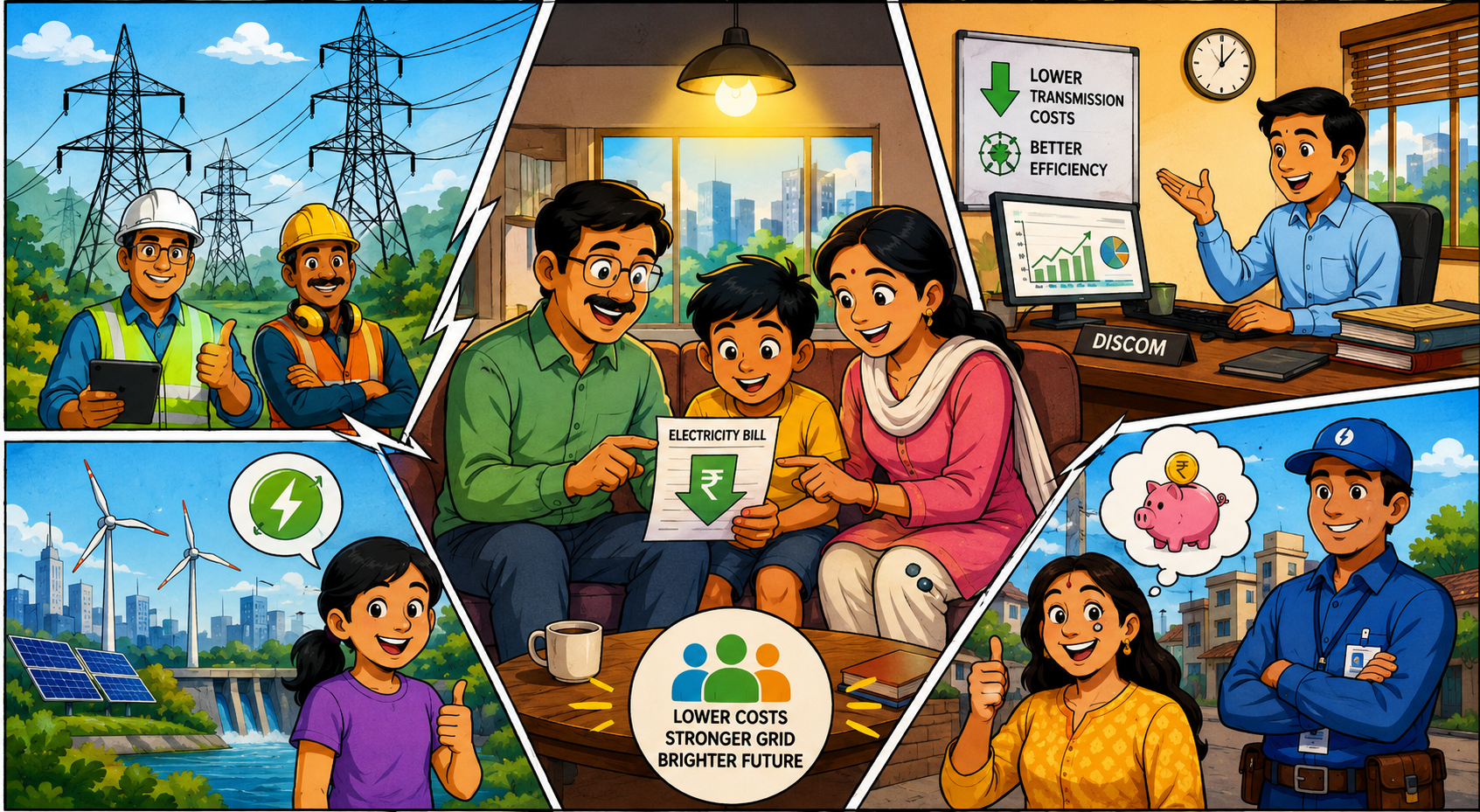
For Indian families, this can help reduce future tariff pressure if savings move through discom accounts and state tariff orders. Bills may not fall quickly because power tariffs also include taxes, subsidies, losses and old dues.
For factories, shops and service firms, stable transmission charges can help cost planning. A LoansJagat analysis can add reader value here by comparing electricity bill pressure with household loan EMIs and business working-capital costs. Interlink: LoansJagat.
The gains will depend on pass-through. If lower project bids only improve company margins, the public benefit will stay limited.
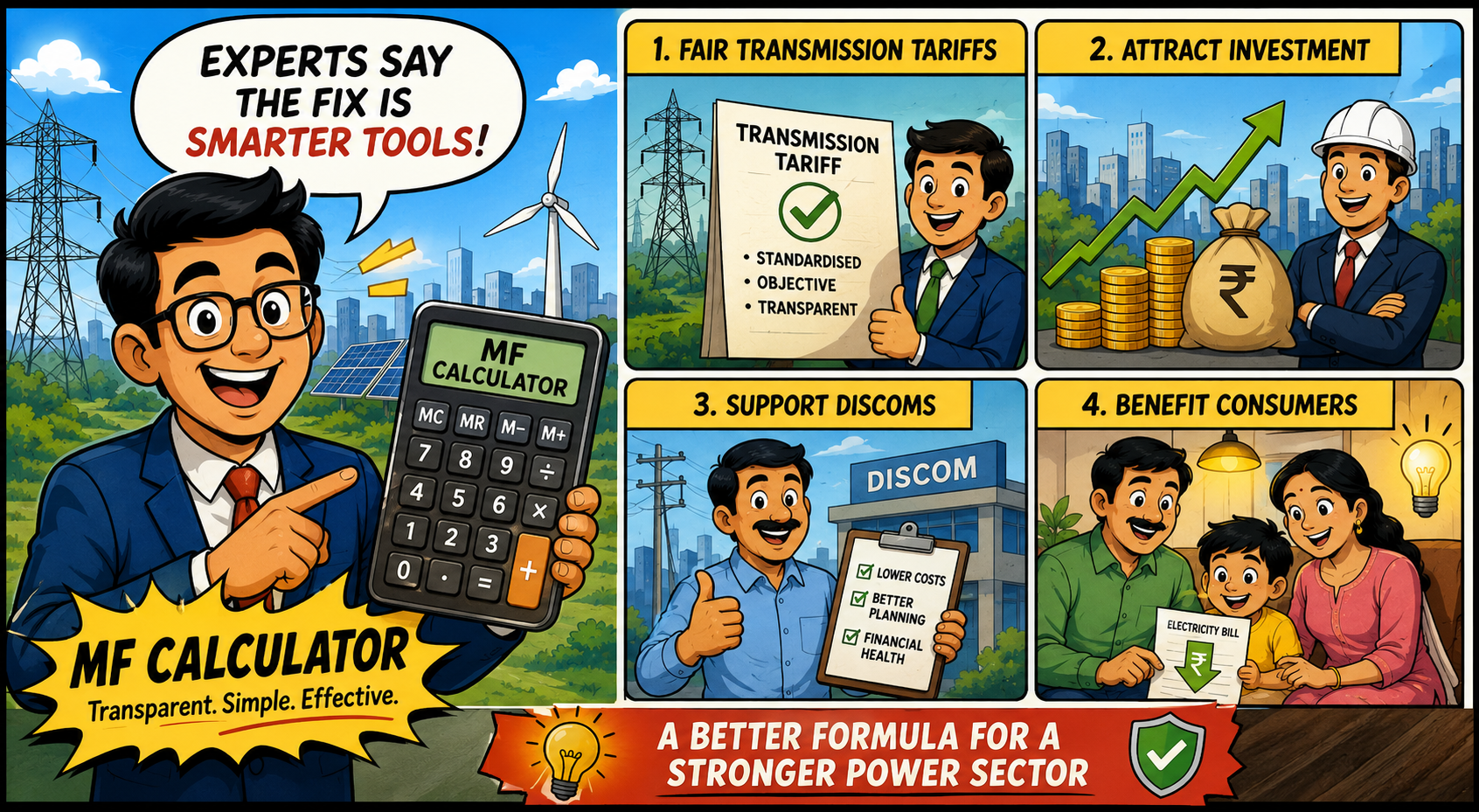
S&P Global Ratings said on 8 January 2024 that India’s draft tariff norms would cover 1 April 2024 to 31 March 2029 for thermal, hydropower and transmission assets. It said the framework supports investment continuity and credit stability.
The fix is a mixed model: competitive bidding for lower costs, tariff norms for investor returns and stronger project monitoring for timely grid buildout. Reuters reported on 3 June 2026 that stricter grid rules had unsettled renewable investors, with some projects facing up to 50% revenue risk.
These updates show India is trying to cut power costs without weakening grid investment. Competition can lower tariffs, but strong regulation is still needed for reliable supply.
Lower transmission costs can reduce pressure on future electricity tariffs, but LoansJagat’s reading is that household benefit depends on pass-through by discoms and state regulators. If discom losses, subsidy gaps and unpaid dues remain high, cheaper transmission may first repair utility finances before families see relief in monthly bills.
Competition can make India’s power transmission cheaper. Regulation will decide whether that saving reaches consumers without hurting future grid investment.
How Much Can Transmission Costs Fall?
Competition can reduce transmission costs by up to 40%, according to the reported S&P Global view.
3 June 2026
*T&C Apply
Will Electricity Bills Fall Immediately?
Not immediately. State tariffs include taxes, subsidies, losses, power purchase costs and discom dues.
Why Is Regulation Still Needed?
Regulation protects long-term grid investment while competition pushes companies to quote lower project costs.
What Caused Power Cuts and Discom Losses In India?
Power cuts have multiple causes, including discom finances, peak demand, power theft and aging grids. Unpaid dues compound the situation.
What Is Tariff-Based Competitive Bidding In The Power Sector?
In tariff-based competitive bidding, companies offer to work at specific tariffs in order to win power generation and transmission projects.
Related News Updates | |||









.png&w=3840&q=75)



