
By continuing, you agree to LoansJagat's Credit Report Terms of Use, Terms and Conditions, Privacy Policy, and authorize contact via Call, SMS, Email, or WhatsApp
Disclaimer: The information published on LoansJagat is intended for general informational and educational purposes only and should not be considered financial, legal, or investment advice. Interest rates, loan terms, statistics, and other data may change over time and may vary by lender or source. Please verify the latest information and consult a qualified financial advisor or the respective Bank/NBFC before making any financial decisions.
Subscribe Now
About the author

LoansJagat Team
‘Simplify Finance for Everyone.’ This is the common goal of our team, as we try to explain any topic with relatable examples. From personal to business finance, managing EMIs to becoming debt-free, we do extensive research on each and every parameter, so you don’t have to. Scroll up and have a look at what 15+ years of experience in the BFSI sector looks like.
Related Blog Post
Simplify All Your Loans Into One Affordable EMI

Customers Served

Debt Consolidated

1200+ Reviews

Locations in India
Club all Loans & Credit Card Bills into Single EMI

Quick Apply Loan
Consolidate your debts into one easy EMI.

Takes less than 2 minutes. No paperwork.

10 Lakhs+
Trusted Customers

2000 Cr+
Loans Disbursed

4.7/5
Google Reviews

50+
Banks & NBFCs Offers
Other services mentioned in this article
India’s sovereign rating debate has returned after Piyush Goyal accused 3 global agencies of overlooking the country’s growth, fundamentals and repayment capacity.
Key Highlights
Minister of Commerce and Industry Piyush Goyal noted that Fitch Ratings, Moody’s Ratings and S&P Global Ratings had inadequate assessments of the growth story, strength and potential of the Indian economy. As per The Indian Express and NDTV Profit, these comments were made during a business plenary in London on June 26, 2026.
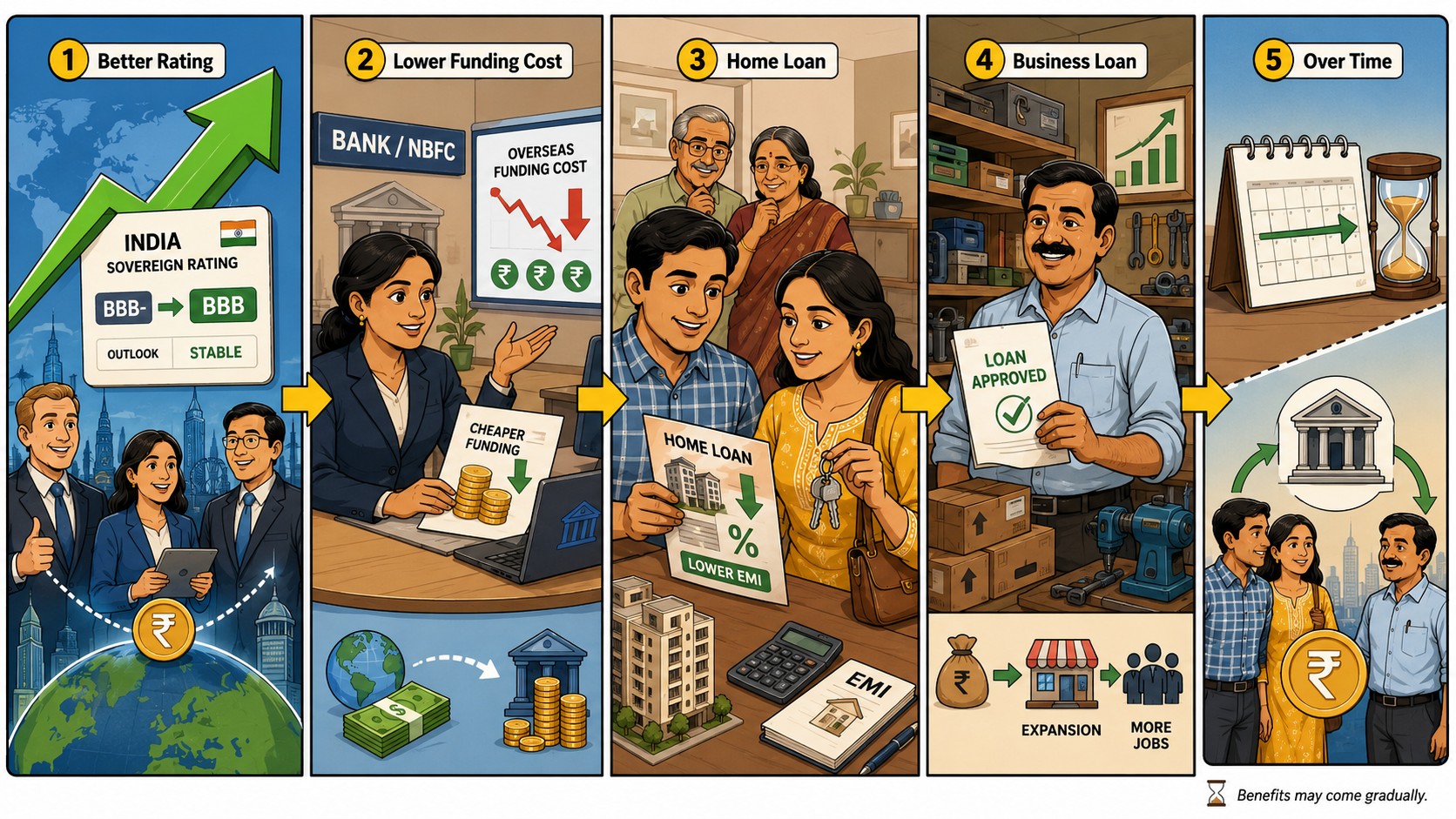
The dispute may affect foreign investor perception, government bond pricing and overseas borrowing costs for Indian companies. No immediate change is expected in household EMIs. However, a delayed sovereign upgrade can keep foreign-currency funding costlier, particularly for banks and large businesses seeking money abroad.
Goyal praised CareEdge Global for carrying out what he described as an objective assessment. He also asked why countries with weaker indicators sometimes receive stronger ratings. The Economic Times reported his call for wider debate on global rating methods.
India’s current ratings show a visible gap.
A higher sovereign grade would not automatically reduce personal loan or home loan rates. Its first impact would probably appear in cheaper overseas funding for banks and companies. Benefits may reach borrowers later if lenders pass those savings through new loan pricing.
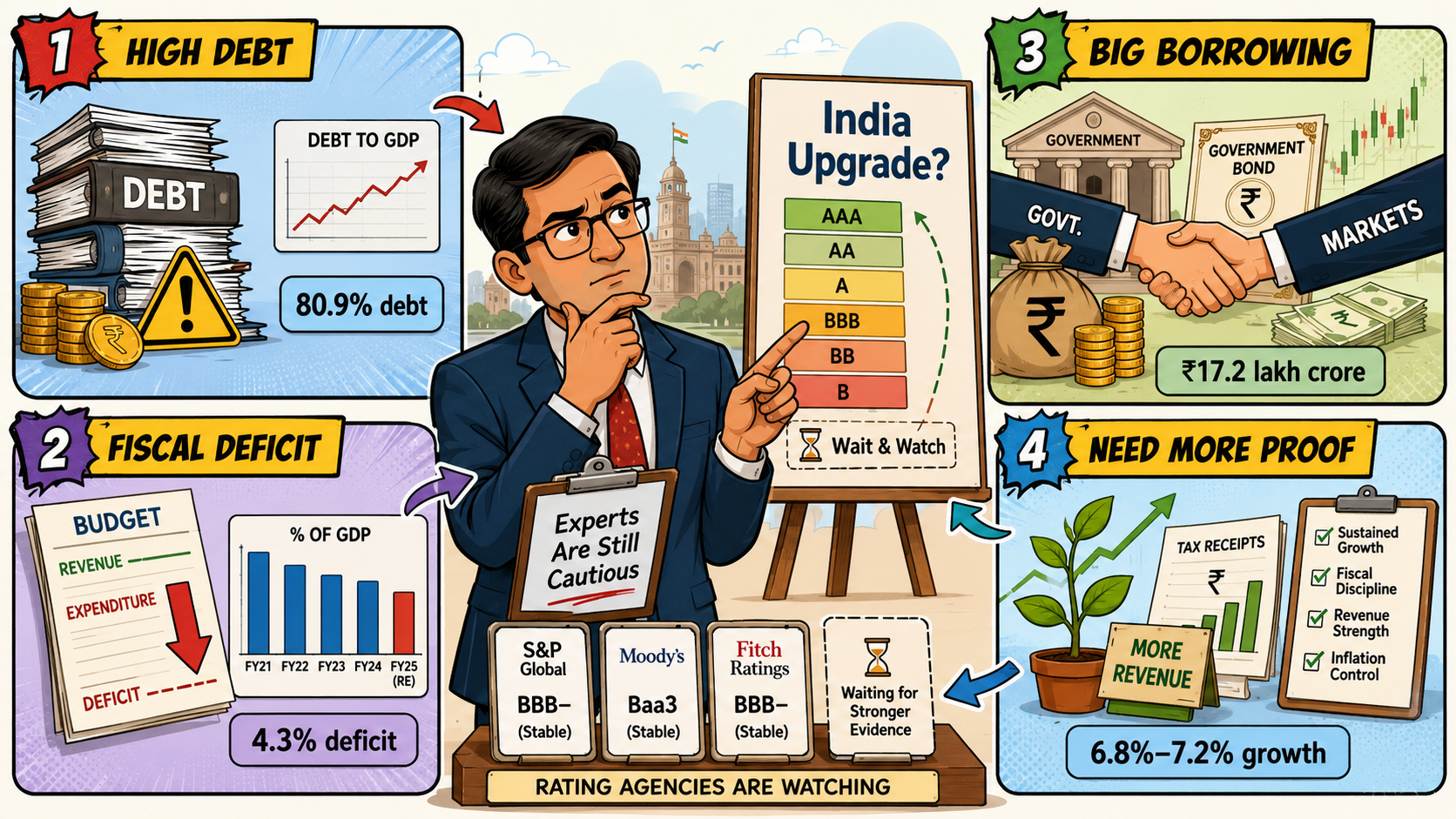
Fitch recognised India’s growth but estimated government debt at 80.9% of GDP in August 2025, against a 59.6% median for BBB-rated countries. It warned that debt reduction could become difficult if nominal GDP growth stayed below 10%.
The FY2026-27 Budget added another layer to the debate.
BBB
*T&C Apply
55.6% of GDP
S&P had upgraded India from BBB- to BBB on August 14, 2025, its first upgrade since 2007. The solution now lies in maintaining high growth while reducing debt, widening tax revenue and lowering combined Centre-state deficits. A LoansJagat sovereign-rating guide explains how country ratings influence investor risk and borrowing credibility.
Investors will compare India’s growth record with the fiscal tests used by rating agencies. The next signals will come from debt reduction, tax receipts and whether the government meets its 4.3% fiscal deficit target for FY2026-27
Goyal’s remarks may bring rating methods back into public debate, but agencies are unlikely to revise India’s grade without fresh fiscal evidence. Stronger revenue collection, lower borrowing and steady growth will carry more weight than political criticism alone.
India’s high growth supports Goyal’s argument, while debt and deficits support the agencies’ caution. The next upgrade will depend on whether fiscal improvement keeps pace with economic expansion.
What Did Piyush Goyal Say?
He said 3 global rating agencies had failed to fairly recognise India’s growth and capabilities.
Is India Below Investment Grade?
No. India remains investment grade across CareEdge, S&P, Fitch and Moody’s rating scales.
Will A Rating Upgrade Reduce EMIs?
Not immediately. Benefits may emerge later through lower funding costs and improved loan pricing.
Why Does India Have A Similar Credit Rating To Greece?
Both face debt concerns, though India grows faster and Greece benefits from euro-area backing.
Why Do Western Rating Agencies Score India Lower Than Expected?
They cite high debt, fiscal deficits and low government revenue, despite India’s strong growth record.









.png&w=3840&q=75)



