By continuing, you agree to LoansJagat's Credit Report Terms of Use, Terms and Conditions, Privacy Policy, and authorize contact via Call, SMS, Email, or WhatsApp
Disclaimer: The information published on LoansJagat is intended for general informational and educational purposes only and should not be considered financial, legal, or investment advice. Interest rates, loan terms, statistics, and other data may change over time and may vary by lender or source. Please verify the latest information and consult a qualified financial advisor or the respective Bank/NBFC before making any financial decisions.
Subscribe Now
About the author

LoansJagat Team
‘Simplify Finance for Everyone.’ This is the common goal of our team, as we try to explain any topic with relatable examples. From personal to business finance, managing EMIs to becoming debt-free, we do extensive research on each and every parameter, so you don’t have to. Scroll up and have a look at what 15+ years of experience in the BFSI sector looks like.
Related News
Simplify All Your Loans Into One Affordable EMI

Customers Served

Debt Consolidated

1200+ Reviews

Locations in India
Club all Loans & Credit Card Bills into Single EMI

Quick Apply Loan
Consolidate your debts into one easy EMI.

Takes less than 2 minutes. No paperwork.

10 Lakhs+
Trusted Customers

2000 Cr+
Loans Disbursed

4.7/5
Google Reviews

50+
Banks & NBFCs Offers
Other services mentioned in this article
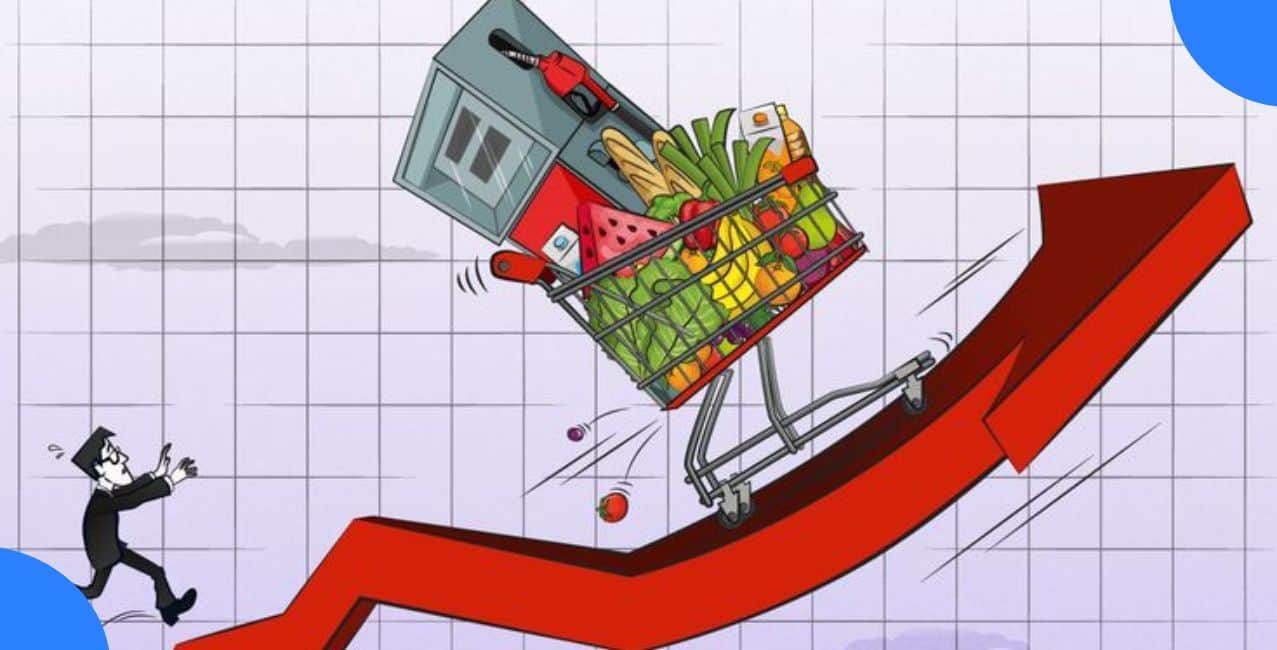
A weak monsoon forecast has put India’s food prices under watch, with rice, pulses and vegetables facing fresh pressure in 2026.
Key Takeaways
India’s food inflation risk has returned just when households were seeing some relief in prices. The latest monsoon warning has made traders, farmers and economists watch rainfall more closely than policy talk.
In the short term, poor rain can lift vegetable, pulse and cereal prices. In the long term, weak farm output can hurt rural income, food supply and household spending.
The numbers below show why this story has become important for consumers and policymakers.
If rainfall fails during July and August, the first price shock may come from vegetables, pulses, rice and oilseeds.
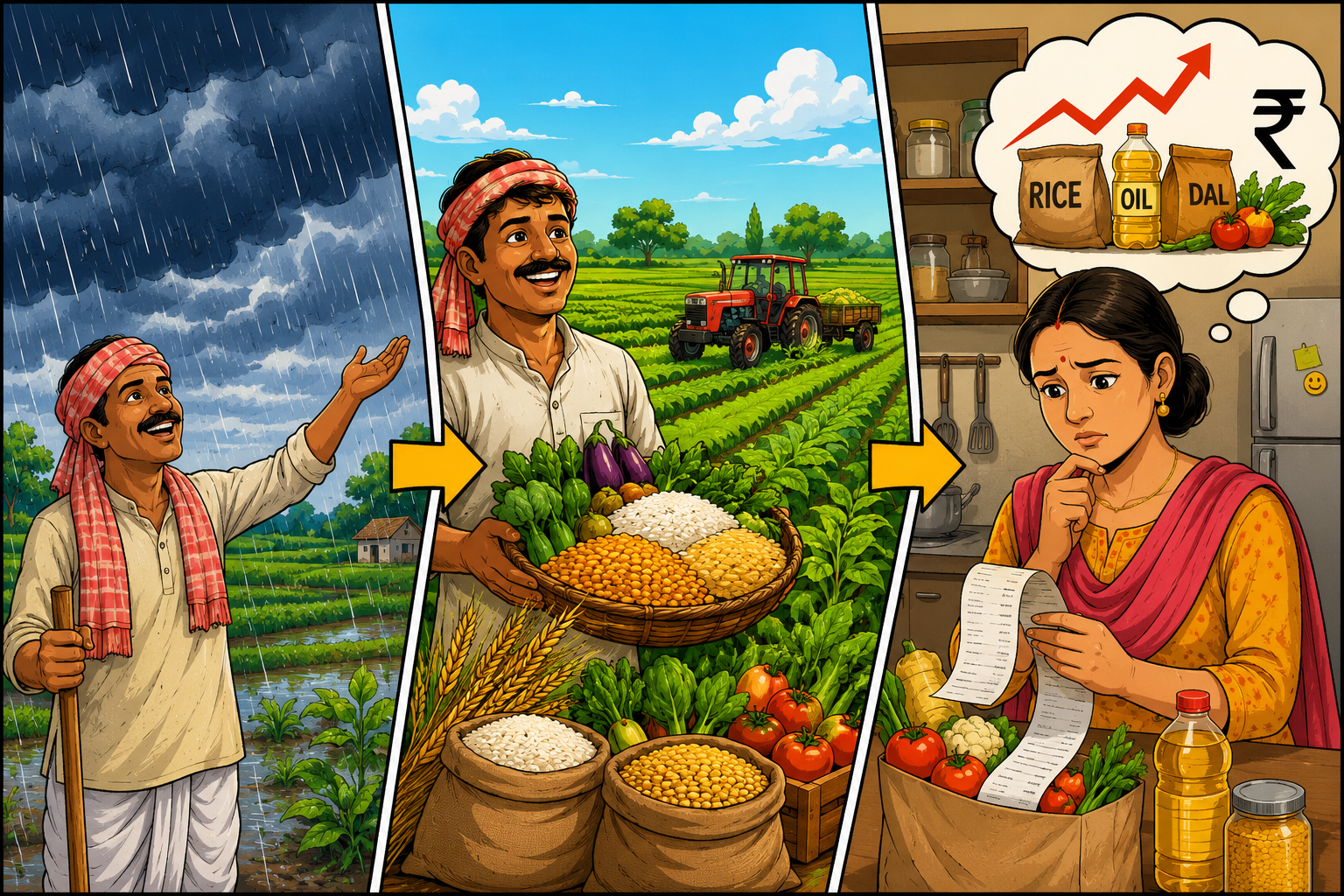
A below-normal monsoon does not hit only farmers. It reaches the kitchen through mandi prices, transport costs and retail shelves. Families may first notice it in tomatoes, onions, dal and edible oil.
There is also a positive side. India has food stocks, irrigation coverage has improved in several states, and quick import or stock-release steps can cool prices before panic buying begins.
Ask any shopkeeper in a mandi and he will say the same thing: one bad spell of rain, or no rain at the wrong time, changes prices fast. Tomatoes jump first, then dal, rice and cooking oil follow. Families may not read every forecast, but they notice when the weekly vegetable bag costs ₹200 more. Farmers feel it even earlier, while sowing seeds and waiting for clouds that may or may not come. That is why this monsoon forecast feels serious. It is not only a farm story. It can walk straight into kitchens, markets and monthly budgets.
Reuters reported on 29 May 2026 that India’s 2026 monsoon forecast is the weakest in 11 years. Down To Earth also reported a 60% chance of deficient rainfall, based on IMD’s revised forecast.
Here is where the risk can spread.
4.20%
*T&C Apply
Possible Impact
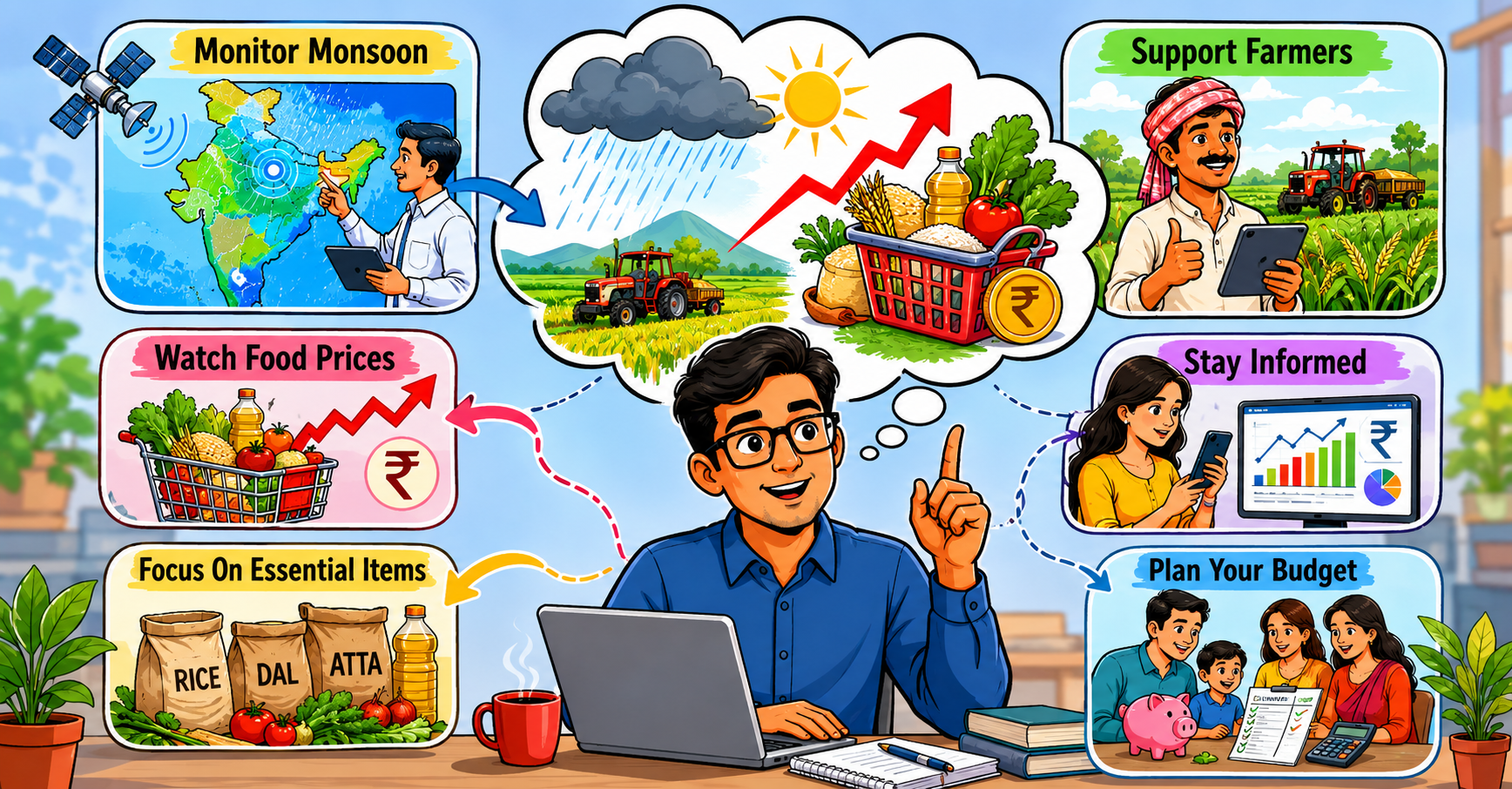
Experts say the solution is not only waiting for rain. Faster crop monitoring, buffer stock release, irrigation support and timely imports can reduce the hit on consumers.
India’s inflation story in 2026 may depend heavily on rain. If El Niño weakens the monsoon further, food prices could again become the biggest worry for households.
El Niño 2026 Could Crash The Indian Market?
El Niño can shake the Indian market, yes, but I wouldn’t call it a crash trigger yet. The bigger worry is a poor July-August monsoon. If rain fails, dal, rice, vegetables and edible oil can get costlier. That hurts rural buying first. Tractor sales, two-wheelers, FMCG counters, fertiliser stocks and small finance lenders may feel the pressure. Investors may also worry if inflation moves above the 5.1% CPI estimate. Still, India has food stocks, government spending and strong services activity. So, this looks more like a correction risk than a full market crash.
How does monsoon affect the performance of stock market?
Monsoon affects the stock market in a very Indian way. If rain is good, farmers earn better, villages spend more, and companies selling tractors, bikes, fertilisers, seeds and daily-use items usually get some support. A bad monsoon makes the mood nervous. Dal, rice, vegetables and edible oil may turn costly. Then inflation talk starts again, and investors worry about interest rates. I would not say every weak monsoon breaks the market. It doesn’t. But it can pull down rural-facing stocks and make traders extra careful during June to September.









.png&w=3840&q=75)



