By continuing, you agree to LoansJagat's Credit Report Terms of Use, Terms and Conditions, Privacy Policy, and authorize contact via Call, SMS, Email, or WhatsApp
Disclaimer: The information published on LoansJagat is intended for general informational and educational purposes only and should not be considered financial, legal, or investment advice. Interest rates, loan terms, statistics, and other data may change over time and may vary by lender or source. Please verify the latest information and consult a qualified financial advisor or the respective Bank/NBFC before making any financial decisions.
Apply for Loans Fast and Hassle-Free
Subscribe Now
About the author

LoansJagat Team
‘Simplify Finance for Everyone.’ This is the common goal of our team, as we try to explain any topic with relatable examples. From personal to business finance, managing EMIs to becoming debt-free, we do extensive research on each and every parameter, so you don’t have to. Scroll up and have a look at what 15+ years of experience in the BFSI sector looks like.
Related Blog Post
Simplify All Your Loans Into One Affordable EMI

Customers Served

Debt Consolidated

1200+ Reviews

Locations in India
Club all Loans & Credit Card Bills into Single EMI

Quick Apply Loan
Consolidate your debts into one easy EMI.

Takes less than 2 minutes. No paperwork.

10 Lakhs+
Trusted Customers

2000 Cr+
Loans Disbursed

4.7/5
Google Reviews

50+
Banks & NBFCs Offers
Other services mentioned in this article
Key Takeaways
Bonus Tip: Covered call ETFs blew up fast, assets shot from just $7 billion in 2020 to a massive $150 billion by mid-2025.
Rohan bought 100 shares at ₹500 each. He saw the price stay flat for many weeks. To get some extra cash, he chose to sell covered call strategy on those shares. He got a premium right away. That cash is like bonus money while he kept owning the stock. This blog gives a covered call strategy explained with an example.
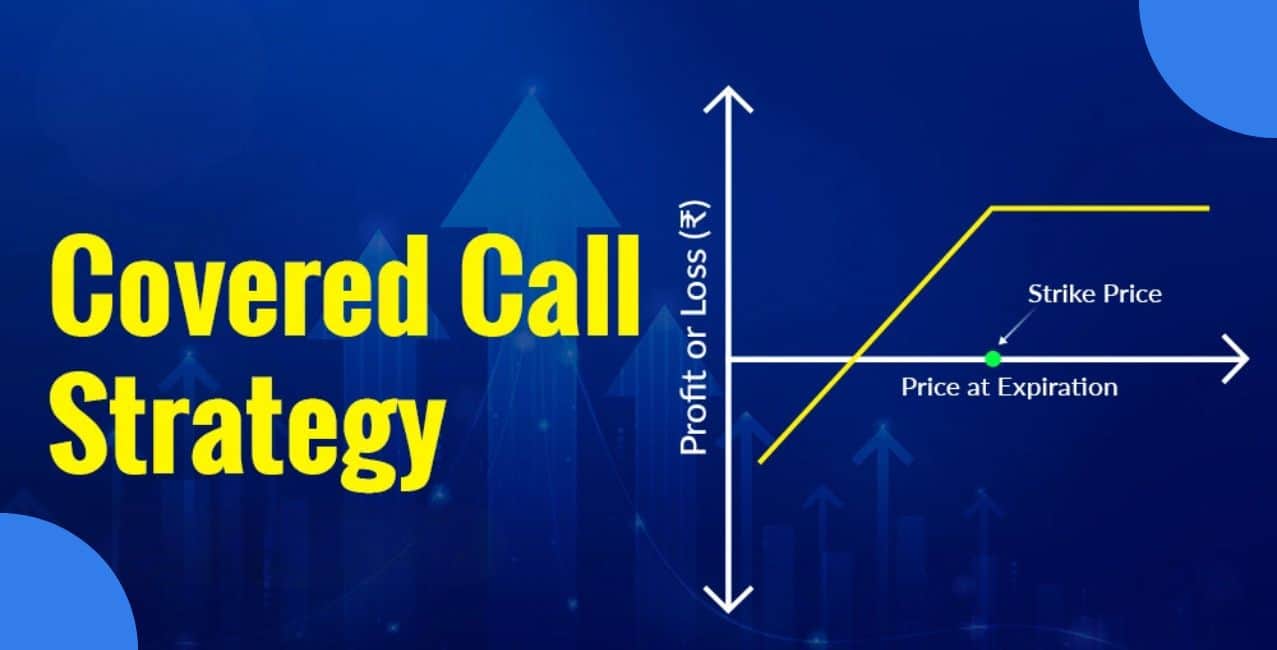
A covered call strategy that lets you hold shares you already own. Then you sell covered call strategy on them. That call gives someone else the right to buy your shares at a fixed price by a set date. You get paid a premium for it now. Because you own the shares already, your position stays covered. Lots of people use this to pull extra income from stocks they like to keep.
These are the basic terms you should know:
Knowing these terms makes the strategy easier to follow and apply.
Here is a clear step-by-step way to do it.
If the buyer does nothing, you keep the premium and your shares. Nice bonus income. If they act, you sell shares at the strike price. You still keep the premium, so your exit price gets a boost.
These are the main outcomes you can expect from this strategy:
Each outcome depends on how the stock price moves over time.
Let's look at Rohan's case. He used 100 shares.
Rohan bought 100 shares at ₹500 each. Total cost came to ₹50,000. He sold a call with strike at ₹520. He got ₹10 premium per share.
Lot size here is 100 shares, so premium is:
₹10 × 100 = ₹1,000
This ₹1,000 is extra cash from the option.
*T&C Apply
₹50,000
Three things can happen now.
If price remains under strike till end, option likely dies unused.
Result for Rohan:
Total gain: ₹1,000
Say price climbs to ₹540 before end.
The buyer may use option and buy Rohan's shares at ₹520.
Profit on shares:
(₹520 - ₹500) × 100 = ₹2,000
Add premium:
₹2,000 + ₹1,000 = ₹3,000 total profit
His real sell price works out to ₹530 per share (strike + premium).
Still, he misses any gains above that point.
If the price drops, the option is likely to expire unused.
Loss on shares:
(₹500 - ₹480) × 100 = ₹2,000 loss
Premium received: ₹1,000
Net result: ₹1,000 loss
Premium helps cut the pain, but big drops still hurt.
Note: In real markets, especially covered call strategy in India, lot sizes change by stock and time. We used 100 here just to keep numbers easy. Always check current lot size before you trade.
The Advantages of a Covered Call Strategy are:
It works best when stocks move slowly and stay stable.
Covered call strategy also has risks.
Knowing these risks helps you avoid unwanted losses and surprises.
A covered call gives you extra money from shares you already hold. It shines when you think the market will move little or stay flat. You enjoy a stable cash flow, but big upward moves get limited profit and sharp drops still bite. If you like this idea, study the basics first, watch lot sizes in your market, and test with small shares till it feels right.
How is covered call strategy better than buy a call option in a particular stock in which expecting bullishness?
Covered call gives premium income right away while you own the stock. Buying a call costs money upfront with no income.
Is a covered call strategy safe for long-term investors?
It's fairly safe if you like the stock long-term. Premium adds income, but big drops still hurt almost like holding shares alone.
Is selling covered calls actually kind of stupid?
Not stupid at all if the stock stays flat or rises slowly. You collect extra cash monthly, but you do cap big upside gains.
Why do people even sell covered calls?
People sell them to earn extra income from shares they already own. It's like renting out your stock for a fee.
Can I lose money in a covered call strategy?
Yes, you can lose money. If the stock falls hard, the premium helps a little, but you still take most of the loss.