By continuing, you agree to LoansJagat's Credit Report Terms of Use, Terms and Conditions, Privacy Policy, and authorize contact via Call, SMS, Email, or WhatsApp
Disclaimer: The information published on LoansJagat is intended for general informational and educational purposes only and should not be considered financial, legal, or investment advice. Interest rates, loan terms, statistics, and other data may change over time and may vary by lender or source. Please verify the latest information and consult a qualified financial advisor or the respective Bank/NBFC before making any financial decisions.
Apply for Loans Fast and Hassle-Free
Subscribe Now
About the author

LoansJagat Team
‘Simplify Finance for Everyone.’ This is the common goal of our team, as we try to explain any topic with relatable examples. From personal to business finance, managing EMIs to becoming debt-free, we do extensive research on each and every parameter, so you don’t have to. Scroll up and have a look at what 15+ years of experience in the BFSI sector looks like.
Related Blog Post
Simplify All Your Loans Into One Affordable EMI

Customers Served

Debt Consolidated

1200+ Reviews

Locations in India
Club all Loans & Credit Card Bills into Single EMI

Quick Apply Loan
Consolidate your debts into one easy EMI.

Takes less than 2 minutes. No paperwork.

10 Lakhs+
Trusted Customers

2000 Cr+
Loans Disbursed

4.7/5
Google Reviews

50+
Banks & NBFCs Offers
Other services mentioned in this article
Key Takeaways
Many people earn from multiple countries, but are unsure where they should pay tax.
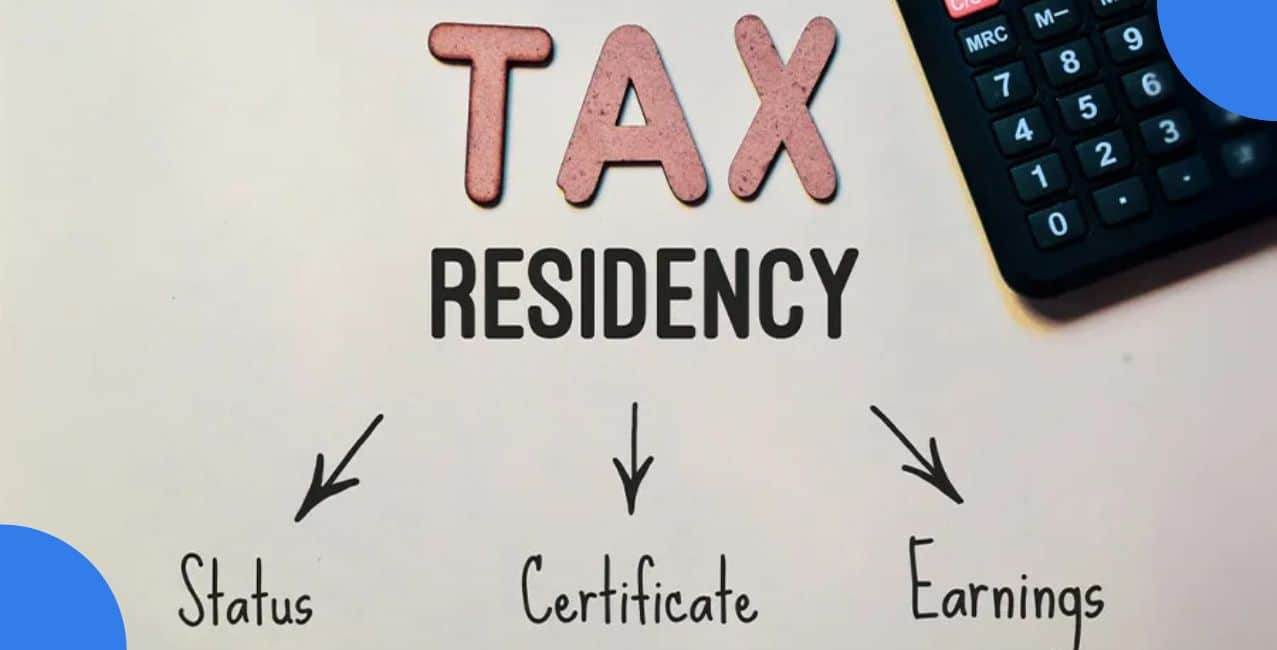
Tax residency is the status that determines the country where a person or entity is legally required to pay taxes based on factors like physical presence, duration of stay, and source of income.
If I stayed in India for 190 days in a financial year and earned ₹12,00,000 locally plus ₹5,00,000 abroad, I may qualify under tax residency rules and be taxed on my total ₹17,00,000 income.
This simple step-by-step process helps in identifying the correct country of tax residency with ease.
Step 1: Count the Number of Days Stayed in India
Calculate the total number of days spent in India during the financial year. If the stay is 182 days or more, the individual may qualify under tax residency india.
Step 2: Check the Alternate Condition
If the 182-day rule is not met, check if the individual stayed 60 days in the current year and 365 days in the last 4 years combined. This condition also helps determine tax residency india.
Step 3: Evaluate Income Sources
Identify whether income is earned in India or abroad. This is important when dealing with tax residency salary, especially for individuals earning from multiple countries.
Step 4: Use an Online Tool for Accuracy
A tax residency calculator can simplify the process by automatically assessing eligibility based on stay duration and income details.
Step 5: Confirm the Final Status
Classify the status as Resident, Non-Resident, or Resident but Not Ordinarily Resident (RNOR) based on the above checks.
Anyone can determine their country of tax residency and avoid compliance issues by following these steps.
These rules help determine whether a person falls under tax residency india, which directly affects how their income, including tax residency salary, is taxed.
These rules make it easier to identify the correct country of tax residency and ensure compliance with tax laws. The tools, such as a tax residency calculator, can further simplify this process and reduce errors in determining residency status.
Corporate tax residency is important for businesses that operate across borders. It helps determine the country of tax residency of a company and ensures proper taxation of profits and compliance with laws.
Businesses can correctly identify their country of tax residency and avoid legal or tax complications by understanding these criteria.
Not every organization or entity qualifies as a tax resident. These exceptions is important to correctly identify the country of tax residency and avoid incorrect tax treatment under tax residency india rules.
*T&C Apply
These entities are treated differently because they do not meet the required conditions for residency.
It becomes important to prove the country of tax residency when dealing with international income. A Tax Residency Certificate helps establish this proof and ensures correct tax treatment under global agreements.
A Tax Residency Certificate plays a key role in international taxation. It helps individuals and businesses stay compliant while avoiding unnecessary tax burdens.
Tax residency plays a key role in deciding where and how income is taxed. The rules help avoid errors and unnecessary tax liability. It is always better to check the status carefully and plan ahead to stay compliant and make informed financial decisions.
1. What does it mean to be a tax resident?
A tax resident is a person or entity that is legally required to pay tax in a specific country based on residency rules. In tax residency india, this status is mainly determined by the number of days stayed in India and certain additional conditions. A tax resident may have to pay tax on global income, including tax residency salary.
2. Is it possible to not be a tax resident of any country?
Yes, it is possible, but it is rare and usually temporary. This situation is known as stateless residency and happens when a person does not meet the residency rules of any country. However, most countries have strict laws to prevent this, so individuals are generally treated as residents somewhere based on their country of tax residency.
3. I stayed close to 182 days in India due to travel issues. What should be done?
The 182-day rule in tax residency india is generally applied strictly, and even a small difference in the number of days can impact residency status. If a person leaves India on the 182nd day, it may still be counted depending on how the days are calculated. In exceptional cases like flight cancellations, proper documentation may help support the situation, but professional advice is strongly recommended. A tax residency calculator can also help in assessing the correct status and understanding the impact on taxation.
4. What is the ₹15,00,000 income rule in Indian tax residency?
The ₹15,00,000 rule applies to Indian citizens or persons of Indian origin who are not liable to tax in any other country. If their total Indian income exceeds ₹15,00,000, they may be considered residents under tax residency india. This rule ensures that individuals with significant income cannot avoid taxation, and it also impacts how their tax residency salary is taxed.
5. When is a Tax Residency Certificate required for foreign income?
A Tax Residency Certificate is required when claiming benefits under tax treaties between countries. It acts as proof of the country of tax residency and helps avoid double taxation. It may be difficult to claim relief on foreign income without this certificate, making it an important document for international taxpayers.