Check AI Loan Optimisation Plans to Reduce Your EMI

Disclaimer: The information published on LoansJagat is intended for general informational and educational purposes only and should not be considered financial, legal, or investment advice. Interest rates, loan terms, statistics, and other data may change over time and may vary by lender or source. Please verify the latest information and consult a qualified financial advisor or the respective Bank/NBFC before making any financial decisions.
Subscribe Now
About the author

Vidhi Chauhan is a copywriter and content writer with extensive experience creating high-quality, SEO-driven content across multiple industries, with a strong focus on fintech. She has written extensively on GST, banking, personal loans, business loans, credit cards, income tax, insurance, and other financial topics, helping Indian readers understand complex concepts through clear, accurate, and engaging content.
Related Blog Post
Simplify All Your Loans Into One Affordable EMI

Customers Served

Debt Consolidated

1200+ Reviews

Locations in India
Club all Loans & Credit Card Bills into Single EMI

Quick Apply Loan
Consolidate your debts into one easy EMI.

Takes less than 2 minutes. No paperwork.

10 Lakhs+
Trusted Customers

2000 Cr+
Loans Disbursed

4.7/5
Google Reviews

50+
Banks & NBFCs Offers
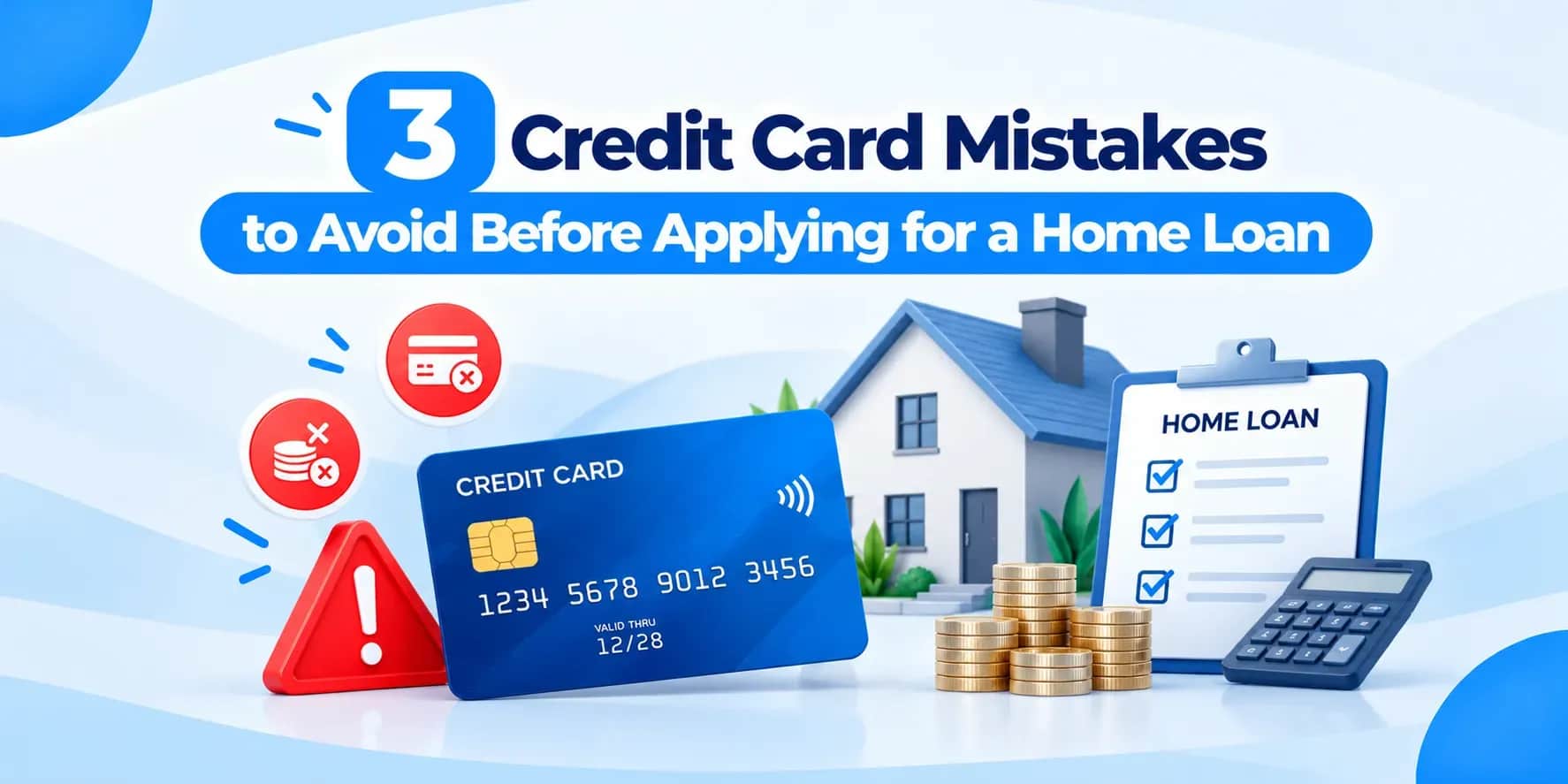
Planning to apply for a home loan? Even if your income is sufficient, your credit card habits could affect how a lender views your application. Missed payments may hurt your credit score, high outstanding balances can raise your credit utilisation, and cash advances can add to your debt. These issues may affect your credit profile or leave you with less money to manage a home loan EMI. Before you apply, make sure these three common credit card mistakes are not working against you.
Key Takeaways
When you apply for a home loan, lenders assess your credit history, existing debts and ability to manage another EMI. Your credit card repayment behaviour can influence this assessment. Missed payments may affect your credit score, while high outstanding balances can increase credit utilisation and leave less money available for loan repayments.
However, these factors do not automatically lead to rejection. Lenders also consider your income, employment, existing EMIs, property details and eligibility criteria. Managing your credit card use responsibly can help you prepare for the application.
Some credit card habits may seem harmless but can become costly when you are preparing for a major financial commitment. Knowing which practices to reconsider can help you avoid unnecessary expenses and make more informed decisions before applying for a home loan.
Missing credit card payments can affect your credit history and raise concerns about your repayment behaviour. Lenders may review your payment record when assessing your home loan application. Repeated delays can make your credit profile less favourable, although a missed payment does not automatically lead to rejection.
Paying only the minimum amount due meets the minimum payment requirement, but the remaining balance may continue to attract interest and charges.
How to avoid this mistake
Your credit utilisation ratio measures how much of your available credit limit you use. High utilisation may affect your credit score and indicate heavy reliance on credit.
For example, if your combined credit limit is ₹5,00,000 and your outstanding balance is ₹1,50,000, your utilisation ratio is 30%.
High outstanding dues can also leave less income available for a home loan EMI. Lenders assess these commitments alongside your income, credit history and other eligibility factors. No single utilisation percentage guarantees home loan approval.
How to avoid this mistake
A higher credit limit may lower your utilisation ratio if your balance remains unchanged. However, it does not reduce your debt or guarantee better home loan eligibility.
A credit card cash advance lets you withdraw cash against your available credit limit, but it can be expensive. Depending on your card's terms, withdrawals may attract fees and interest from the transaction date, without an interest-free period.
Frequent cash advances can increase your debt and borrowing costs. If you use them for regular expenses, you may have less money available for a home loan EMI, down payment and related costs.
Cash withdrawals do not automatically lower your credit score or lead to home loan rejection. Their impact depends on your outstanding debt, credit history and the lender's assessment.
How to avoid this mistake
Avoiding unnecessary cash advances can help control borrowing costs as you prepare for a home loan.
Along with avoiding these credit card mistakes, review your overall financial position before submitting an application. Preparing in advance gives you time to identify errors, address outstanding dues and understand how much you can comfortably afford to borrow.
Use the following checklist:
You should also avoid making financial changes solely to improve your credit score without considering their wider effect. For example, closing an old credit card may reduce your total available credit and increase utilisation if you still owe money on other cards. Consider its fees, usefulness and your overall credit position before deciding.
These steps can help you approach the application with a clearer understanding of your finances. The amount you qualify for and the final terms will depend on the lender’s assessment and eligibility requirements.
Before applying for a home loan, review your credit card habits and make sure your existing debts are manageable. Pay your bills on time, keep outstanding balances under control, and avoid frequent cash withdrawals using your credit card. Also, check your credit report and assess your current EMIs to understand how much you can comfortably repay.
If multiple loan EMIs and credit card dues are becoming difficult to manage, LoansJagat can help eligible borrowers explore debt consolidation options through its lending partners. Compare the available interest rates, fees and total repayment costs to assess whether consolidation suits your financial situation. Approval and terms depend on lender eligibility criteria.
These steps can help you prepare your finances for a home loan application, although approval will depend on the lender’s assessment of your overall financial profile.
You can continue using your credit cards for planned expenses while preparing for a home loan. Keep spending within your budget, pay bills on time and avoid accumulating balances that could strain your monthly finances.
Closing a card may reduce your total available credit and increase your credit utilisation ratio if balances on other cards remain unchanged. Consider its annual fees, benefits, security and your overall credit profile before deciding.
The EMI on an existing personal loan forms part of your financial commitments and may reduce the income available for a home loan EMI. Lenders consider your existing obligations alongside your income, credit profile and other eligibility factors.
Start reviewing your finances as early as possible. This gives you time to check your credit report, address incorrect information, manage outstanding debt and organise documents. Improvements to your credit profile may take time, and corrections are not always immediate.
A high credit score can support your application, but it does not guarantee approval. Lenders also assess your income, existing financial obligations, employment or business profile, property details and their own eligibility criteria.
A cash advance does not automatically affect home loan eligibility. However, the associated fees, interest and outstanding debt may increase your financial commitments. Your repayment behaviour and overall financial profile will influence how a lender assesses your application.
Start your journey today
Apply Now*T&C apply