By continuing, you agree to LoansJagat's Credit Report Terms of Use, Terms and Conditions, Privacy Policy, and authorize contact via Call, SMS, Email, or WhatsApp
Disclaimer: The information published on LoansJagat is intended for general informational and educational purposes only and should not be considered financial, legal, or investment advice. Interest rates, loan terms, statistics, and other data may change over time and may vary by lender or source. Please verify the latest information and consult a qualified financial advisor or the respective Bank/NBFC before making any financial decisions.
Subscribe Now
About the author

Anishka Bhadly
Anishka Bhadly is a content writer with a finance and business background. She has completed her bachelor's degree with a specialisation in finance and is currently pursuing an MBA in the finance field too. The knowledge she has gained from her studies and experience working with EdTech companies helped her combine theoretical knowledge with practical industry insight. Her expertise lies in creating well-researched, informative, and reader-friendly content in various banking, personal finance, loans, insurance, and investment-related topics.
Related Blog Post
Simplify All Your Loans Into One Affordable EMI

Customers Served

Debt Consolidated

1200+ Reviews

Locations in India
Club all Loans & Credit Card Bills into Single EMI

Quick Apply Loan
Consolidate your debts into one easy EMI.

Takes less than 2 minutes. No paperwork.

10 Lakhs+
Trusted Customers

2000 Cr+
Loans Disbursed

4.7/5
Google Reviews

50+
Banks & NBFCs Offers
Other services mentioned in this article
Aside from being useful for making everyday purchases, credit cards also provide their owners with multiple benefits.They allow people to control their spending, enable them to accumulate rewards and discounts, and help establish a good credit history.The latter benefit is particularly advantageous for those who may need to take out a loan or apply for a mortgage at some point, as having a clear credit history is frequently necessary to do so. Cash withdrawals can also sometimes be made from a credit card, although they often come with applicable interest rates and additional fees.
Cards may provide the option of converting eligible purchases into installments and getting discounts at specific websites, fuel stations, airports, or online transactions. However, offers and payment options can vary between cards. It is therefore important to compare the various features, fees, offers, and payment options of different cards and choose a card that best suits a person's spending.
Key Takeaways:
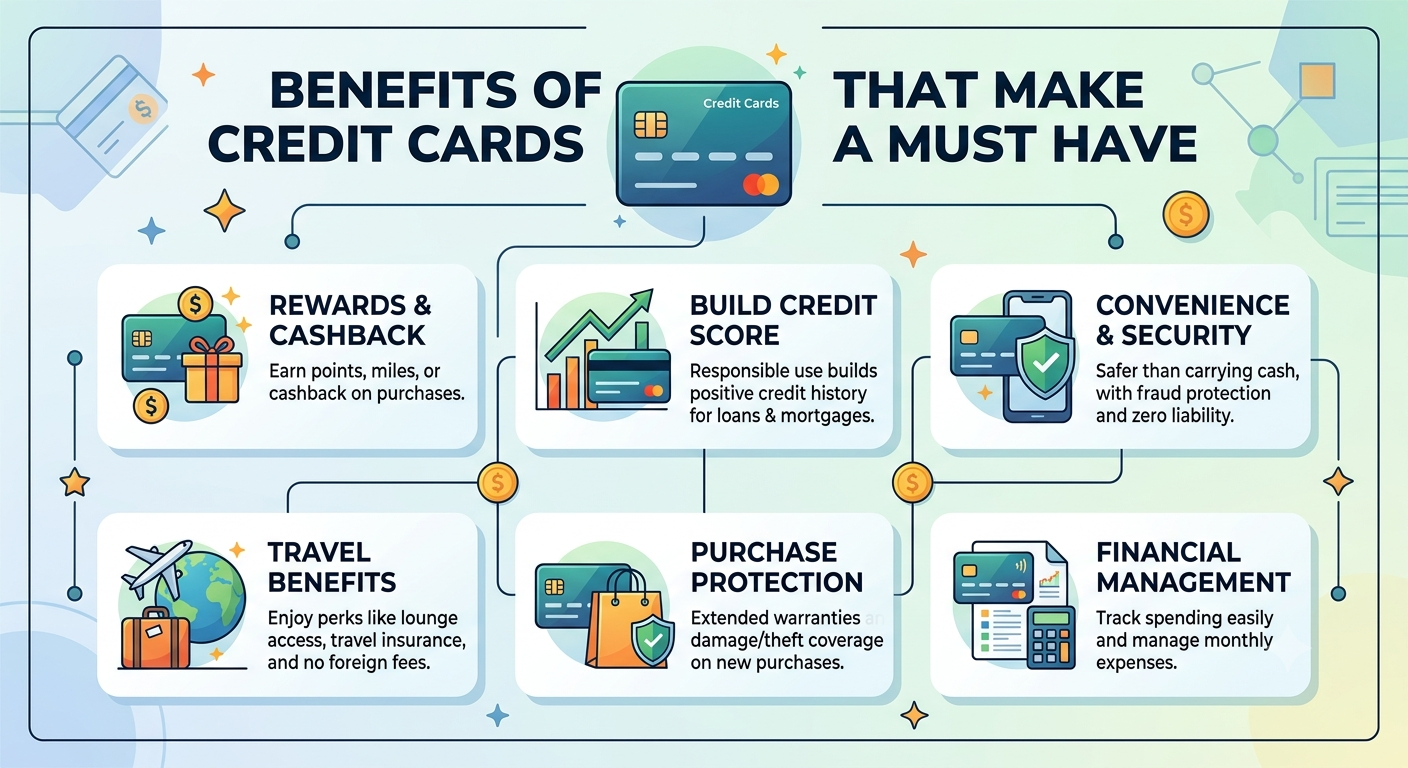
A credit card is a payment card that allows the cardholder to borrow funds from the card issuer, which then pays the seller of the goods or services purchased with the card. The cardholder will use at the issuer's credit to make payments and can either fully cover the amount due or carry a balance subject to applicable terms. The credit card usually has a credit limit, which is a pre-set spending limit for the cardholder. In addition, credit cards often provide cardholders with a variety of benefits, including rewards, cash back, discounts, and other bonuses. These factors can help make credit card use more manageable, provided the cardholder considers their spending, applicable fees, repayment terms and ability to repay the outstanding amount.
Credit card advantages can make day-to-day spending more convenient while offering rewards, payment flexibility, and other benefits. However, these benefits depend on the card, its terms and conditions, and how the user manages the card.
Some credit cards offer cashback on eligible purchases such as groceries, online shopping and dining. The cashback rate, eligible categories and applicable terms can vary depending on the card.
Reward points are a useful benefit offered with some credit cards. Depending on the card and its reward programme, cardholders may earn points on eligible purchases. These accumulated points can then be redeemed for benefits such as merchandise, vouchers or other options available under the card’s terms.
One can enjoy the EMI facility on certain products with credit cards. It helps in paying back the amount in easy instalments rather than paying the whole amount at once. But one should keep in mind their processing fee, applicable charges, and other terms and conditions.
Travel rewards credit cards can provide valuable benefits for frequent travelers. Depending on the card and issuer, these cards can offer rewards in a variety of forms ranging from airline points to points that can be transferred to hotels or earned through travel expenses. The rewards on credit cards can vary depending on the card and issuer.
The credit cards give you the benefit of a billing cycle. This helps one to make a purchase and pay later. But it should be kept in mind that if one pays the whole amount within the due date, then he/she will not be charged any interest on the transaction.
Credit cards can provide protection against fraud through features such as transaction alerts, OTPs and card-lock options. If a cardholder notices a suspicious transaction, they can contact the card issuer’s customer support and report it. Based on the card issuer’s policies and applicable terms, certain security and liability provisions are provided for eligible fraudulent transactions.
Most credit cards provide the facility of international transactions. It is a convenient way of paying money outside the country. But one should check about the foreign transaction charges, currency conversion charges, and other terms and conditions.
One must maintain a good credit history, as it builds up one's creditworthiness, which will help him in the future in terms of credit. A positive credit history and responsible repayment behaviour can contribute to a good credit score.
The benefits and facilities of credit cards solely depend on an individual's pattern of use. Various credit card features like cashback, reward points, fraud protection, international transactions, etc. are amazing, but one should keep in mind their terms and conditions.
A credit card may be classified according to its acceptance, purpose, and other benefits, as well as targeted buyers. The banks and issuers offer a variety of types to cover the customers’ demands, purchasing power, and market needs.
This is not an exclusive list, and the banks continue to develop new products to suit customers’ demands and spending patterns as well as other needs.
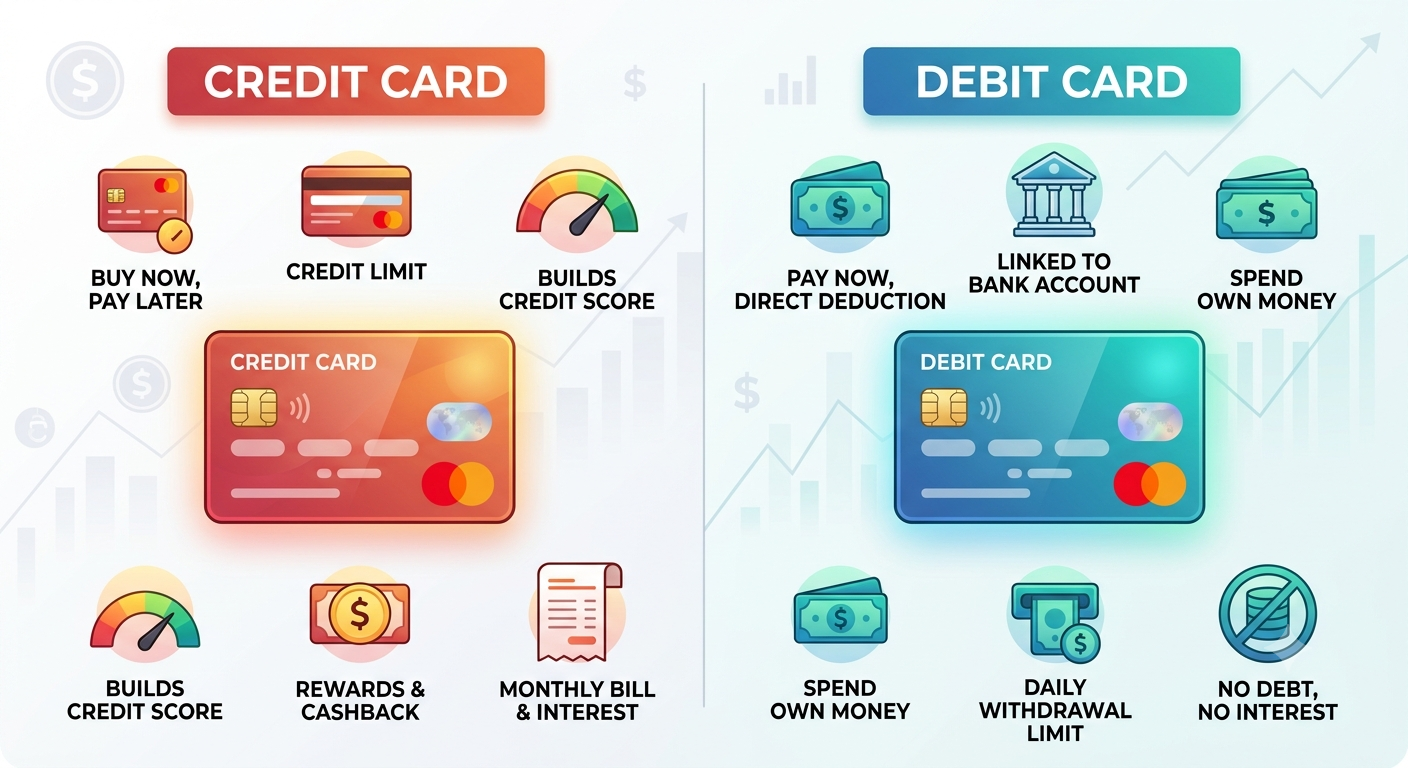
Credit cards and debit cards both facilitate card payments, but they have several key differences. The table below highlights the major differences.
Credit cards and debit cards differ in how payments are funded and processed, although both can be used for many similar transactions. Credit cards allow users to borrow money, while debit cards only let users spend the money in their bank accounts.
A credit card can be a very helpful tool for making purchases, receiving rewards, having access to funds, and establishing credit history. Its worth is determined by the responsible use of the card and the features that it offers. In addition, timely payment of fees helps to reduce additional costs. It is important to choose a card that will best suit the customer’s spending capabilities and wishes.
Therefore, it is important to compare the characteristics and benefits of different cards, their fees, and terms and conditions. A credit card is a great option for making purchases and receiving rewards if the card’s features and benefits suit the customer’s needs and spending power.
A credit card is a card that lets you borrow money from the card issuer for paying a purchase amount.
The benefits of a credit card could be cashback, reward points, discounts, travel benefits and flexible payment options. It varies from card to card.
A credit card limit is the maximum amount that a card member can spend on a particular credit card. This is decided by the credit card company based on income, credit score and other factors.
Credit cards may attract interest if the due amount is not paid in time. It is decided by the card issuer bank, and the rate would vary depending on their policies.
Depending on the card type, the credit card purchase amount can be converted into EMIs. It may attract interest, processing fees and other charges. You should contact customer care and confirm the eligibility and terms before making any such transactions.
Depending on the card, most credit cards can be used abroad. However, there may be foreign transaction fees, currency conversion charges and other international transaction settings depending on the card.
Reward points are earned on qualifying purchases with your card, depending on the reward programme of your card. The points can be redeemed for rewards, such as gift cards, merchandise, travel and more, based on the terms of your card.
A co-branded credit card is a credit card brand issued by a bank in partnership with another company or organisation. The card may offer benefits specific to the partner.
A corporate credit card is a credit card issued to corporates by banks for their employees to make business expenses. Cards may have specific spends and features depending on the corporate issuer.
Yes, you can use your credit card as long as you stay within the available limit and repay on time. Your credit score can be affected by factors such as payment history, credit utilisation and recent credit enquiries. Regular, responsible card use may support a healthy credit profile, while missed payments or high utilisation may hurt it.