By continuing, you agree to LoansJagat's Credit Report Terms of Use, Terms and Conditions, Privacy Policy, and authorize contact via Call, SMS, Email, or WhatsApp
The information published on LoansJagat is intended for general informational and educational purposes only and should not be considered financial, legal, or investment advice. Interest rates, loan terms, statistics, and other data may change over time and may vary by lender or source. Please verify the latest information and consult a qualified financial advisor or the respective Bank/NBFC before making any financial decisions.
Subscribe Now
About the author

Ananya Shrivastava is a Content Writer specialising in finance-focused news, blogs, and long-form articles on Indian markets, RBI policy, personal finance, and lending. She has authored over 450 blogs and 250 news pieces, combining technical knowledge with rigorous research to simplify complex financial concepts into clear, engaging content. With a marketing-driven lens and sharp editorial judgment, she consistently achieves top Google rankings while ensuring every claim is backed by verified data.
Related Blog Post
Simplify All Your Loans Into One Affordable EMI

Customers Served

Debt Consolidated

1200+ Reviews

Locations in India
Club all Loans & Credit Card Bills into Single EMI

Quick Apply Loan
Consolidate your debts into one easy EMI.

Takes less than 2 minutes. No paperwork.

10 Lakhs+
Trusted Customers

2000 Cr+
Loans Disbursed

4.7/5
Google Reviews

50+
Banks & NBFCs Offers
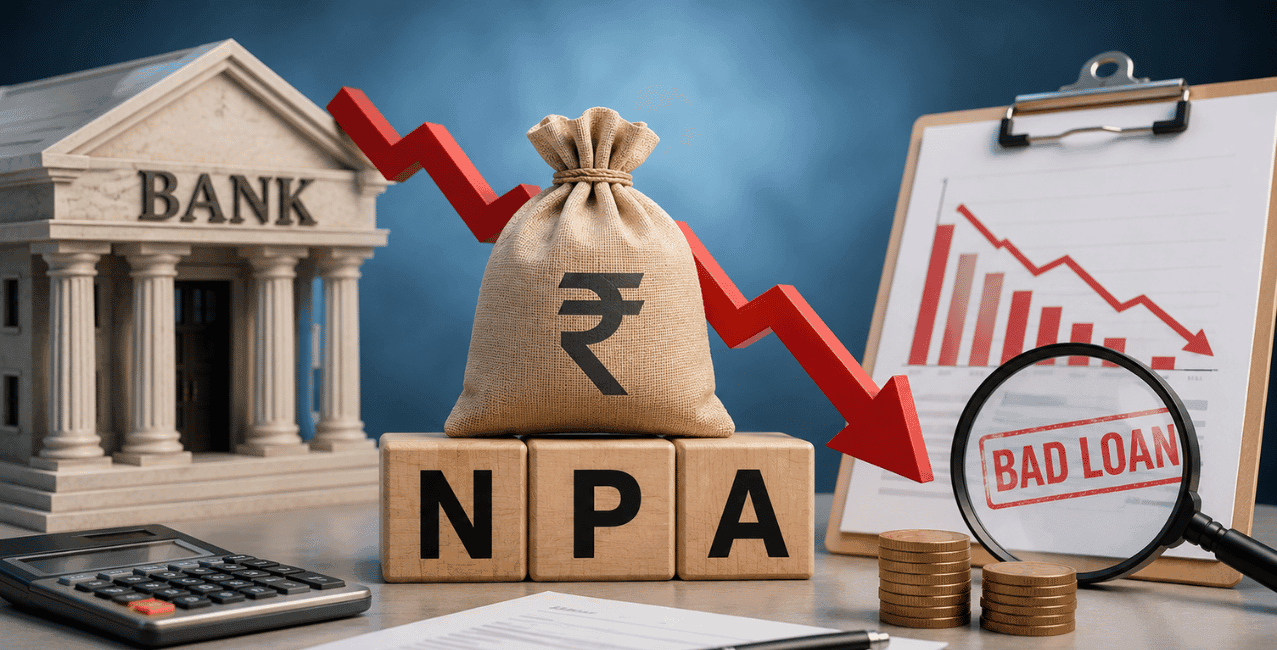
RBI has explained that a technical write-off happens when the bank takes a bad loan off its records for its own accounting work. At the same time, the borrower may still have the loan amount showing as due in their account. RBI also points out that waiver or remission can come through a one-time settlement. This is the reason loan write-off and loan waiver are connected, but they are different things.
Key Takeaways
Loan write-off is mostly something done in the accounts. RBI says that when they do a technical write-off, the NPA stays in the borrower's account as outstanding. The lender just removes it from their books to handle the accounts better. Banks do this step when it looks like getting the money back will be difficult, will cost too much, or will take a very long time.
Write-off does not mean the loan is cancelled. The bank can still hold on to its right to recover the money. The borrower can be asked to pay even after this step. Simply put, the debt can continue even when the bank has taken it out of its active records.
A loan waiver means some part or the full debt gets forgiven as part of a settlement or relief plan. RBI has said waiver or remission can be allowed by the proper authority during a one-time settlement. In most situations, the borrower has to first pay the amount they agreed on in the settlement. So waiver is not like getting the debt cancelled for free.
According to the RBI one-time settlement rules, the settlement money is normally paid all at once. If the borrower is not able to pay everything together, then at least 25% has to be paid right away. The remaining part can be paid in small amounts over time with no extra interest. This is why a waiver usually comes inside a payment arrangement and not as a free benefit.
The three terms differ mainly in whether the borrower still owes the money and how the loan is closed.
A write-off does not necessarily cancel the debt; a waive-off removes the repayment obligation, while a settlement closes the loan after partial repayment.
Banks go for write-off when an account has been bad for a long period, and the chances of getting money back are low. RBI uses technical write-off to clear the balance sheet of those bad debts that seem impossible to recover or would need too much effort and money.
RBI calls a loan an NPA if the payment stays overdue for more than 90 days in regular term loans. After that point, if getting the money back becomes very difficult, the bank can shift it to technical write-off after checking its rules and recovery chances. That is why the NPA stage and write-off stage are not the same.
Banks need to show the true condition of their loans. They cannot keep showing a bad loan as good forever. Taking it off through write-off lets them keep the books correct even if they may try to recover later.
Loan waivers usually come as a relief measure and not as regular bank work. RBI one-time settlement rules allow waiver or remission as part of the official settlement. In some special situations, the government brings debt relief plans for people facing big problems, like farmers.
Waiver is often decided by policy. It is brought in to lessen the trouble for borrowers after they face some big difficulty. This makes waiver quite different from the usual write-off process.
Let me say one thing first. Write-off can give the feeling that the debt is finished, but that is not always the case.
The simple thing to remember is that write-off is not equal to complete freedom from the debt.
*T&C Apply
Waiver brings real help because the amount that is forgiven does not need to be paid anymore. Once the settlement gets approval, the forgiven portion goes out of the borrower's responsibility. RBI settlement rules clearly connect waiver or remission to the approved settlement.
Here is a short list that makes it easy to read.
A waiver improves the money situation, but it does not remove the credit history marks by itself.
For banks, write-off cleans the balance sheet and gives a true view of bad loans. RBI sees technical write-off as a standard practice for handling loans that are tough to recover. Banks use it to show the actual state of their loan records.
There is also a benefit under tax rules. The Income Tax Act lets banks claim a deduction for bad debts that are actually written off as unrecoverable. So this matters for their tax calculations. On the other hand big waivers are usually part of government policies and can have support from relief schemes like the one for farmers linked with RBI.
The main difference for banks is that write-off changes only the way the loan is shown in records. Waiver actually reduces the amount they can get back.
Take a simple write-off case. A person stops making payments for many months. After 90 days of overdue, the account turns into NPA. Later, if recovery chances are poor, the bank shifts it to technical write-off. But the loan can stay in recovery efforts even after this.
For waiver, it works like this: there is an approved settlement. The borrower pays the fixed amount and the remaining debt gets forgiven as per the terms. RBI one-time settlement rule says if full payment is not possible at once, then some part must be paid first and the balance later.
One important point: many people get shocked when they see the effect.
Accounts that are written off, settled, or have court cases are seen badly by banks. CIBIL notes that these things affect new credit, and a payment record is very important in the score. So even if the loan amount is reduced or removed from bank books, the credit history can stay affected for many years.
CIBIL keeps some details like enquiries in the report for seven years. The important thing is bad credit marks do not disappear fast. Borrowers should fix things quickly instead of waiting for the problem to become bigger.
These steps are the ones that really help.
Doing some paperwork carefully now can prevent big problems afterwards.
Several misconceptions can create confusion about what happens to a borrower’s outstanding dues after a write-off, waiver or settlement.
A write-off is mainly an accounting treatment and does not automatically end the borrower’s repayment liability.
Waivers are generally offered only under specific schemes, policies or circumstances.
Such reporting can negatively affect the borrower’s credit history and future access to credit.
Loan write-off and loan waiver are different from each other. Write-off is mainly done for accounting reasons while waiver gives actual relief from debt through settlement or scheme. Both of them damage the credit history. Borrowers must keep all written papers safe, check their credit report from time to time, and ensure the lender makes proper updates to the account.
The bank removes the loan from its books for accounting, but the borrower may still have to pay the debt later.
It is an accounting step in which the bank takes a bad loan off its records, while the debt can remain
Yes, in some cases if the bank proves fraud or the court orders it for wilful default by the borrower.
Pay the full amount, get an NOC from the lender and request them to update the record properly with CIBIL.
It means part or full debt is forgiven under an approved settlement or government relief scheme for the borrower.
Yes, a waiver hurts the credit score and can create problems for getting new loans for many years ahead.
Borrowers facing stress who qualify under government relief schemes or RBI-approved one-time settlement rules can apply.
You pay much less than the full debt and get direct relief from the remaining repayment burden on you.
The purpose is to give real debt relief to borrowers who face serious hardship through settlement or policy help.
It can still damage your credit score and usually requires you to make the settlement payment first.