By continuing, you agree to LoansJagat's Credit Report Terms of Use, Terms and Conditions, Privacy Policy, and authorize contact via Call, SMS, Email, or WhatsApp
Disclaimer: The information published on LoansJagat is intended for general informational and educational purposes only and should not be considered financial, legal, or investment advice. Interest rates, loan terms, statistics, and other data may change over time and may vary by lender or source. Please verify the latest information and consult a qualified financial advisor or the respective Bank/NBFC before making any financial decisions.
Subscribe Now
About the author

Vidhi Chauhan is a copywriter and content writer with extensive experience creating high-quality, SEO-driven content across multiple industries, with a strong focus on fintech. She has written extensively on GST, banking, personal loans, business loans, credit cards, income tax, insurance, and other financial topics, helping Indian readers understand complex concepts through clear, accurate, and engaging content.
Related Blog Post
Simplify All Your Loans Into One Affordable EMI

Customers Served

Debt Consolidated

1200+ Reviews

Locations in India
Club all Loans & Credit Card Bills into Single EMI

Quick Apply Loan
Consolidate your debts into one easy EMI.

Takes less than 2 minutes. No paperwork.

10 Lakhs+
Trusted Customers

2000 Cr+
Loans Disbursed

4.7/5
Google Reviews

50+
Banks & NBFCs Offers
When you apply for a secured loan, the lender considers more than just your income, credit score, and capacity to repay. It could also depend on the value of the asset on which the loan will be secured. Here, the Loan-to-Value ratio comes into play.
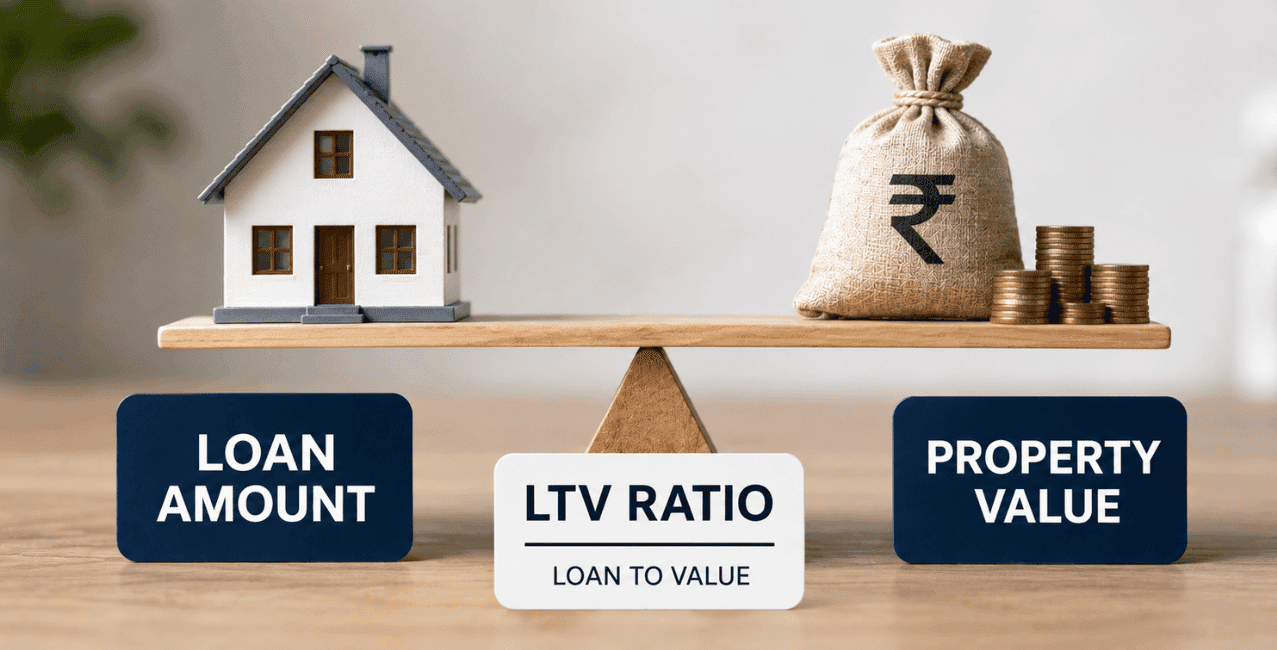
The Loan-to-Value (LTV) ratio is the ratio of the amount a lender will finance to the value of the asset. The LTV ratio is of great significance when securing a loan for homes and property because the lenders use it to calculate the maximum amount they may provide in terms of the value of the property.
This way, the LTV ratio can assist you in calculating the amount that you need to finance by yourself.
Prepayments usually decrease LTV due to reduced debt exposure.
The Loan-to-Value ratio is the ratio of the value of an asset that a lender will finance with a loan. For instance, in the case of a home loan, it is an indication of the extent to which the value of the property can be financed.
For example, if the value of the property in question is ₹80 lakhs and the corresponding LTV is 75%, then the lender will provide financing for ₹60,00,000. The rest of ₹20,00,000 has to be arranged by the borrower as his/her contribution according to the lender's calculations.
Lenders do not finance the full value of the property, and the LTV limit ensures that the risk of lending against an asset whose value changes over the duration of the loan is managed.
It is important to note that the final amount of the loan is not decided by the LTV ratio alone. It depends on other considerations like income, financial liabilities, credit score, property valuation, etc.
The LTV ratio can be easily calculated using a mathematical formula:
LTV Ratio (%) = (Loan Amount ÷ Property Value) × 100
For instance, if the value of the property you buy is ₹1 crore and your loan amount is ₹70,00,000,
LTV Ratio = (₹70,00,000 ÷ ₹1,00,00,000) × 100
LTV Ratio = 70%
Hence, in the above example, the LTV ratio will be 70%, while the balance amount of ₹30 lakh will be contributed by the borrower.
Using the same formula, you can calculate the loan amount from the property value, given the LTV ratio. For example, when the LTV ratio is 80% and the value of the property is ₹50,00,000, then the loan amount will be ₹40,00,000.
Read Also : What Is LTV Ratio in Loans
LTV ratio is significant because it impacts the quantum of borrowing against a particular property.
The lender may put a cap on the quantum of the loan depending on the applicable LTV ratio. The borrower can get a bigger loan, even if the income and ability to repay suggest that he can get a bigger loan, but the LTV quantum may limit the loan size.
The lower the LTV ratio, the greater the proportion of the borrower's contribution towards the valuation of the property. For instance, if the LTV ratio is 70%, the rest of the 30% needs to be arranged from one's pocket, besides other related costs of purchase.
When the LTV is higher, it means that the lender is funding a higher amount in terms of the value of the property. This could be considered higher risk for the lender. On the contrary, when the LTV is low, the borrower has a higher share in the property.
It is likely that lenders prefer a low LTV since the borrower has more skin in the game. This will help the borrower get more favorable terms for the loan.
If there is a high LTV ratio, then this means the loaner is giving a bigger amount than the actual worth of the property. This would help in lowering the amount that the borrower has to invest at the beginning itself. However, it may increase the amount borrowed.
A low LTV ratio is the opposite, where more investment has to be made by the borrower to buy the property. Here, the borrowing is less. The exposure of the lender is reduced. As per ICICI Bank's explanation of the LTV ratio, a low LTV ratio would help the borrowers get good loan terms.
Thus, getting the maximum amount as a loan should not be the primary motive of the borrower. Down payment, EMI, and other factors should also be taken into consideration.
LTV is one of the criteria that determines how much financing a lender can provide against a certain property. It might even happen that although the income of the borrower is enough for a higher home loan, the lending company needs to restrict the size of the loan due to the LTV ratio.
For instance, while your income makes you eligible for a home loan of ₹60,00,000, the LTV ratio for the property may make you eligible for a home loan of just ₹50,00,000.
*T&C Apply
The eligibility for a home loan depends on various factors like income level, job stability, liabilities, and others.
Let us assume that a customer is buying a property worth ₹90,00,000. Assuming that the LTV applicable is 75%,
Maximum Loan Amount = Property Value × LTV
= ₹90,00,000 × 75%
= ₹67,50,000
Hence, the customer needs to get the other ₹22,50,000 from their personal funds, other than the expenses that may be incurred in such a case.
This is an example of LTV.
In the case of loans, LTV is the percentage of the value that the lending institution will be financing on an asset. LTV is important when seeking home loans because it helps in determining the maximum loan that can be taken and how much the borrower is expected to contribute. It is important to know the LTV ratio before taking out a loan because it will assist you in determining the possible loan amount, the down payment, and whether the borrowing amount is affordable to you or not.
LTV ratio is more applicable in cases of secured loans when the borrower provides some form of asset as collateral for the loan. It is widely used in home loans, property loans, car loans, and several other forms of loans.
The lender uses a valuation of the property through a process of valuation that has been approved by the lender. The valuation may be different from the price of the property agreed upon by the buyer and the seller.
Yes, any changes in the valuation of the property will change the LTV ratio of the loan when the amount borrowed remains the same. The LTV will be increased due to the reduction in the value of the property.
Yes, the LTV ratio is likely to vary as the amount borrowed decreases or as there is an increase/decrease in the assessed value of the property. Payment towards the loan will lead to a decrease in the amount borrowed.
LTV can indicate the amount of money required outside the loan to fund the purchase of the property. This depends on the lender's rules as well as the costs of the property and the borrower's financial position.
Charges associated with the property such as stamp duties and registration charges would normally be treated as being distinct from the cost of the property.
The correct LTV would depend on the regulations, the bank’s credit policy, and the nature of the property and mortgage involved. The borrower may discuss with the bank his financial requirements, but an LTV above the allowed level could be unrealistic.
LTV is concerned about the proportion of the loan value to that of the asset, while loan eligibility takes into account the financial situation of the borrower. Although the borrower fulfills the criteria in one case, he might still receive different loan amounts based on other eligibility criteria.
Partial repayment of the loan balance lowers the outstanding loan amount while the value of the real estate remains constant. Therefore, prepayment usually lowers the LTV ratio.
While a low LTV reduces the amount of debt that is owed compared to the value of the asset involved, it also increases the amount of money that has to be put in by the borrower.