By continuing, you agree to LoansJagat's Credit Report Terms of Use, Terms and Conditions, Privacy Policy, and authorize contact via Call, SMS, Email, or WhatsApp
Disclaimer: The information published on LoansJagat is intended for general informational and educational purposes only and should not be considered financial, legal, or investment advice. Interest rates, loan terms, statistics, and other data may change over time and may vary by lender or source. Please verify the latest information and consult a qualified financial advisor or the respective Bank/NBFC before making any financial decisions.
Subscribe Now
About the author

Darshana Patel
Darshana Patel is a finance and tech writer with a strong background in journalism, financial economics, and political science, working with Loans Jagat. She has immense experience writing content through her previous work in fintech and edtech companies. Her contribution at Loans Jagat is to simplify finance-backed content and academically powered content for the readers.
Related Blog Post
Simplify All Your Loans Into One Affordable EMI

Customers Served

Debt Consolidated

1200+ Reviews

Locations in India
Club all Loans & Credit Card Bills into Single EMI

Quick Apply Loan
Consolidate your debts into one easy EMI.

Takes less than 2 minutes. No paperwork.

10 Lakhs+
Trusted Customers

2000 Cr+
Loans Disbursed

4.7/5
Google Reviews

50+
Banks & NBFCs Offers
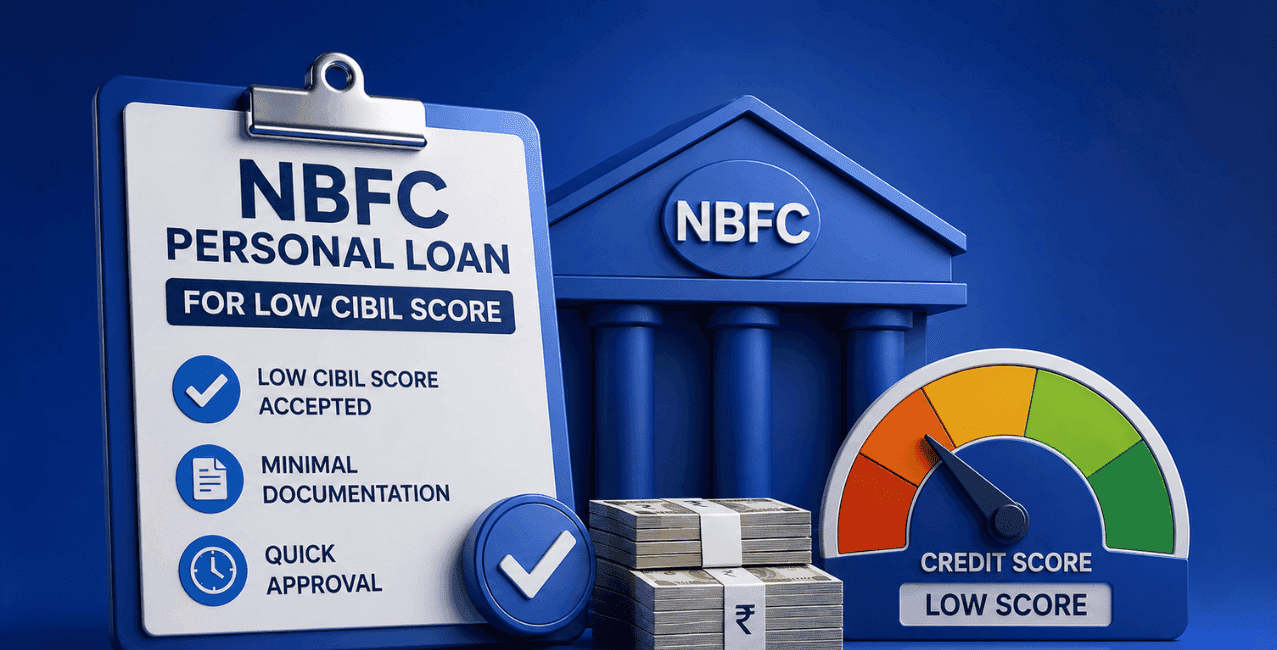
It is really hard to get a loan from a bank at better rates with a low CIBIL score. Many people feel hopeless in this situation. NBFCs provide loans with a lower CIBIL score but with some conditions. This blog will explain NBFC personal loans for a low CIBIL score.
NBFC stands for Non-Banking Financial Company, a company registered under the Companies Act and regulated by the RBI under the Reserve Bank of India Act, 1934. Eligible NBFCs are registered with the RBI. Such firms lend money but generally don't collect savings deposits the way regular banks do. Their personal loans normally come without any security requirement. No house, vehicle or jewellery needs to be offered. The borrower receives one fixed sum and returns it through fixed monthly instalments across a chosen period. That money may go toward any personal expense.
Many people prefer these loans because everything happens online and takes less time than bank processes. NBFCs stay within RBI boundaries yet create their own conditions. This lets them help applicants whose scores look weak.
The answer is yes. Scores on CIBIL run between 300 and 900. Banks generally demand 700 and above. Lower numbers often lead to quick rejection. NBFCs show more openness. Quite a few of them look at scores between 550 and 650 when income stays steady and bank credits appear regularly.
RBI does not fix any lowest CIBIL score for loans. Each NBFC decides its own minimum score. A low score does not mean the loan will always get rejected. In most cases the amount becomes smaller and the interest rate becomes higher. People who have regular jobs and clean recent bank statements still get approved quite often. Even first-time borrowers with no credit score shouldn't be turned down for that reason alone. Not having a score isn't the same as having a bad one.
Also Read: Top 5 NBFCs for Debt Consolidation Loans in India
The CIBIL figure alone never decides the outcome. Officers study the wider picture. Monthly earnings, regularity of salary or business inflows, existing instalments and remaining capacity all get checked. Statements covering three to six months carry heavy weight.
Job length, age and sometimes other payment habits also affect the review. Risk level decides the rate. Greater risk brings higher interest. Online systems handle most files and deliver answers within one or two days once documents are complete.
This is the usual requirements; actual requirements can be different depending on the lender and your requirements:
Self-employed applicants must prove ongoing business income through bank entries or tax filings. Each firm decides its own exact figures for income and age.
Only basic proof of identity and earnings is needed.
They may ask you for some different documents as per their policies and requirements.
Income level and current instalments mainly decide the size. A low score usually keeps the sum modest. Stronger earnings can push the number upward, yet first-time loans for weaker scores frequently remain lower than a person with average CIBIL scores.
Firms calculate a safe EMI limit, generally kept under 40-50 percent of take-home pay after other dues. Repayment windows commonly stretch from 12 to 60 months. Final figures rest with each NBFC’s internal policy.
Rates attached to a loan for low CIBIL score from NBFCs normally fall between 18 percent and 36 percent yearly. Score, income consistency, requested sum and chosen period shape the exact number. Weaker scores attract the upper end of that band.
Extra costs usually include:
Starting 1 January 2026, RBI stops prepayment fees on floating-rate loans given to individuals for non-business needs. Both banks and NBFCs fall under this rule for any loan begun or renewed from that date onward. The sanction letter still needs careful reading because fixed-rate products may continue charging fees.
Every lender must hand over a Key Fact Statement before final acceptance. That single sheet lists the complete yearly cost, total repayment amount, and the full instalment schedule in plain language. Always compare the full cost rather than the interest figure alone.
Begin by confirming RBI registration. The official list sits on rbi.org.in. Look beyond the quoted rate and study total expense. Processing fee, other charges, and the resulting EMI for a manageable period all need comparison.
Repayment comfort and support quality also matter. Firms that supply clear Key Fact Statements and easy online tracking prove more reliable. Steer clear of anyone demanding money before disbursal or forcing quick decisions.
Digital lending products covered under RBI's Digital Lending Guidelines typically include a brief cooling-off window. Cancellation during that time requires only the principal plus interest for the days the money was used, without further penalty.
Nearly every step now runs online.
Multiple applications at the same time should be avoided. Repeated checks can push the CIBIL score lower.
Progress takes months, but it is easy.
*T&C Apply
Consistent on-time payments across six to twelve months usually lift the number.
The difference between the NBFC Loans and Bank Loans is:
Banks offer lower rates once approval comes through. Approval itself stays rare when the score looks weak. NBFCs close that gap, although the rates rise.
The benefits of taking loans from NBFCs are:
This is only helpful if you are paying back on time. Otherwise, you have to pay more charges.
There are some bad sides of NBFC personal loans too:
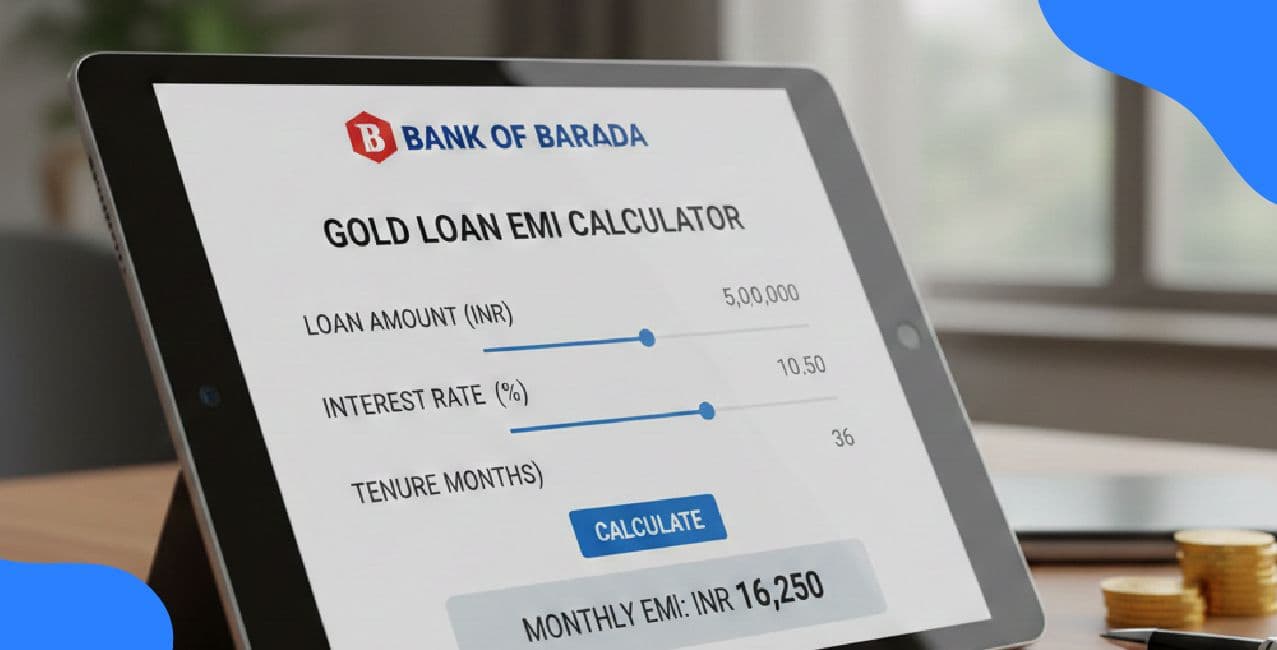
Must calculate the sum and EMI correctly before applying. It will give you a clear idea whether you will be able to pay on time.
A loan for low CIBIL score through an NBFC is a good option if you can pay it back. Borrow only the amount that fits comfortably within your monthly capacity. Confirm the RBI registration on the RBI website before filling out the form or submitting documents. Study the Key Fact Statement carefully, and then decide whether it is good for you or not.
No single best NBFC exists. Compare interest rate, fees, and tenure between NBFCs like Bajaj Finserv or Tata Capital before picking one.
Yes, as long as the NBFC is registered with the RBI. Check that on the RBI site before you apply.
Mostly 650-700. Some NBFCs still give loans at 550 , but you pay higher interest.
Not always. NBFCs are quicker and less strict; banks usually charge less interest.
A finance company that RBI has registered and keeps a check on the RBI website.
Yes. NBFCs take loans from banks and other institutions, then lend that money out to people.
Yes, same as a bank loan. Pay on time and your score improves; miss payments and it drops.
Faster approval and easier eligibility, good for people banks turn down over low credit scores.
Usually same day to a few days, faster than banks, especially with app-based lenders.
You get late fees, extra interest, a drop in credit score, recovery calls, and maybe legal action.