By continuing, you agree to LoansJagat's Credit Report Terms of Use, Terms and Conditions, Privacy Policy, and authorize contact via Call, SMS, Email, or WhatsApp
Disclaimer: The information published on LoansJagat is intended for general informational and educational purposes only and should not be considered financial, legal, or investment advice. Interest rates, loan terms, statistics, and other data may change over time and may vary by lender or source. Please verify the latest information and consult a qualified financial advisor or the respective Bank/NBFC before making any financial decisions.
Subscribe Now
About the author

Vidhi Chauhan
Vidhi Chauhan is a copywriter and content writer with extensive experience creating high-quality, SEO-driven content across multiple industries, with a strong focus on fintech. She has written extensively on GST, banking, personal loans, business loans, credit cards, income tax, insurance, and other financial topics, helping Indian readers understand complex concepts through clear, accurate, and engaging content.
Related Blog Post
Simplify All Your Loans Into One Affordable EMI

Customers Served

Debt Consolidated

1200+ Reviews

Locations in India
Club all Loans & Credit Card Bills into Single EMI

Quick Apply Loan
Consolidate your debts into one easy EMI.

Takes less than 2 minutes. No paperwork.

10 Lakhs+
Trusted Customers

2000 Cr+
Loans Disbursed

4.7/5
Google Reviews

50+
Banks & NBFCs Offers
Other services mentioned in this article
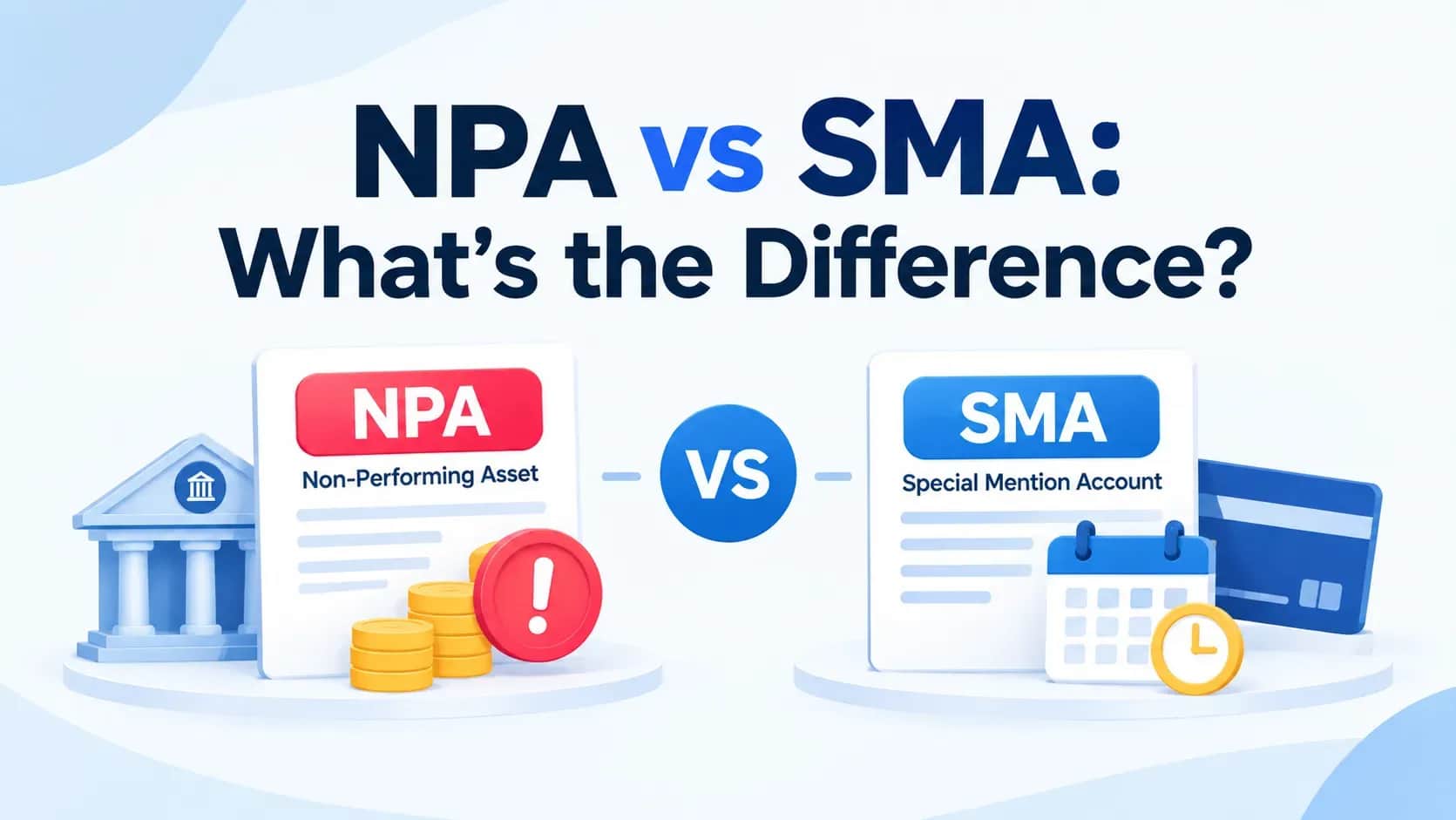
The main difference between NPA and SMA lies in the point at which repayment pressure becomes an issue in the loan account. Special Mention Accounts (SMA) are classified as warning signals for overdue payments that are not sufficient to classify the account as a Non-Performing Asset (NPA). SMA accounts are classified as SMA-0, SMA-1, or SMA-2 based on the number of days an account remains overdue. The classification of NPA means the account has reached a stage where the loan meets certain criteria, such as being overdue for more than 90 days on term loans.
Key Takeaways
A Special Mention Account (SMA) indicates early signs of financial stress or delays in loan repayments. It has not yet reached the stage of a Non-Performing Asset (NPA).
The idea behind classifying accounts as SMA is to enable the lender to recognise any repayment difficulty at an early stage. The borrower, too, should treat the EWS as a warning to bring repayments in order before the account becomes an NPA.
For the loans, except for revolving credit, SMA can be categorised on the basis of the period of default of the following amounts:
These categories are defined according to the guidelines issued by the RBI. In the case of credit revolvers like cash credit and overdraft accounts, the classification depends on how long the balance exceeds the sanctioned limit/drawing power.
SMA-0 label needs signs of stress or an overdue balance of 30 days or less. This represents the first level in the SMA category.
If a borrower has reached this point, he/she needs to repay the outstanding balance before reaching the next level of SMA-1.
The account is classified as SMA-1 when principal, interest, or any other amount is overdue for more than 30 days and up to 60 days.
This denotes a greater repayment delay.
SMA-2 applies when principal, interest, or any other amount is overdue for more than 60 days and up to 90 days.
This is the final SMA level before the account can be declared NPA, subject to the applicable 90-day criteria. Thus, it is important for the borrowers to take SMA-2 seriously and settle their debts.
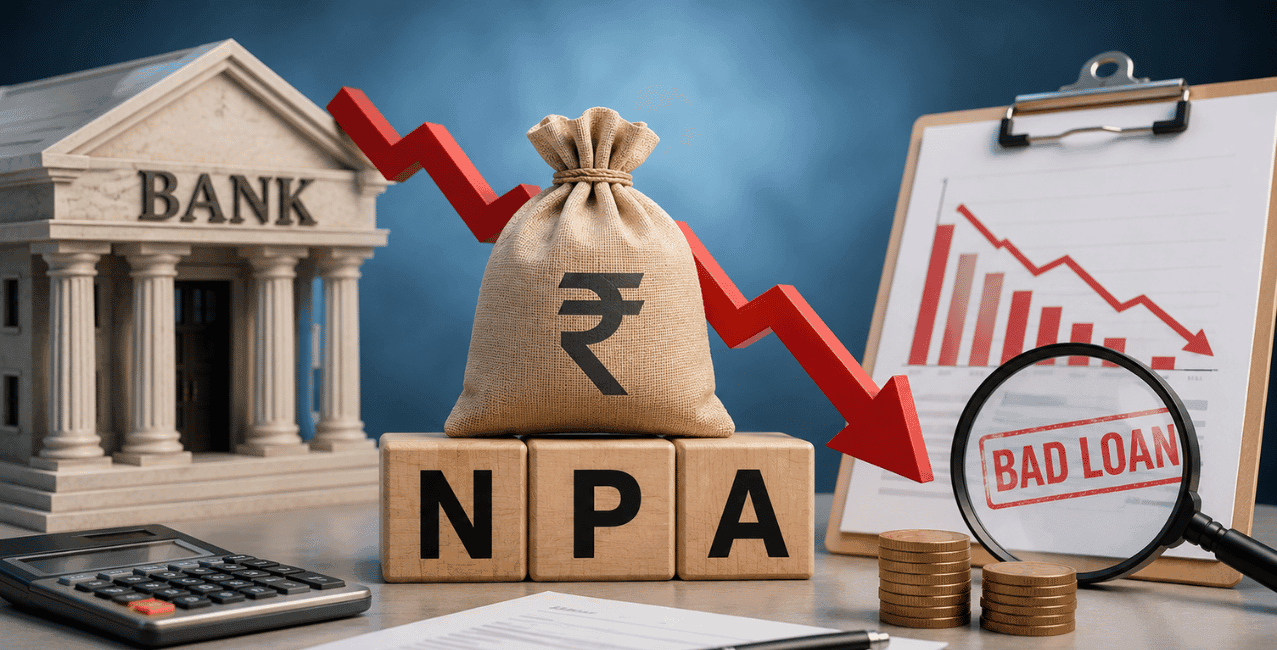
The acronym NPA means Non-Performing Asset. A loan would be considered NPA if the principal or interest is overdue for at least 90 days in the case of a term loan, subject to the relevant regulatory guidelines.
An overdraft/cash credit account would be considered to be NPA if the account is ‘out of order’ as per the relevant guidelines. There are separate guidelines prescribed by the RBI for certain other types of credit accounts and agricultural loans as well.
Once an account becomes an NPA, it represents a more serious stage of delinquency than an SMA account.
The main difference between NPA and SMA is the severity and stage of loan delinquency.
Thus, the SMA categorisation system serves as a significant early warning system. The account could go through different stages of SMA as the overdue period gets longer, and it could even become NPA if the dues remain outstanding for the stipulated period.
This progression can be illustrated by a very simple example.
*T&C Apply
As per RBI's classification guidelines, SMA and NPA classification is done through the lender's day-end process. The date of classification is the same as the calendar date for which the day-end process is done.
For example, assume that your loan instalment falls due on 31 March and you have not made the payment before the lender's day-end process for the said date; then, 31 March would be considered the date of overdue under the applicable scheme.
NPA is indicative of the fact that the loan is no longer regarded as a good account by the bank. The effect may be different for the bank and the borrower.
For the bank, there may be a need for provisioning and recovery measures. For the borrower, continuing not to pay back means he will find it harder to deal with his loan, as well as obtain any other loan in the future based on his credit history.
The RBI's asset classification system further classifies the NPA into categories such as sub-standard, doubtful and loss, etc,. Based on the situation and how long the account has been non-performing.
So it becomes necessary for the borrower to rectify his repayment problem in time.
In case your loan account falls into the SMA category, you can consider certain measures to ensure that things do not get out of hand. Here are a few things to do:
1. Pay Your Outstandings
In case there is any delay in paying your EMI or other loans, know how much you owe and clear them promptly.
2. Talk to the Bank
If you have some temporary financial problems, speak to your bank and do not let the overdue payments continue. You may inquire about what can be done according to the terms of your loan and its policies.
3. Know Your EMI Payment Date
Always be informed about the date on which your EMI is due.
4. Ensure You Have an Adequate Bank Account Balance
In case your EMI is to be automatically deducted, ensure that there is enough balance in your account.
5. Evaluate Your Loan Repayment Scheme
If your existing EMI is proving to be too much of a burden, analyse your financial situation and consider other payment schemes with your lender.
Mainly, the difference between NPA and SMA is based on the level and stage of repayment difficulty. The categories of SMA, which include SMA-0, SMA-1, and SMA-2, help in identifying the loan accounts that have high amounts of overdue dues. If the problem of overdue amounts persists beyond the limit, then the account can be termed an NPA.
For the loan takers, the lesson is quite clear: it is essential not to let the loan become an NPA. It is essential to keep track of the EMI deadlines and ensure that there are sufficient funds in your account to meet the payments.
SMA classification in itself is a type of internal classification by the lender, which is used to track stressed loans. Late or missed payments are usually submitted to credit information companies and can affect the credit profile of the borrower.
Yes, an SMA loan will revert to regular classification once the borrower has paid the amount required by the lender to bring the loan to regular status.
It might be harder to obtain a loan since the lenders check the behaviour in terms of repayment and other debts. The final verdict would be based on the credit score of the borrower and income levels.
No, since the borrower might need to settle all the amounts that are overdue and not just one instalment. Other possible charges and amounts that need to be cleared also need to be taken into consideration according to the loan agreement.
Yes, the borrower can raise an objection with the lender if he finds out that his/her account status has not changed despite having paid. The borrower needs to keep his/her payment receipt, transaction reference number and loan statement.
Yes, borrowers must confirm that their payment is made correctly without any overdue amount remaining in the loan account.
Delayed payments in several instalments could have some influence on the possibility of loan restructuring or other forms of loan repayment, depending on the policies of the lender and the circumstances of the borrower.
No, NPA status does not absolve the borrower of their repayment obligations. The borrower is still obliged to clear their dues.
By examining their monthly cash flows, the dates on which EMIs fall, and the balance left after deducting EMIs from their income, borrowers will be able to detect repayment difficulties. Creating reminders and maintaining an emergency buffer may also help avoid such difficulties.
The borrower must keep all EMI receipts, bank statements, transaction references, correspondence with the lender, and loan papers in case of any disputes about loan repayments.