By continuing, you agree to LoansJagat's Credit Report Terms of Use, Terms and Conditions, Privacy Policy, and authorize contact via Call, SMS, Email, or WhatsApp
Disclaimer: The information published on LoansJagat is intended for general informational and educational purposes only and should not be considered financial, legal, or investment advice. Interest rates, loan terms, statistics, and other data may change over time and may vary by lender or source. Please verify the latest information and consult a qualified financial advisor or the respective Bank/NBFC before making any financial decisions.
Apply for Loans Fast and Hassle-Free
Subscribe Now
About the author

LoansJagat Team
‘Simplify Finance for Everyone.’ This is the common goal of our team, as we try to explain any topic with relatable examples. From personal to business finance, managing EMIs to becoming debt-free, we do extensive research on each and every parameter, so you don’t have to. Scroll up and have a look at what 15+ years of experience in the BFSI sector looks like.
Related Blog Post
Simplify All Your Loans Into One Affordable EMI

Customers Served

Debt Consolidated

1200+ Reviews

Locations in India
Club all Loans & Credit Card Bills into Single EMI

Quick Apply Loan
Consolidate your debts into one easy EMI.

Takes less than 2 minutes. No paperwork.

10 Lakhs+
Trusted Customers

2000 Cr+
Loans Disbursed

4.7/5
Google Reviews

50+
Banks & NBFCs Offers
Other services mentioned in this article
Key Insights
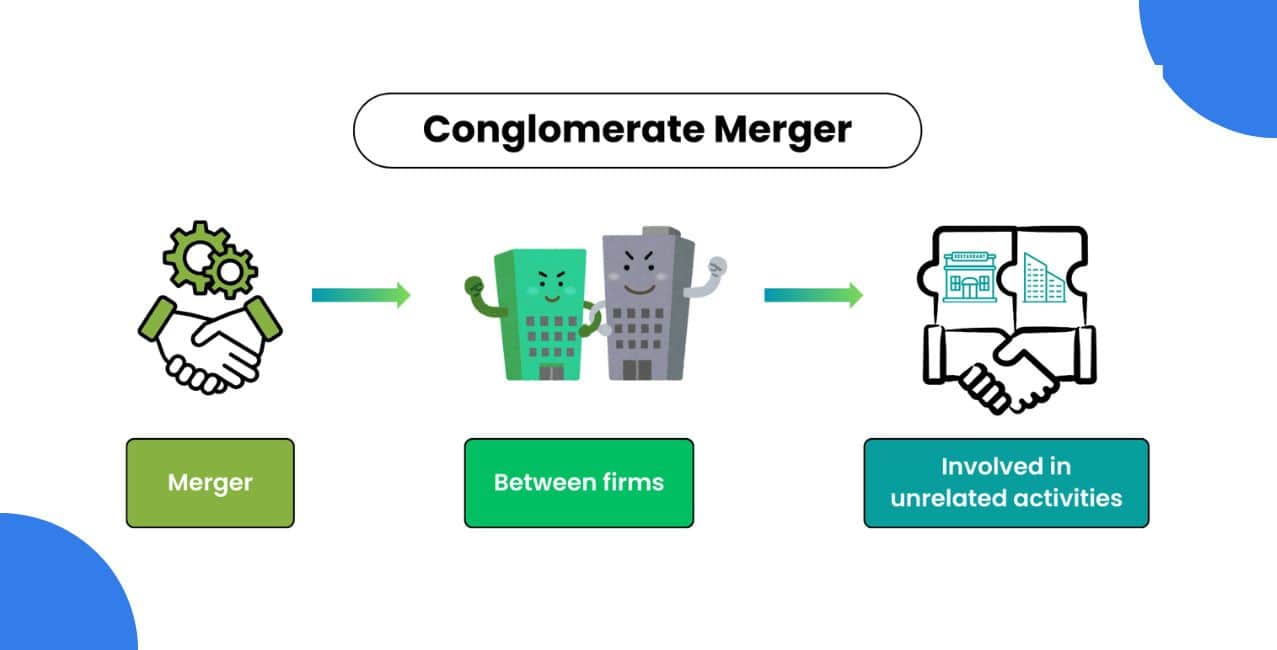
Conglomerate mergers take place when companies from different industries come together. This can lower their risk and help them enter new markets. If you look at examples of these mergers, you’ll see how big companies create a mix of businesses. In this blog, we’ll share some examples to make the idea of a conglomerate merger clearer.
Are you Looking at examples of companies that have gone through conglomerate mergers can help explain diversification. Economists define a conglomerate as a group of businesses that are not related to each other.
A conglomerate acquisition is different from a congeneric deal. Understanding what a conglomerate merger is can help you see how these strategies differ.
A conglomerate merger brings together companies from different industries. Economists view conglomerates as a way to spread risk by combining unrelated businesses. Unlike acquisitions of related companies, conglomerate mergers involve firms that offer very different products.
Example
Seeing a list of companies that have gone through conglomerate mergers helped me understand what a conglomerate merger is. For example, if a car company buys a hotel chain, that is a type of conglomerate acquisition. Economists describe a conglomerate as diversification without any operational connection between the businesses.
Conglomerate mergers can help companies diversify, but they also make management more complicated and may reduce value when businesses are not related.
Here is the table where you can the advantages and disadvantages of the conglomerate merger:
Conglomerate mergers help companies diversify, but they can also bring risks such as trouble combining operations, cultural clashes, and issues if managers lack experience.
Bonus Tip: If the merging companies are involved in different businesses but with the same target markets, a conglomerate merger may help them to cross-sell their existing products. Cross-selling will eventually lead to higher profits for the new company.
There are two types of conglomerate mergers: pure and mixed. In a pure conglomerate merger, the companies are unrelated and operate in different markets. In a mixed conglomerate merger, the companies might be in the same industry and join together to boost revenue and expand their market share by launching new branded products in various markets.
Merging with another successful business is a good way to share resources and benefits. If you have a small company, joining a bigger group in a different industry can help you grow. This partnership can also boost your cash flow and give you more time to focus on expanding your business.
If the merging companies are involved in different businesses but with the same target markets, a conglomerate merger may help them to cross-sell their existing products. Cross-selling will eventually lead to higher profits for the new company.
*T&C Apply
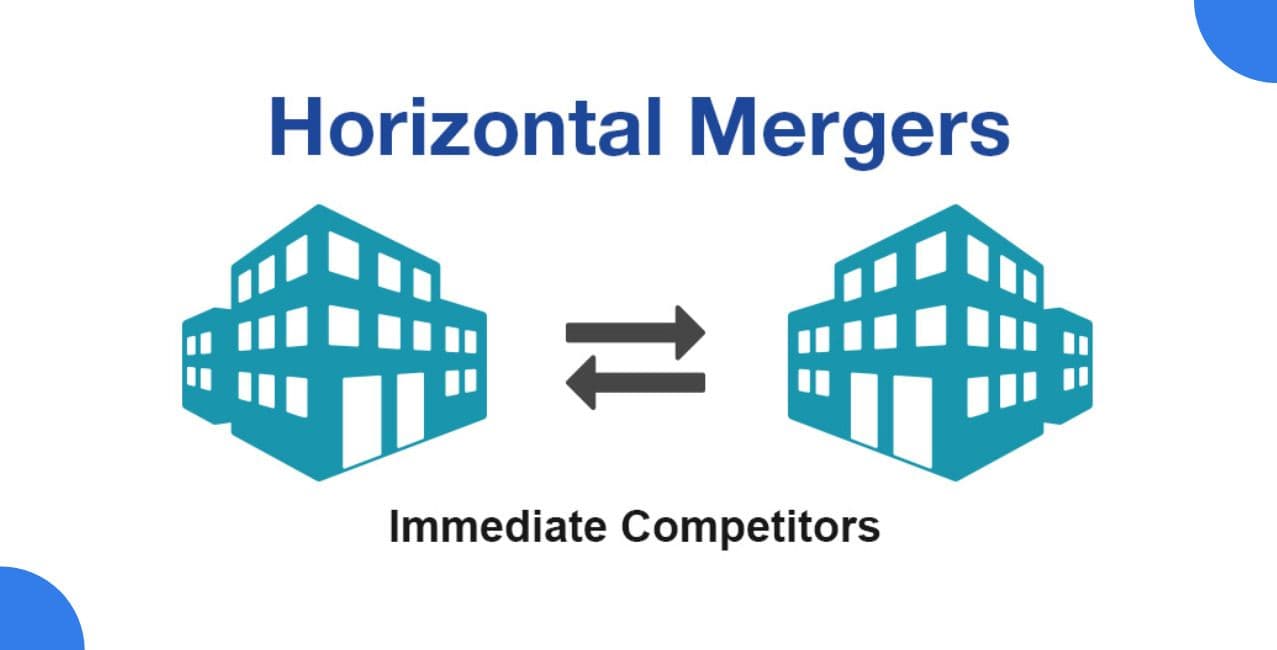
You might also consider a horizontal or vertical merger, depending on your goals.
If you have a larger company, you could take the lead as the acquirer. This involves finding another business, either similar in size or a smaller one with potential, to review, negotiate with, and possibly merge into your main business.
To decide if a To figure out if a merger is a good choice, you can use tools such as discounted cash flow (DCF) analysis, net present value (NPV), internal rate of return (IRR), market comparisons, and return on investment (ROI) projections.
Conglomerate mergers join companies from different industries. This helps businesses diversify, discover new cross-selling opportunities, and expand their investments. To make these deals work, companies use tools like DCF, NPV, and ROI. They also need to handle challenges like inexperienced management, cultural differences, and changes in how the business runs.
How to think about merging companies?
When considering a company merger, it is important to look at strategy, finances, and company culture to make sure the deal creates long-term value. Start by setting clear goals, such as growth, synergy, or gaining market share. Take time to do thorough due diligence to find any hidden risks, and check if the company cultures are a good fit to avoid problems after the merger.
How many employees are moving from their company to ours?
Recent industry trends show that many employees are changing jobs, especially in the tech and IT sectors. In fact, 6 out of 10 Indian employees plan to switch jobs in 2026.
What are some examples of a conglomerate merger?
Conglomerate mergers happen when companies from completely different industries or business activities join together. For example, Disney bought ABC, Berkshire Hathaway owns companies like GEICO and Dairy Queen, and Amazon bought Whole Foods.
What happens when 2 companies merge?
When two companies merge, they choose to join together and create a new company. This is often done to gain a bigger share of the market, cut down on competition, or work more efficiently. The companies combine their shares, bring their operations and management teams together, and usually save money by working as one.