By continuing, you agree to LoansJagat's Credit Report Terms of Use, Terms and Conditions, Privacy Policy, and authorize contact via Call, SMS, Email, or WhatsApp
Disclaimer: The information published on LoansJagat is intended for general informational and educational purposes only and should not be considered financial, legal, or investment advice. Interest rates, loan terms, statistics, and other data may change over time and may vary by lender or source. Please verify the latest information and consult a qualified financial advisor or the respective Bank/NBFC before making any financial decisions.
Subscribe Now
About the author

LoansJagat Team
‘Simplify Finance for Everyone.’ This is the common goal of our team, as we try to explain any topic with relatable examples. From personal to business finance, managing EMIs to becoming debt-free, we do extensive research on each and every parameter, so you don’t have to. Scroll up and have a look at what 15+ years of experience in the BFSI sector looks like.
Related Blog Post
Simplify All Your Loans Into One Affordable EMI

Customers Served

Debt Consolidated

1200+ Reviews

Locations in India
Club all Loans & Credit Card Bills into Single EMI

Quick Apply Loan
Consolidate your debts into one easy EMI.

Takes less than 2 minutes. No paperwork.

10 Lakhs+
Trusted Customers

2000 Cr+
Loans Disbursed

4.7/5
Google Reviews

50+
Banks & NBFCs Offers
Other services mentioned in this article
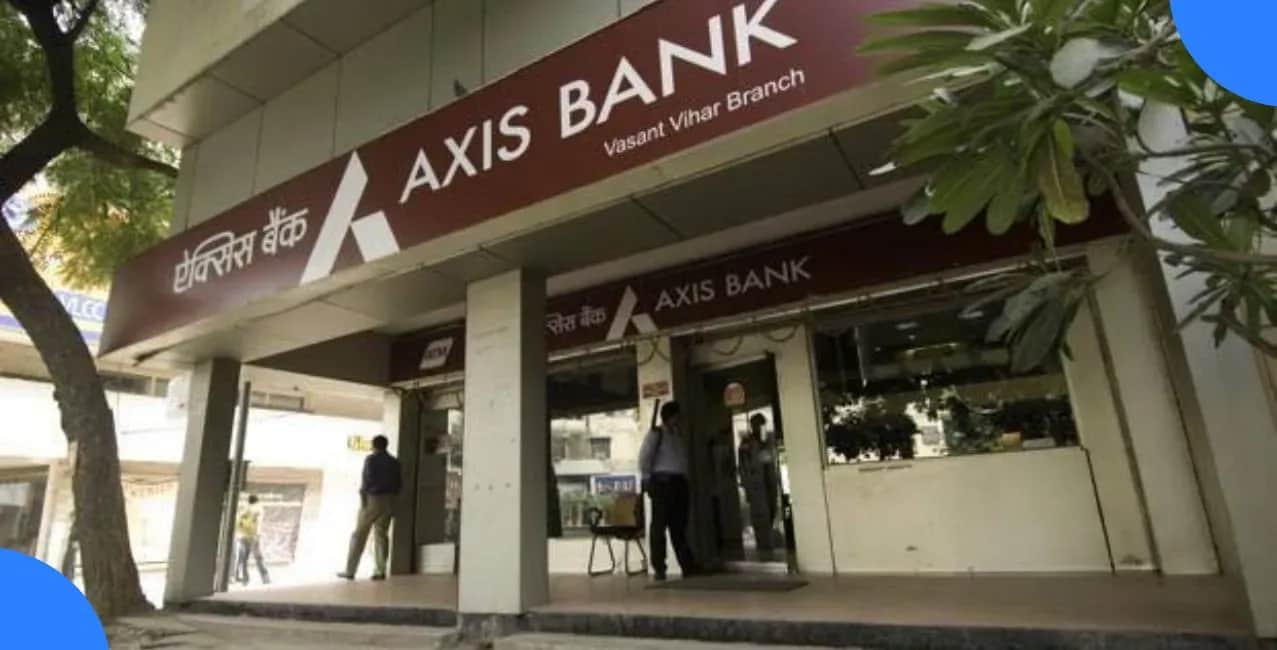
Axis Bank’s Q1 deposit growth lifted sentiment on July 6, while Kotak’s weaker liability trend triggered selling despite healthy loan expansion in banking shares today.
Key Takeaways
Shares of Axis Bank increased after the Q1 FY27 update, reporting deposits up by 18.2% and gross advances by 18.8%. HDFC Bank also reported an increase after posting advances and deposits growth in double digits. Kotak Mahindra Bank fell 3.5% with slow deposit growth and pressure on low-cost CASA deposits.
For a brief time, banking stocks reacted. For a prolonged time, this will show up as the cost of loans, price of deposits and quality of borrowers involved. When banks operate with loans and deposits less than the required statutory minimum, this leads to a situation of competitive bidding for fixed deposits, and in a bid to protect the lending spread, banks would resort to stringent lending norms. This would be detrimental to borrowers of home loans, MSMEs, and personal loans and small business owners.
Private bank shares did not move in one direction after the latest Q1 updates. Axis Bank and HDFC Bank gained because their growth looked more balanced. Kotak Mahindra Bank fell because the Street did not like the pressure on its liability side.
Axis Bank’s provisional Q1 FY27 update, dated July 4, 2026, showed total deposits at ₹13.73 lakh crore and gross advances at ₹12.73 lakh crore as of June 30, 2026. The update helped the stock because deposits grew nearly in line with loans. HDFC Bank also supported banking sentiment after its gross advances rose 15.4% and deposits rose 14.7% year-on-year.
Kotak’s case was different. The bank reported loan growth, but investors reacted to weaker deposit signals. Its net advances stood at ₹5.12 lakh crore for the quarter ended June 30, 2026, but slower sequential deposit growth and CASA weakness pulled the stock down.

Axis Bank gained because the bank’s deposit growth gave comfort to investors. A bank can expand credit faster when it has stable deposits. That reduces pressure on funding costs and protects lending margins.
Kotak slipped because investors read its Q1 update as a warning on deposit quality. CASA deposits are cheaper than bulk deposits or higher-rate fixed deposits. When CASA weakens, banks may need costlier funds. That can put pressure on net interest margins in the coming quarters.
Before the table, the key point is simple. The market looked beyond loan growth. It checked whether each bank had enough deposit strength to support that loan growth.
After the table, the split reaction becomes easier to read. Axis and HDFC Bank had a stronger deposit story. Kotak had growth, but the liability side raised doubts.
The previous update came from the wider banking system. LoansJagat reported on July 4, 2026, that bank credit in India crossed ₹20,47,50,000 crore, while deposits stood at ₹24,88,10,000 crore as of January 31, 2026. The report also placed system-level credit growth at 14.6% against deposit growth of 12.5%.
That gap created the backdrop for the July 6 stock reaction. Investors were already watching whether private banks could grow deposits fast enough. So, when Axis Bank showed stronger deposit growth, the stock gained. When Kotak showed pressure in deposits, selling followed.
Official financial inclusion data also gives a broader view. The Press Information Bureau said on March 16, 2026, that 57.78 crore Jan-Dhan accounts had deposits of ₹294,702 crore as of February 25, 2026. This shows that India’s banking base has widened, but large banks still need active, stable and low-cost deposits to support lending.

*T&C Apply
For depositors, this phase may bring better fixed deposit offers. Banks need deposits to support lending, so savers may see more special-tenure schemes, senior citizen offers and branch-level deposit drives. Risk-averse households could benefit from this competition.
For borrowers, the result may be less comfortable. Strong loan growth means banks are still lending, but deposit pressure can stop loan rates from falling quickly. Personal loan borrowers, MSME borrowers and unsecured credit users may face stricter checks if banks try to protect margins.
For the wider public, stronger banking access is a positive sign. More Jan-Dhan accounts, digital payments and formal savings routes help families build banking history. That can support future access to insurance, credit and direct benefit transfers.
The pressure point remains loan affordability. If banks collect deposits at higher rates, they may not reduce lending rates quickly. A borrower applying for a home loan or business loan should check the reset date, processing charge, foreclosure fee and total interest cost before signing.
Market experts read the Q1 updates as a liability-side test for banks. The stock reaction showed that investors rewarded banks with stronger deposit growth and punished those showing pressure in low-cost funds. Axis Bank passed that test better than Kotak in early trade on July 6.
The fix is not complicated, but it takes steady execution. Banks need more retail savings accounts, better salary account retention, stronger current account relationships and fewer expensive deposits. Loan growth has to stay linked with deposit quality.
For borrowers, the solution is comparison. A small difference in rate, reset date or processing fee can change the final repayment burden. Loans should not be judged only by EMI. The total payout over the full tenure gives a better borrower view.
Axis Bank said in its Q1 FY27 provisional update that the numbers were subject to limited review by statutory auditors. That means the full June-quarter results will give a fuller picture of margins, asset quality, profit and management commentary.
The disclosure framework also comes under the listed company rules. The Securities and Exchange Board of India issued its Master Circular on January 30, 2026, for compliance with the SEBI Listing Obligations and Disclosure Requirements Regulations, 2015 by listed entities. This is why quarterly business updates by listed banks are closely watched before final earnings.
Government data from the Press Information Bureau also shows why deposits remain important for India’s banking reach. A larger account base helps banks expand, but investor confidence depends on how much of that money stays stable and low-cost.
Axis Bank’s Q1 update gave investors a stronger deposit signal. HDFC Bank also gained because its scale and double-digit growth supported banking sentiment. Kotak Mahindra Bank slipped because the market reacted to deposit pressure and CASA weakness.
The next update will come through full Q1 FY27 earnings. That is where investors will check whether these business updates translate into stronger margins and profits. Borrowers should watch the same trend from another angle. If banks pay more for deposits, loan pricing may stay tight for longer.
Why did Axis Bank shares gain after the Q1 update?
Axis Bank gained because deposits rose 18.2% and advances rose 18.8%, showing balanced growth in Q1 FY27.
Why did Kotak Mahindra Bank fall despite loan growth?
Kotak fell because investors focused on weaker sequential deposit growth and CASA pressure, not only on loan expansion.
What impact will this have on borrowers?
If banks try tenaciously to protect margins while seeking to attract more deposits, borrowers may have to face slower rate reductions or more stringent rate checks.
Will depositors be able to cash in on this trend?
Definitely. If banks are in even more need of stable deposits, they may offer more attractive fixed deposit rates or introduce special schemes.
What will be the focus for investors?
More attention should be given to margins, CASA ratio, credit-deposit ratio, asset quality, and management commentary for Q1 FY27.









.png&w=3840&q=75)



