
By continuing, you agree to LoansJagat's Credit Report Terms of Use, Terms and Conditions, Privacy Policy, and authorize contact via Call, SMS, Email, or WhatsApp
Disclaimer: The information published on LoansJagat is intended for general informational and educational purposes only and should not be considered financial, legal, or investment advice. Interest rates, loan terms, statistics, and other data may change over time and may vary by lender or source. Please verify the latest information and consult a qualified financial advisor or the respective Bank/NBFC before making any financial decisions.
Subscribe Now
About the author

Arshathul Afia
Arshathul Afia is a journalism graduate and fintech content writer with 4+ years of experience in digital publishing and research-led writing. She has written 200+ articles covering personal finance, lending, banking, digital payments, credit, insurance, and major financial developments in India. At LoansJagat, she focuses on simplifying complex fintech news, RBI updates, loan-related changes, policy developments, and industry trends for everyday readers. Her journalism background helps her approach stories with research, context, and clarity, while her SEO experience ensures content remains discoverable and relevant. She aims to make financial news easier to understand, practical, and useful for readers across India.
Related Blog Post
Simplify All Your Loans Into One Affordable EMI

Customers Served

Debt Consolidated

1200+ Reviews

Locations in India
Club all Loans & Credit Card Bills into Single EMI

Quick Apply Loan
Consolidate your debts into one easy EMI.

Takes less than 2 minutes. No paperwork.

10 Lakhs+
Trusted Customers

2000 Cr+
Loans Disbursed

4.7/5
Google Reviews

50+
Banks & NBFCs Offers
Banks want permission to apply fresh trade rules to old mismatches, helping exporters resolve stalled records and reducing compliance pressure across India’s banking system nationwide.
Key Highlights
New rules will take effect on 1 October 2026, but lenders do not want to use them retrospectively without written approval. Permission could speed up genuine closures, reduce repeated document requests and improve trade records. If banks remove entries without enough proof, irregular remittances may escape scrutiny.
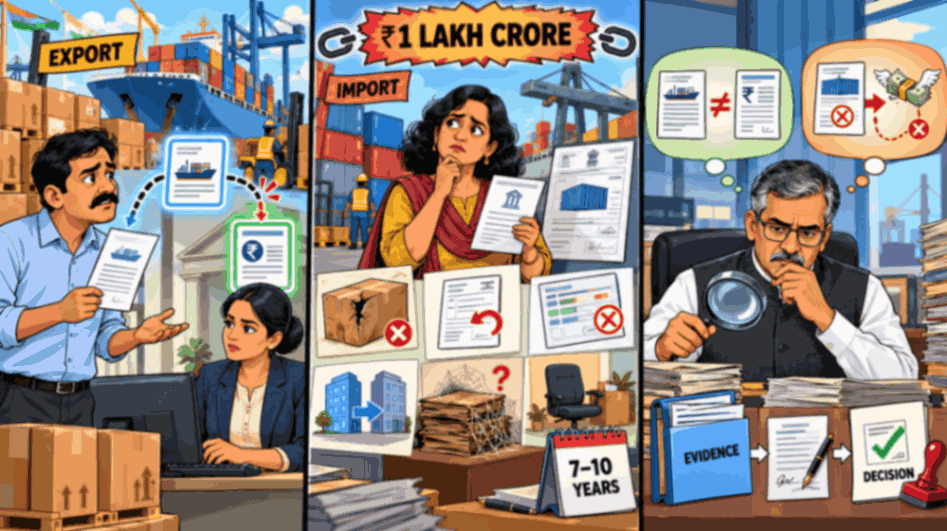
India tracks export shipments and import payments through separate banking and customs records. For an export, the bank must connect the overseas receipt with the correct shipping bill. For an import, it must link the foreign remittance with evidence that goods entered India. A record remains open when the transaction happened but the data failed to match, or when part of the transaction never took place.
The reasons are often ordinary. A buyer may deduct money for damaged goods, an exporter may issue a credit note, or a payment platform may attach the wrong purpose code. Mergers and missing files add difficulty. After 7 or 10 years, the employee who handled the order may have left.
Other entries point to a genuine breach. An exporter may never receive the money, or an importer may fail to bring back a cancelled order’s refund. Each record therefore needs evidence, an explanation and a documented decision.
The first benefit would reach exporters and importers that have already completed genuine trades. A textile unit in Tiruppur may have received dollars through a payment intermediary, yet its shipping bill remains open because the receipt carried a different code. A machinery importer in Pune may have submitted papers years ago, but the bank’s record still shows an unmatched remittance. A practical closure route would reduce branch visits, professional fees and staff hours spent rebuilding an old file.
Smaller firms have less room to absorb that work. MSME-related products formed 48.55% of India’s merchandise exports in 2024-25, according to a government update published on 30 March 2026. Such businesses often depend on packing credit, bill discounting and working-capital limits to accept the next order. An unresolved entry does not automatically stop finance, but it can trigger questions during account reviews and slow a bank’s decision.
The framework taking effect on 1 October 2026 gives authorised dealer banks wider room in genuine trade cases. Banks may examine delayed payments, reductions in export value, permitted set-offs, third-party receipts or payments, and advances that cannot be refunded after a transaction failed. The new approach places more judgement with the bank handling the customer.
Older transactions were reported under the rules operating when those trades occurred. A lender that closes them under a future framework could face an audit query later, even if the customer has supplied a believable explanation. Banks want a written transition route covering entries outstanding up to 30 September 2026. They also want to finish as many cases as possible before the new framework starts.
The dated comparison below shows how the requested permission differs from the relief already available.
Approval would not erase the backlog overnight. Banks would still collect declarations, review payment trails and record who authorised each closure. Higher-value remittances with weak support should face closer scrutiny.
The first major step came on 1 October 2025, when eligible outstanding entries of up to ₹10 lakh received a simpler reconciliation route. The change helped banks address a large number of smaller items through customer declarations. A related LoansJagat explainer noted that the relief could reduce paperwork for smaller exporters and importers, especially where old records remained technically open despite a genuine transaction.
That relaxation reduced entry volume, but larger cases stayed behind. A ₹25 lakh export carrying a disputed deduction could need more evidence than the small-value route allowed. In July 2026, advisers suggested a limited window for old cases, supported by audited accounts or bank statements.
India’s merchandise and services exports reached US$863.1 billion in FY 2025-26, according to an official trade release. That volume produces vast numbers of invoices and payment messages. Better matching when payment arrives remains cheaper than another decade-long clean-up.
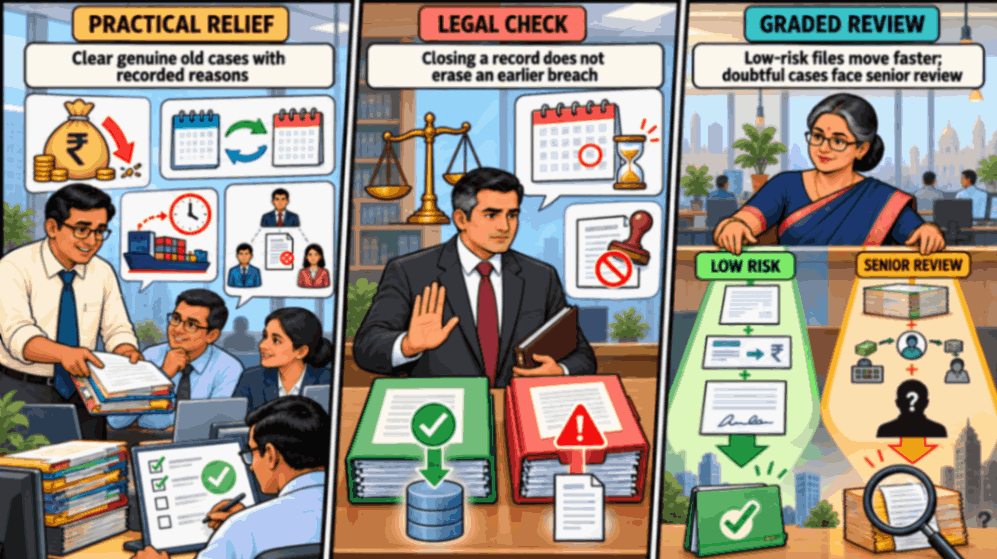
Harshal Bhuta of P.R. Bhuta & Co supported extending the revised framework to existing cases. He said it could assist with larger write-offs, set-offs across different periods, delayed import payments and third-party transactions where a formal tripartite agreement was missing. His comments favour practical relief, provided the bank records why the transaction qualifies.
Moin Ladha of Khaitan & Co offered a tighter legal reading. Wider bank discretion may resolve genuine delays, but it does not automatically erase an earlier breach. A customer whose transaction lacked approval or missed a deadline may still face the consequences attached to that failure. Closure of a data entry and forgiveness of non-compliance are 2 separate decisions.
From a LoansJagat borrower perspective, the strongest fix is a graded review rather than a blanket waiver. Low-risk records with matching invoices, payment trails and customer declarations can move quickly. Larger entries, third-party flows and cases with missing counterparties should pass through senior review. This protects genuine firms while keeping doubtful remittances open for investigation.
Banks also need one evidence checklist. Exporters should keep invoices, shipping bills, credit notes and payment advice. Importers should retain contracts, bills of entry, cancellation letters and refund requests. Audited accounts may support cases where original papers are unavailable.
The banks’ request offers a route through years of unfinished trade records, but the result depends on the transition terms issued before or after 1 October 2026. Permission with defined checks could help genuine exporters and importers finish old cases without weakening scrutiny. No permission would leave lenders using older routes for the backlog while applying wider rules only to new transactions.
A workable order should separate clerical gaps from commercial failures and suspect flows. Banks can resolve documented cases, seek senior approval for larger amounts and retain doubtful transactions for further action. That would reduce stale paperwork, protect audit trails and keep the clean-up focused on genuine trade.
They are records that remain open because banks cannot connect a shipment, payment and its documents. Others involve unpaid exports, cancelled imports or missing refunds.
No. Banks would still examine customer declarations, transaction records and the reason for the mismatch. Suspicious, disputed or unsupported cases could remain open or move to further review.
The exporter can request an outstanding statement from its bank and match it with shipping bills, payment advice and electronic realisation records. Written confirmation is safer than relying on account credit.
The exporter may request an extension, reduction or permitted write-off. The bank will usually ask for recovery efforts, correspondence and the reason payment became impossible.
The receipt may carry the wrong code or may not be matched with the correct shipping bill, leaving the entry open until the bank fixes the link.








.png&w=3840&q=75)


