By continuing, you agree to LoansJagat's Credit Report Terms of Use, Terms and Conditions, Privacy Policy, and authorize contact via Call, SMS, Email, or WhatsApp
Disclaimer: The information published on LoansJagat is intended for general informational and educational purposes only and should not be considered financial, legal, or investment advice. Interest rates, loan terms, statistics, and other data may change over time and may vary by lender or source. Please verify the latest information and consult a qualified financial advisor or the respective Bank/NBFC before making any financial decisions.
Subscribe Now
About the author

Arshathul Afia
Arshathul Afia is a journalism graduate and fintech content writer with 4+ years of experience in digital publishing and research-led writing. She has written 200+ articles covering personal finance, lending, banking, digital payments, credit, insurance, and major financial developments in India. At LoansJagat, she focuses on simplifying complex fintech news, RBI updates, loan-related changes, policy developments, and industry trends for everyday readers. Her journalism background helps her approach stories with research, context, and clarity, while her SEO experience ensures content remains discoverable and relevant. She aims to make financial news easier to understand, practical, and useful for readers across India.
Related News
Simplify All Your Loans Into One Affordable EMI

Customers Served

Debt Consolidated

1200+ Reviews

Locations in India
Club all Loans & Credit Card Bills into Single EMI

Quick Apply Loan
Consolidate your debts into one easy EMI.

Takes less than 2 minutes. No paperwork.

10 Lakhs+
Trusted Customers

2000 Cr+
Loans Disbursed

4.7/5
Google Reviews

50+
Banks & NBFCs Offers
Other services mentioned in this article
A ₹50,000 unpaid credit card balance can add ₹1,875 in 1 month at 3.75%, while fees may push the next bill even higher for borrowers.
Key Highlights
Indian credit card users can face a much larger bill after making any of 9 common payment or spending errors. SBI Card’s April 2026 Key Fact Statement lists a monthly finance charge of 3.75% for unsecured cards. Applied to an unpaid ₹50,000 balance, that works out to ₹1,875 for 1 month before taxes. It is an issuer-specific example, not a rate charged by every bank.
The warning affects people using cards for groceries, medical bills, travel, online shopping or expenses before salary day. The first impact appears in the next statement through interest and fees. If the balance continues for several months, fresh purchases may also lose their interest-free period. Repayment then becomes harder, particularly when the household already has rent, school fees or loan EMIs to pay.
Unpaid credit card balance
₹50,000
↓
Illustrative monthly finance charge
3.75%
↓
Interest for 1 month
₹50,000 × 3.75% = ₹1,875
↓
Balance before applicable taxes
₹51,875
The final charge may be different. Issuers can calculate interest from transaction dates, payment dates, and daily outstanding balances. Refunds, reversals, and new spending also affect the statement.
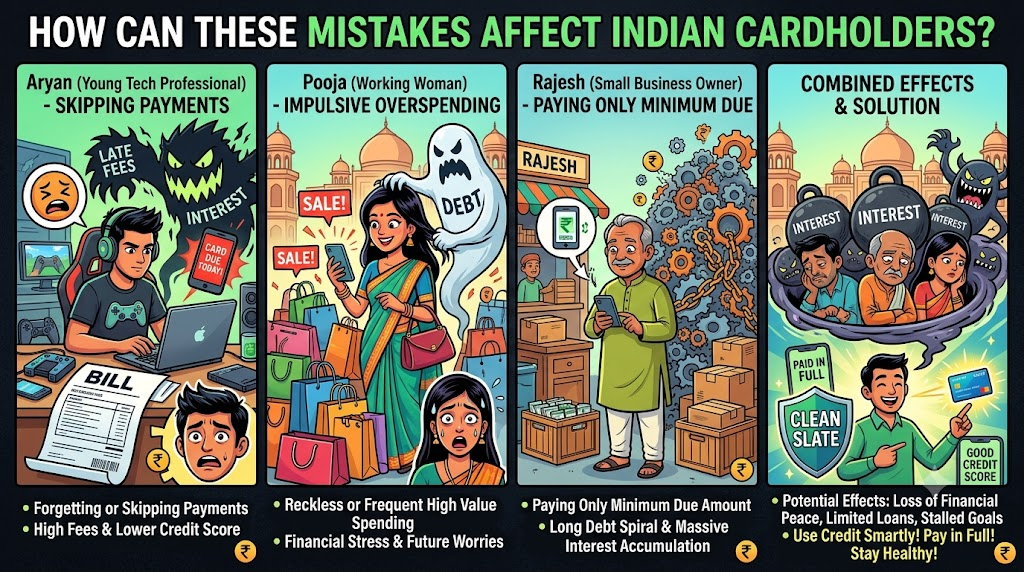
Many users treat the minimum amount due as a smaller version of the full bill. That reading creates trouble. The account may avoid immediate overdue treatment, but most of the debt remains. Interest continues, and the next statement can include the old balance, new purchases and fresh charges together.
Full repayment changes the outcome. SBI Card’s April 2026 document lists an interest-free period of 20 to 50 days on eligible retail purchases when the previous bill has been paid completely. Someone who checks the statement early and keeps enough money ready before the due date can use the card without paying revolving interest on those purchases.
The table below uses SBI Card’s April 2026 Key Fact Statement and its terms updated in July 2026. These are examples from 1 issuer. Charges on another card may be lower, higher or structured differently.
The ₹1,875 figure covers only finance charges in the stated example. A cash fee, dishonoured payment charge or overlimit fee can appear in the same month. Taxes may raise the payable amount again.
Consider a person who withdraws ₹10,000 from an ATM after already carrying a balance. A 2.5% fee would ordinarily be ₹250, but the ₹500 minimum applies under the cited schedule. At 3.75% for 1 month, another ₹375 may be added as finance cost. The pre-tax expense can reach about ₹875, depending on the billing dates.
The statement should be checked before any payment is made. Total amount due and minimum amount due are not interchangeable. The transaction list also needs a quick review, especially after travel, online shopping, or a month with several small payments.
A borrower who cannot clear the full amount should stop using the card for fresh non-essential spending. Paying only the minimum and continuing to shop creates 2 layers of debt in the next cycle. Contacting the issuer before the due date may provide access to an EMI conversion or another repayment arrangement, though the total cost must be checked first.
Auto-pay also needs supervision. The linked account must hold enough money on the debit date. Afterward, the user should confirm that the card account received the payment. A debit instruction alone does not prove that the bill was settled.
Cash withdrawal deserves extra caution. It starts attracting interest immediately in the cited SBI Card terms. For a short emergency, the borrower should compare the full cost against other available options instead of looking only at the amount received from the ATM.
Government action earlier concentrated on online financial fraud. A Press Information Bureau release dated June 17, 2026 said Union Home Minister Amit Shah reviewed the National Cyber Crime Helpline 1930 and the Citizen Financial Cyber Fraud Reporting and Management System in New Delhi.
The release said around 1 lakh citizens had benefited from the Money Restoration and Grievance Redressal mechanism by that date. It also referred to a Standard Operating Procedure issued on January 2, 2026, for handling complaints submitted through the cybercrime portal and the financial fraud reporting system.
That update dealt mainly with losses after a fraudulent transaction. The present warning covers another side of card use. Even regular purchases can cost more if the cardholder carries forward dues, withdraws cash, misses a payment, or chooses an expensive currency conversion.
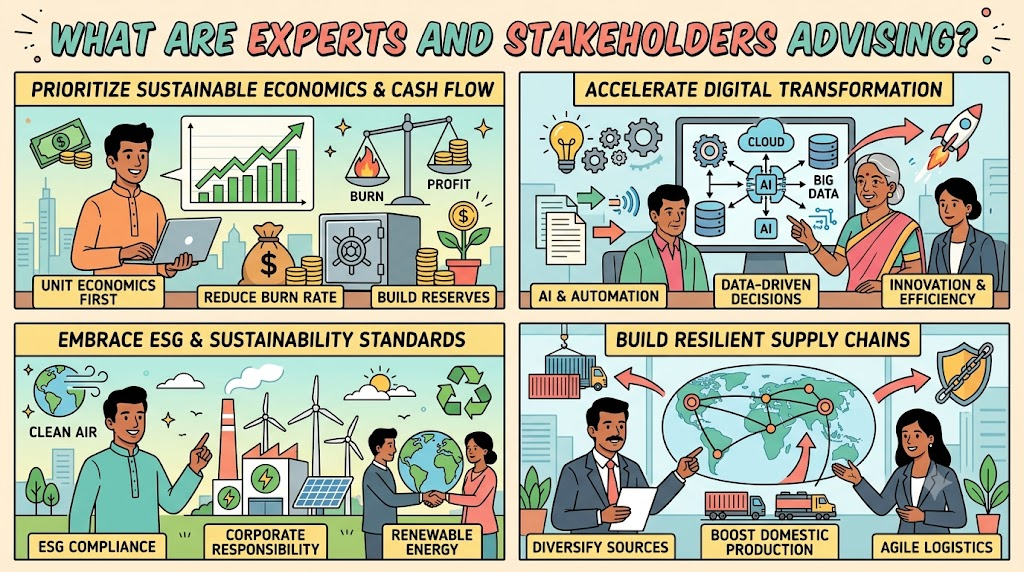
Card users are suggested by CERT-In to check statements regularly, avoid unknown links in payments, and never give OTP, PIN, or CVV to callers. It also advises customers to seek out customer care telephone numbers from trusted sources and does not provide information on the best ways to safeguard themselves against cybercrime.
The advice is useful because fraud calls often create urgency. A caller may claim that a card will be blocked in 10 minutes or that KYC has expired. The request usually follows quickly: install an app, share an OTP or open a link. None of these steps should be completed during an incoming call.
During the June 17, 2026 review, Amit Shah asked states and Union Territories to strengthen their 1930 call centres and prevent unanswered complaints from remaining pending. For a cardholder, speed remains important. The card should be blocked first, followed by a complaint to the issuer and 1930.
The borrower-side view is less dramatic but equally useful. Reward points should never decide spending when the full bill cannot be paid. Earning ₹1,000 in rewards offers little relief if interest, forex charges and payment fees add ₹3,000 or ₹4,000 later.
Credit card debt often grows through ordinary decisions. A minimum payment looks manageable. A cash withdrawal solves a short shortage. An auto-debit is assumed to have worked. The extra cost appears later.
At 3.75% per month, ₹50,000 left unpaid can add ₹1,875 before taxes in 1 billing cycle. Other fees may come on top of that amount.
Paying the total due remains the safest route. Cardholders should also check auto-debits, avoid ATM cash, review foreign currency charges, and read the fee schedule before making large rent, wallet, or utility payments. Any unauthorised transaction needs an immediate card block and a fast report through the issuer and 1930.
Can paying the minimum due stop interest?
No. Paying the minimum only keeps the account from being marked unpaid. Interest still builds on the remaining balance.
Why does ₹50,000 create ₹1,875 in interest?
The calculation uses an illustrative monthly rate of 3.75%. ₹50,000 multiplied by 3.75% equals ₹1,875 before taxes.
Does every credit card charge 3.75% each month?
No. This rate comes from an SBI Card disclosure for unsecured cards. Another issuer or product may use a different rate.
Is cash withdrawal from a credit card free for a few days?
Not under the cited SBI Card terms. The cash fee applies at withdrawal, and finance charges start from the transaction date.
What should someone do after spotting an unknown card transaction?
Block the card immediately. The issuer should be informed next, followed by a report through the 1930 cyber-fraud helpline.
What is the best way to use a credit card?
Use a credit card only for planned purchases, stay within budget, and pay the full bill before the due date.










.png&w=3840&q=75)


