By continuing, you agree to LoansJagat's Credit Report Terms of Use, Terms and Conditions, Privacy Policy, and authorize contact via Call, SMS, Email, or WhatsApp
Disclaimer: The information published on LoansJagat is intended for general informational and educational purposes only and should not be considered financial, legal, or investment advice. Interest rates, loan terms, statistics, and other data may change over time and may vary by lender or source. Please verify the latest information and consult a qualified financial advisor or the respective Bank/NBFC before making any financial decisions.
Subscribe Now
About the author

Arshathul Afia
Arshathul Afia is a journalism graduate and fintech content writer with 4+ years of experience in digital publishing and research-led writing. She has written 200+ articles covering personal finance, lending, banking, digital payments, credit, insurance, and major financial developments in India. At LoansJagat, she focuses on simplifying complex fintech news, RBI updates, loan-related changes, policy developments, and industry trends for everyday readers. Her journalism background helps her approach stories with research, context, and clarity, while her SEO experience ensures content remains discoverable and relevant. She aims to make financial news easier to understand, practical, and useful for readers across India.
Related Blog Post
Simplify All Your Loans Into One Affordable EMI

Customers Served

Debt Consolidated

1200+ Reviews

Locations in India
Club all Loans & Credit Card Bills into Single EMI

Quick Apply Loan
Consolidate your debts into one easy EMI.

Takes less than 2 minutes. No paperwork.

10 Lakhs+
Trusted Customers

2000 Cr+
Loans Disbursed

4.7/5
Google Reviews

50+
Banks & NBFCs Offers
Other services mentioned in this article
U.S. card balances reached $1.25 trillion in Q1 2026. Borrowers are using card perks in response to the growing balances. The high interest rates rapidly deplete their savings.
U.S. credit card balances stood at $1.25 trillion in Q1 2026, according to the Federal Reserve Bank of New York’, household debt update. The number came from the United States, but Indian card users can read the warning too. Fuel, phones, travel bookings, rent-linked spending, insurance premiums and grocery bills now go on plastic. A small unpaid amount can roll into the next bill.
What’s the headline figure? How about $1.25 trillion? That was the U.S. balance in credit cards at the end of Q1 2026. Balances dropped $25 billion from the previous quarter, which typically occurs after the spending frenzy of the holiday season. The year-on-year scan, however, did not bring good news. Credit card balances were $70 billion higher than in Q1 2025.
What more could be said about repayment pains? They were still prominently featured. The New York Fed said that the flow into serious delinquency for credit cards went from 7.04% in Q1 2025 to 7.10% in Q1 2026. Serious delinquency describes a borrower who is 90 days late, or more, which is truly a case of no more than one due date being forgotten.
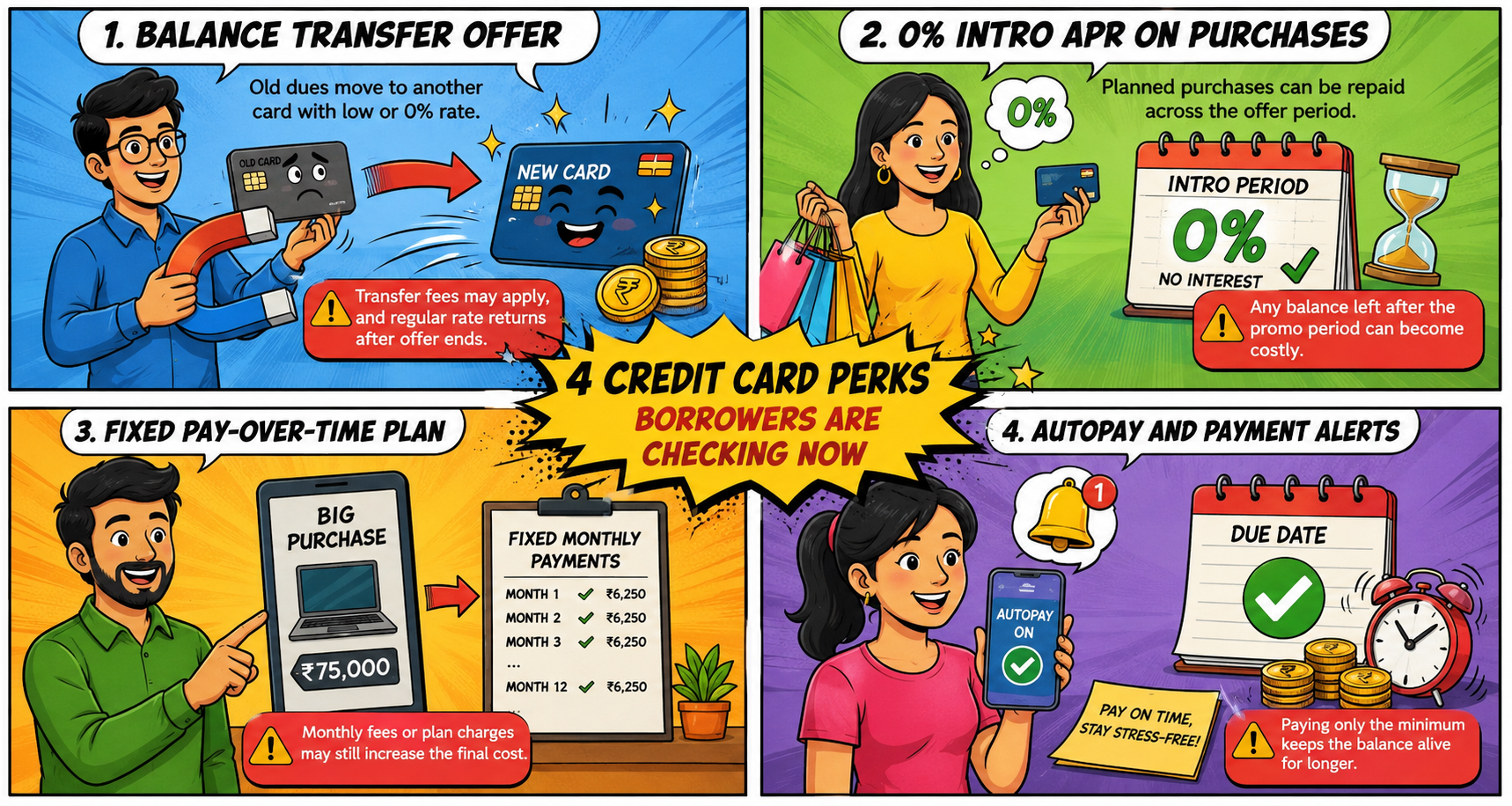
Credit card perks can help, but only when the borrower uses them with a payoff date. Without that, the feature only moves the bill around.
A borrower should read the offer page like a loan document. Fees, promo end date, normal APR and payment date all need a quick check before clicking "confirm." That 2-minute check can save months of regret.
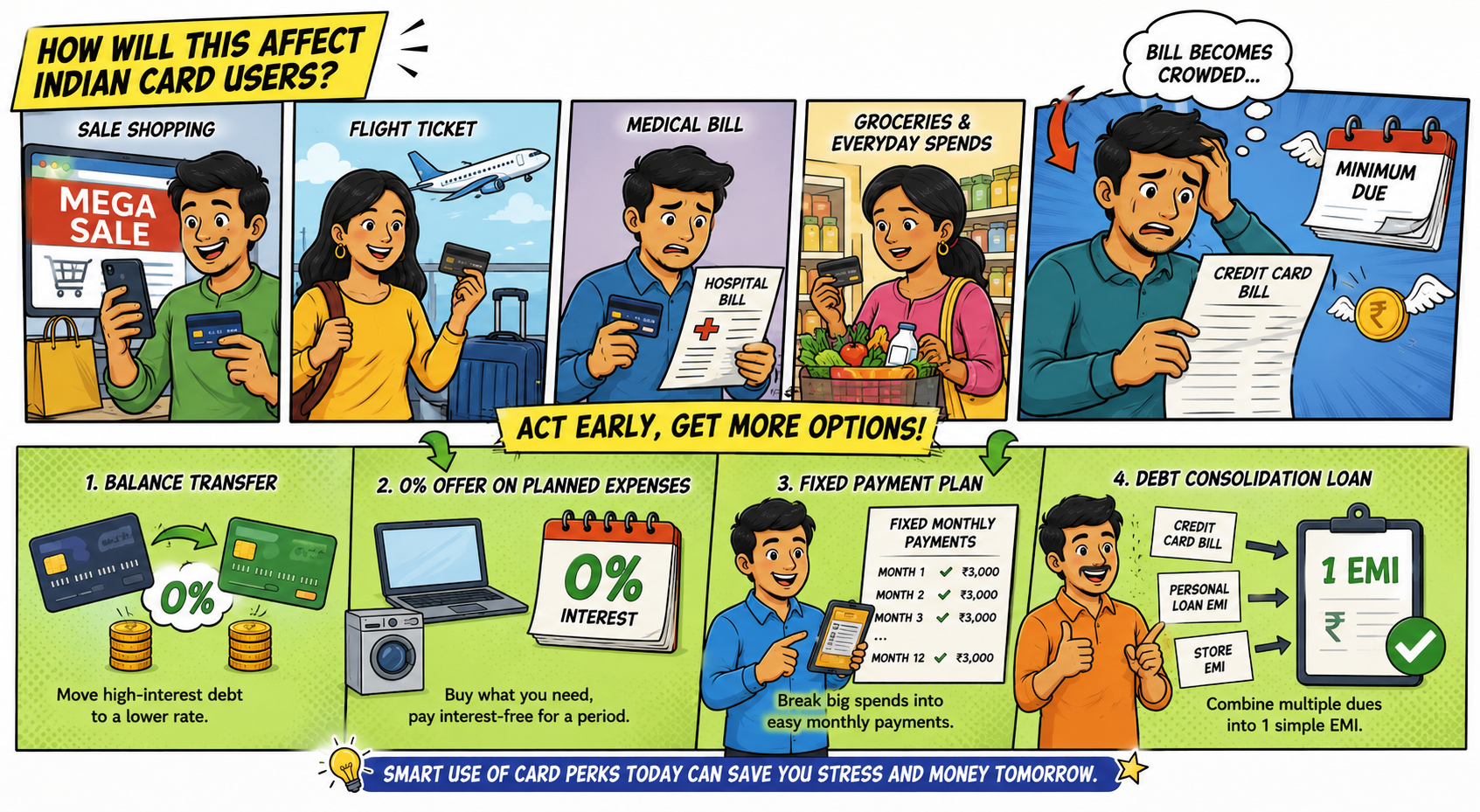
Indian borrowers may see the U.S. figure as foreign news, but the habit behind it is familiar. A sale purchase becomes an EMI. A flight ticket goes on the card. A medical bill is pushed to next month. Many users start with convenience, not with a plan to borrow. The bill then becomes crowded, and the minimum due starts looking tempting.
There is still a useful lesson here. Borrowers who act early get more options. A balance transfer can help when interest is already biting. A 0% offer can work for a planned expense, such as a laptop needed for work or an urgent appliance replacement. A fixed payment plan can separate one big spend from the rest of the card bill. For borrowers managing several repayments together, LoansJagat’s debt consolidation loan explainer describes consolidation as combining multiple dues into 1 EMI.
Daniel Mangrum, research economist at the New York Fed, said household debt rose slightly in Q1 2026, while modest increases in most debt types were partly offset by a seasonal decline in credit card balances. That line stops readers from treating the quarterly fall as full relief. Card balances came down from Q4 2025, yes. The wider debt load still moved up.
The safer fix starts before the borrower picks any perk. Stop fresh non-essential card spending first. Then compare the cost of a balance transfer, a 0% offer, a payment plan or consolidation. After that, set autopay for due-date protection and pay extra manually when income permits. A perk without a repayment date is only a delayed bill with better packaging.
The previous update had 2 parts. U.S. credit card balances fell by $25 billion from Q4 2025 and stood at $1.25 trillion in Q1 2026. That drop may look comforting at first. The annual number gives the other side. Card debt was still $70 billion higher than Q1 2025.
The delinquency figure added the sharper warning. Flow into serious delinquency rose from 7.04% in Q1 2025 to 7.10% in Q1 2026. For lenders, it points to repayment strain. For households, it can mean penalty charges, collection calls, damaged credit records and fewer low-cost borrowing options later.
Credit card perks can help borrowers manage payments, but none of them work without control over fresh spending. Balance transfers can cut interest for a short window. A 0% intro APR can support a planned purchase. Fixed payment plans can make a large expense easier to track. Autopay can stop a missed date from adding more trouble.
The official numbers carry a simple warning. U.S. card balances stood at $1.25 trillion in Q1 2026, assessed-interest card rates reached 22.15% in May 2026, and serious delinquency flow touched 7.10%. Indian cardholders can use the lesson early. A card perk should shorten the debt journey, not stretch it into another billing cycle.
It means U.S. borrowers together owed $1.25 trillion on credit cards in Q1 2026.
A balance transfer can reduce interest quickly if the borrower repays the amount before the promotional rate ends.
No. It delays interest for the offer period. The purchase amount still has to be repaid.
They should avoid minimum-due habits, check card fees and use every perk with a repayment date.
It can help some borrowers combine multiple dues into 1 EMI, but the total cost must be checked first.









.png&w=3840&q=75)


