
By continuing, you agree to LoansJagat's Credit Report Terms of Use, Terms and Conditions, Privacy Policy, and authorize contact via Call, SMS, Email, or WhatsApp
Disclaimer: The information published on LoansJagat is intended for general informational and educational purposes only and should not be considered financial, legal, or investment advice. Interest rates, loan terms, statistics, and other data may change over time and may vary by lender or source. Please verify the latest information and consult a qualified financial advisor or the respective Bank/NBFC before making any financial decisions.
Subscribe Now
About the author

Arshathul Afia
Arshathul Afia is a journalism graduate and fintech content writer with 4+ years of experience in digital publishing and research-led writing. She has written 200+ articles covering personal finance, lending, banking, digital payments, credit, insurance, and major financial developments in India. At LoansJagat, she focuses on simplifying complex fintech news, RBI updates, loan-related changes, policy developments, and industry trends for everyday readers. Her journalism background helps her approach stories with research, context, and clarity, while her SEO experience ensures content remains discoverable and relevant. She aims to make financial news easier to understand, practical, and useful for readers across India.
Related News
Simplify All Your Loans Into One Affordable EMI

Customers Served

Debt Consolidated

1200+ Reviews

Locations in India
Club all Loans & Credit Card Bills into Single EMI

Quick Apply Loan
Consolidate your debts into one easy EMI.

Takes less than 2 minutes. No paperwork.

10 Lakhs+
Trusted Customers

2000 Cr+
Loans Disbursed

4.7/5
Google Reviews

50+
Banks & NBFCs Offers
Other services mentioned in this article
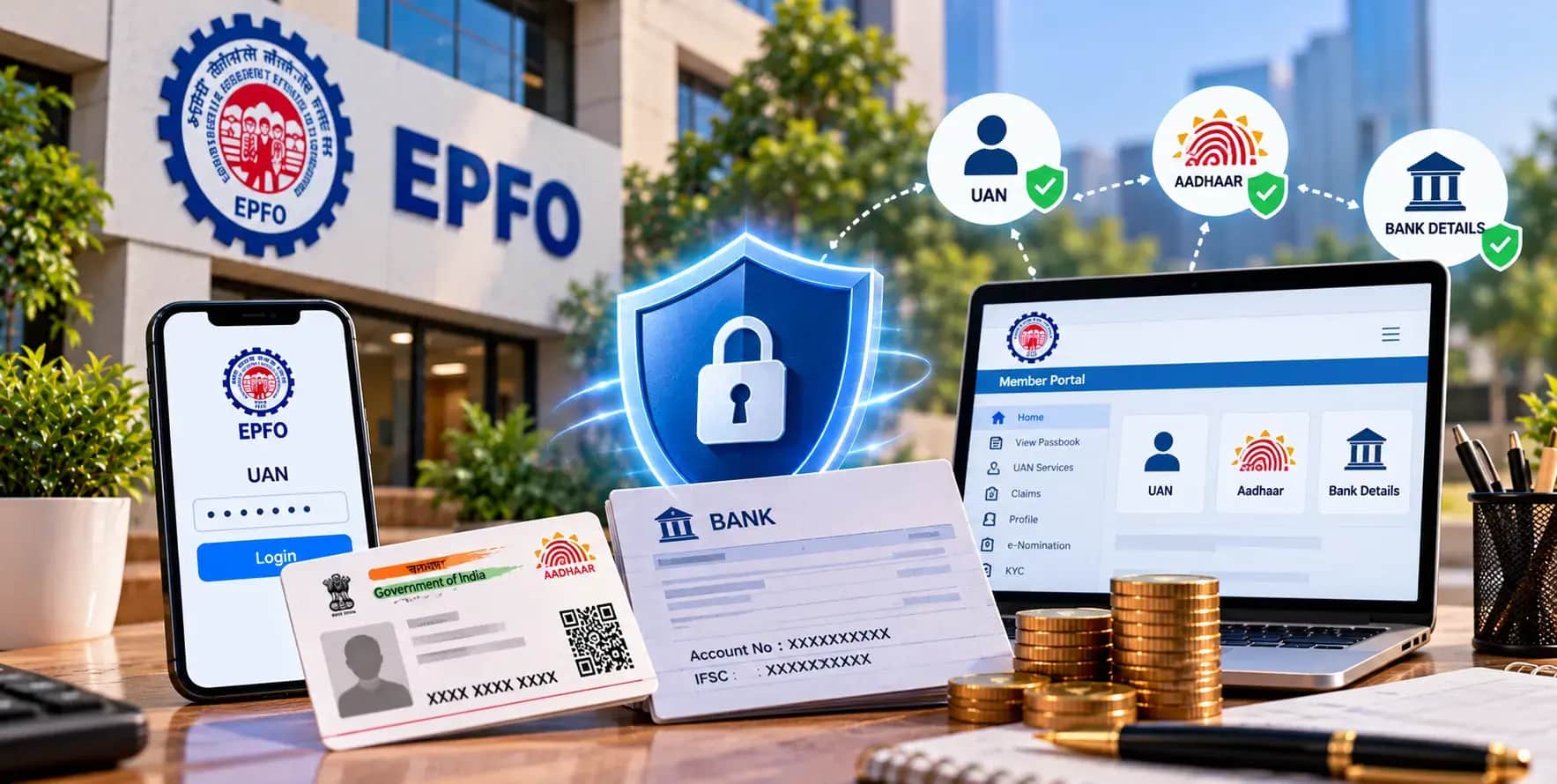
EPFO has warned members against sharing account details through unofficial channels, urging them to avoid suspicious links and report attempts to steal their financial information.
Key Highlights
Fake links and messages seeking personal and financial details were the focus of the Employees’ Provident Fund Organisation’s (EPFO) warning to subscribers across India on 7 October 2026. It asked members to access their accounts only through official portals.
Members risk having their login details stolen and misused for cyber fraud. EPFO’s official member-portal warning also asks subscribers to maintain a complex password and keep their devices updated. Regular account checks remain part of its wider guidance for identifying unauthorised activity.
Members checking their savings or using online PF services have been asked to look closely at the address of the page they open. The advisory flags spelling variations and unusual domains. It also warns against entering sensitive information, including Pension Payment Order details, on unofficial pages.
The view is that the practical value lies in keeping account access under the member’s control. For salaried borrowers managing personal finances, sharing a document is different from handing over a PF password. With the password, the exposure extends beyond the information being shared to the account itself. Members can avoid that risk by keeping their login credentials private.
The advisory directs members to EPFO’s official website and warns them not to open suspicious links. Requests for personal details, OTPs or login credentials do not come from EPFO over the phone, it said. The same applies to requests through WhatsApp, SMS, social media and email.
On the member portal, EPFO also states that it does not call or message members asking them to deposit money. Its published instructions also advise against responding to such calls or messages. Those instructions still apply when the caller claims to work for EPFO.
The checks begin before login and continue after the account opens. EPFO’s published guidance covers both protecting credentials and reviewing the information held against the UAN.
The password and device precautions appear on EPFO’s member portal. Its earlier digital-hygiene guidance adds the account checks, giving subscribers a way to identify discrepancies after accessing their records.
On 1 December 2020, EPFO’s Goa regional office issued “EPFO Goa Appeals Subscribers To Practice Digital Hygiene," Release ID 1677626. Subscribers were warned against sharing Aadhaar OTPs with unknown persons during online claim submission.
Employers also received an instruction: verify workers’ details against documentary evidence before digitally updating KYC information. The release asked members to report irregularities to both their employer and EPFO.
Suspicious identifiers can be submitted through the government’s Report Suspect facility. These include website addresses, phone numbers and email IDs associated with suspected cybercrime.
For financial cyber fraud, the government directs victims to call 1930 immediately. Reporting a suspicious message and filing a complaint about money already lost are separate actions.
EPFO’s warning asks members to stop sensitive information reaching unofficial pages or callers. Reviewing PF records provides another check. Where an irregularity appears, the published guidance calls for prompt contact with the employer and EPFO.
EPFO’s member portal says passwords must not be shared. Assistance with an account does not require handing control of the login to another person.
The OTP should remain private. Members can review their account through the official portal and report any irregularity to EPFO.
The advisory covers UAN, PPO, Aadhaar, PAN, bank details, passwords and OTPs. Members should not enter them on unofficial websites.
No. EPFO’s published warning says it does not contact members to ask for monetary deposits.
1930 is the government helpline for immediate reporting of financial cyber fraud and assistance with cybercrime complaints.









.png&w=3840&q=75)


