By continuing, you agree to LoansJagat's Credit Report Terms of Use, Terms and Conditions, Privacy Policy, and authorize contact via Call, SMS, Email, or WhatsApp
Disclaimer: The information published on LoansJagat is intended for general informational and educational purposes only and should not be considered financial, legal, or investment advice. Interest rates, loan terms, statistics, and other data may change over time and may vary by lender or source. Please verify the latest information and consult a qualified financial advisor or the respective Bank/NBFC before making any financial decisions.
Subscribe Now
About the author

LoansJagat Team
‘Simplify Finance for Everyone.’ This is the common goal of our team, as we try to explain any topic with relatable examples. From personal to business finance, managing EMIs to becoming debt-free, we do extensive research on each and every parameter, so you don’t have to. Scroll up and have a look at what 15+ years of experience in the BFSI sector looks like.
Related Blog Post
Simplify All Your Loans Into One Affordable EMI

Customers Served

Debt Consolidated

1200+ Reviews

Locations in India
Club all Loans & Credit Card Bills into Single EMI

Quick Apply Loan
Consolidate your debts into one easy EMI.

Takes less than 2 minutes. No paperwork.

10 Lakhs+
Trusted Customers

2000 Cr+
Loans Disbursed

4.7/5
Google Reviews

50+
Banks & NBFCs Offers
Other services mentioned in this article
Loan scam texts are getting smarter, mixing fake approvals, quick-link KYC and small “fees”. New data shows why the risk is rising.
India’s payments boom has created a bigger target for fraudsters. In December 2025, UPI processed 21.63 bn transactions, with value around ₹28 lakh cr, as reported using NPCI data by multiple business news outlets in January 2026.
In parallel, cyber fraud losses reported to Parliament have spiked: ₹2,290.24 cr (2022), ₹7,465.18 cr (2023) and ₹22,845.73 cr (2024), according to the Times of India, dated 22 July 2025.
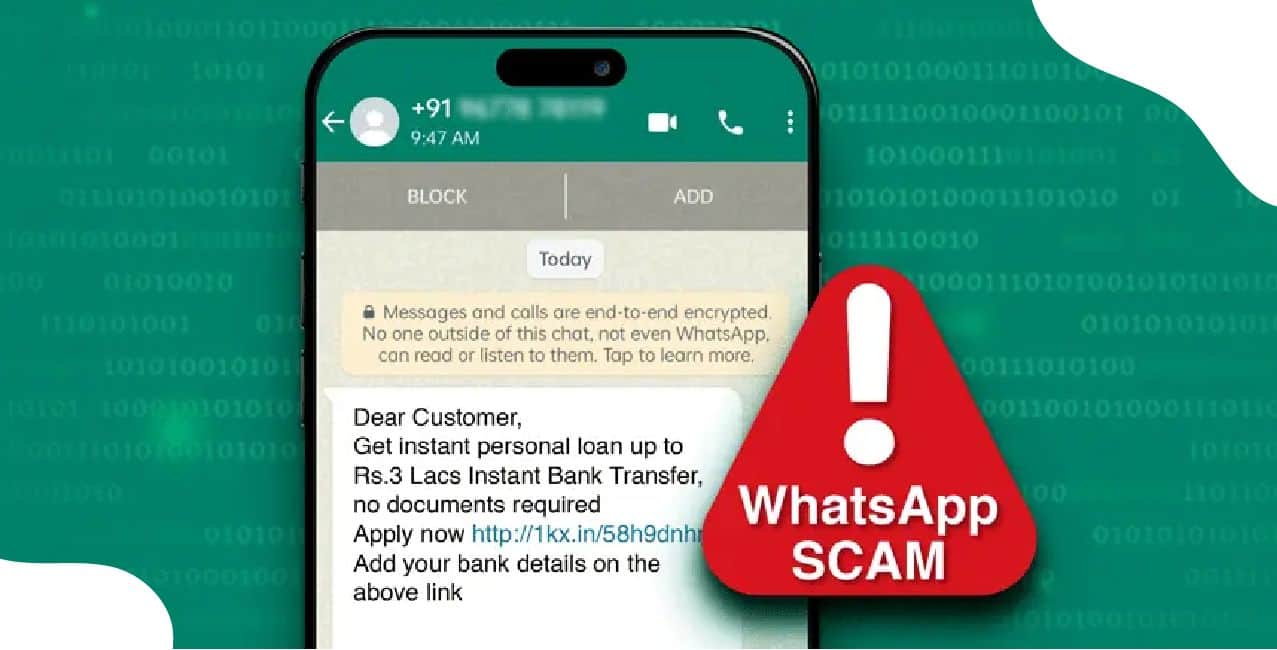
The typical fake loan text looks harmless. “Pre-approved loan”, “instant disbursal”, “low interest”, then a link. It is built to push urgency, not verification. Some messages spoof headers that look like genuine service SMS, then redirect victims to links or APK downloads.

A reported case in Hyderabad showed how an unused SMS header was misused to circulate bogus loan offers, triggering action after telecom alerts.
Before the warning list, one point stands out. Legit lenders do not force borrowers to click random links from SMS.
After this checklist, the safest move is simple. Ignore the link, search the lender independently, and verify through official website numbers only.
Fraudsters often start with a clean-looking “loan approved” SMS, then move the conversation to WhatsApp, calls, or a landing page. The goal is either personal data or money. Many victims are asked to pay a small “processing” amount first, then asked again, and then blocked. LoansJagat flagged this exact pattern in an article dated 18 June 2025, noting scammers may demand ₹1,500 to ₹10,000 upfront before disappearing.
Police cases show similar mechanics. In Nashik, cyber police arrested an accused linked to a telemarketing-style loan fraud that collected “processing fees” for loans that never came, with seized SIM cards and victim complaints.
Even the “recovery” angle is now a trick. Some victims get a second scam call claiming to be from a cyber helpdesk, asking for payment to “release” funds. Tamil Nadu cybercrime warnings have highlighted this repeat targeting pattern.
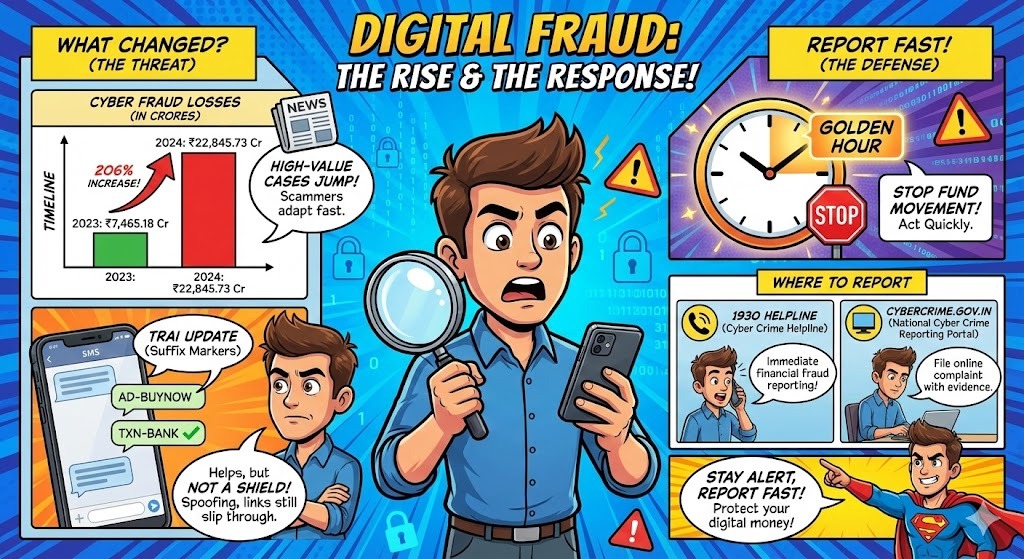
Digital fraud is not a niche anymore. Government data placed before Parliament and widely reported in July 2025 put cyber fraud losses at ₹22,845.73 cr in 2024, up 206% from ₹7,465.18 cr in 2023.
*T&C Apply
A Reuters report dated 11 March 2025 also pointed to a sharp jump in high-value cyber fraud cases in FY2024, reflecting how fast scammers adapt around mobile payments.
There is also a telecom angle.
TRAI’s rule update dated 12 February 2025 introduced clearer SMS classification, and reporting indicates suffix markers became visible to users from 06 May 2025, helping people spot promotional versus service and transactional messages. It helps, but it is not a shield. Spoofing, social engineering, and link-based traps still slip through, especially when users are rushed.
Before the action table, keep the “golden hour” idea in mind. Fast reporting can stop fund movement.
After reporting, victims should alert their bank through verified channels and freeze suspicious activity quickly.
The Ministry of Home Affairs’ PIB release dated 17 December 2025 said the CFCFRMS system helped save ₹7,130 across 23.02 lakh complaints up to 31 October 2025, highlighting why quick reporting is essential. SBI’s cyber safety page also points users to 1930 and the portal for reporting.
Fake loan texts win on speed and confusion, not credibility. Verification through official lender channels and quick reporting to 1930 can cut losses and stop repeat targeting.









.png&w=3840&q=75)



