By continuing, you agree to LoansJagat's Credit Report Terms of Use, Terms and Conditions, Privacy Policy, and authorize contact via Call, SMS, Email, or WhatsApp
Disclaimer: The information published on LoansJagat is intended for general informational and educational purposes only and should not be considered financial, legal, or investment advice. Interest rates, loan terms, statistics, and other data may change over time and may vary by lender or source. Please verify the latest information and consult a qualified financial advisor or the respective Bank/NBFC before making any financial decisions.
Subscribe Now
About the author

LoansJagat Team
‘Simplify Finance for Everyone.’ This is the common goal of our team, as we try to explain any topic with relatable examples. From personal to business finance, managing EMIs to becoming debt-free, we do extensive research on each and every parameter, so you don’t have to. Scroll up and have a look at what 15+ years of experience in the BFSI sector looks like.
Related News
Simplify All Your Loans Into One Affordable EMI

Customers Served

Debt Consolidated

1200+ Reviews

Locations in India
Club all Loans & Credit Card Bills into Single EMI

Quick Apply Loan
Consolidate your debts into one easy EMI.

Takes less than 2 minutes. No paperwork.

10 Lakhs+
Trusted Customers

2000 Cr+
Loans Disbursed

4.7/5
Google Reviews

50+
Banks & NBFCs Offers
Other services mentioned in this article
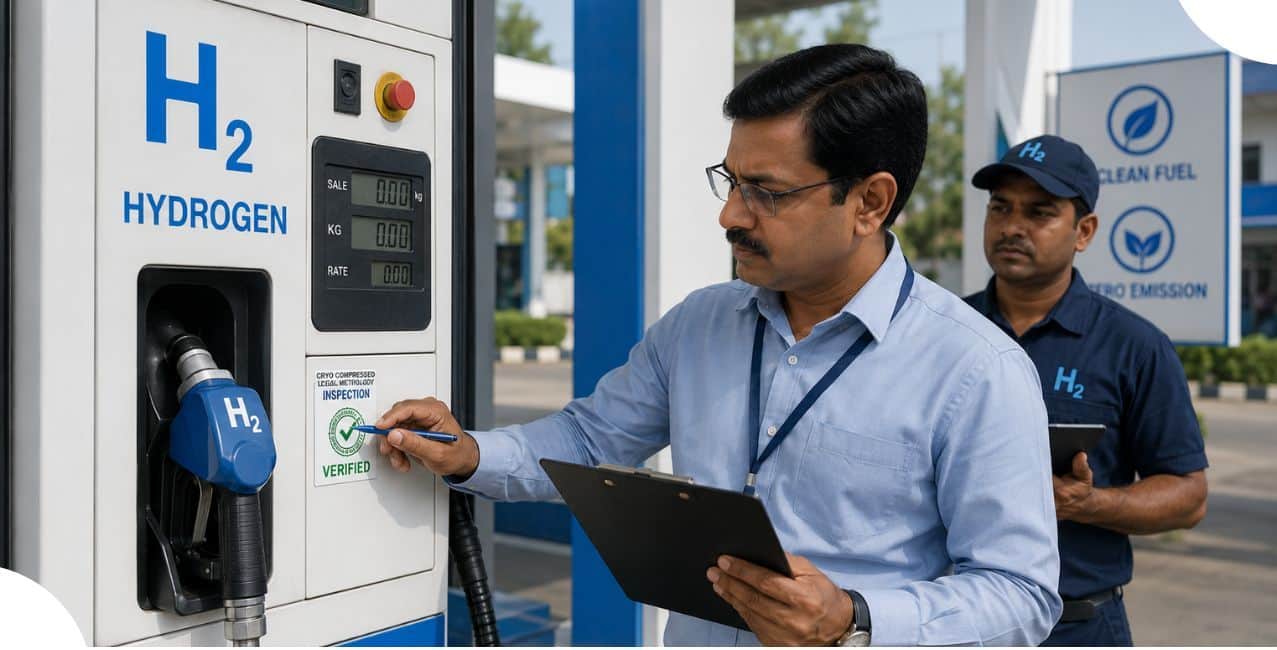
India has expanded fuel dispenser verification to CNG, LNG, LPG and hydrogen pumps, bringing cleaner fuels under stricter legal metrology checks.
Key Takeaways
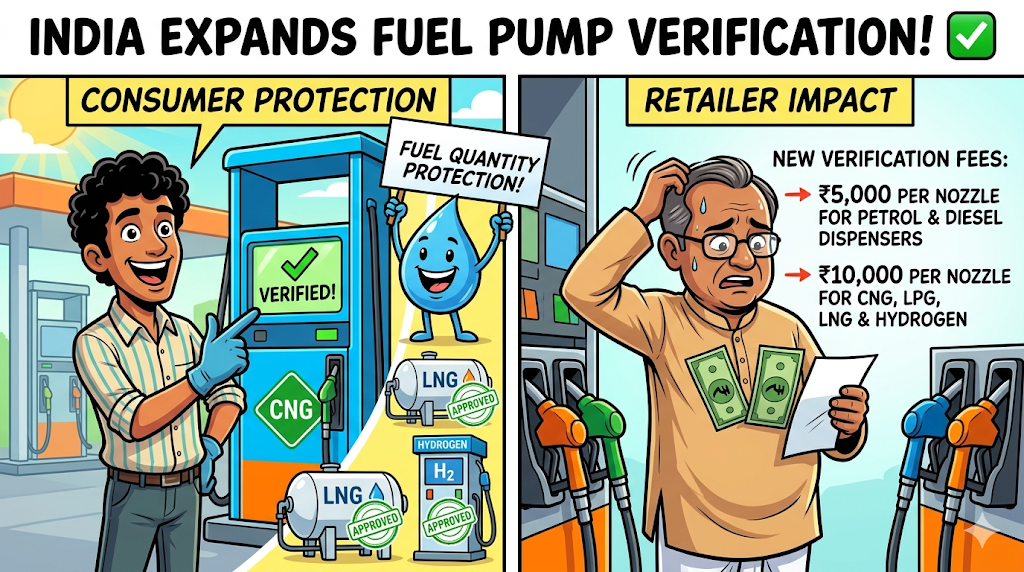
India’s clean-fuel rollout has now reached the fuel pump. The Department of Consumer Affairs said on 24 May 2026 that it has amended the Legal Metrology (Government Approved Test Centre) Rules, 2013, allowing GATCs to verify and re-verify more fuel dispensing systems. The change was also reported by Moneycontrol, Business Standard, Economic Times Energyworld and Deccan Herald.
For consumers, the long-term gain is better fuel quantity protection at CNG, LNG and hydrogen outlets. The short-term pressure may fall on fuel retailers because verification fees are now fixed at ₹5,000 per nozzle for petrol and diesel dispensers, and ₹10,000 per nozzle for CNG, LPG, LNG and hydrogen dispensers.
The amendment adds 5 fuel dispensing systems under the GATC framework: petrol, diesel, CNG, LPG, LNG and hydrogen dispensers. With this, instrument categories verifiable through GATCs have gone up from 18 to 23. The Centre said the move will improve verification service availability and support cleaner fuel adoption.
State governments have also been empowered to notify more categories of weights and measures for GATC verification based on local needs. This is important because clean-fuel adoption is not uniform across India. Large cities may need CNG checks first, while industrial clusters may require LNG and hydrogen verification capacity faster.
This table shows the shift from routine fuel checking to a wider clean-fuel compliance framework. It also makes private testing infrastructure more useful for faster verification.
For Indian households, the rule links directly to fuel billing. A CNG car owner, delivery rider or fleet operator depends on accurate dispenser readings. If the nozzle reading is wrong, the buyer pays more or receives less. Legal verification reduces that risk.
There is also a price angle. LoansJagat reported on 14 May 2026 that expensive crude can push petrol and diesel bills higher, hurting household budgets, transport and inflation. Recent Reuters reporting on 25 May 2026 also said petrol and diesel prices had risen again amid global oil pressure.
*T&C Apply
These numbers explain why pump verification is being widened now. India is preparing not just fuel supply, but also the billing and measurement system around it.
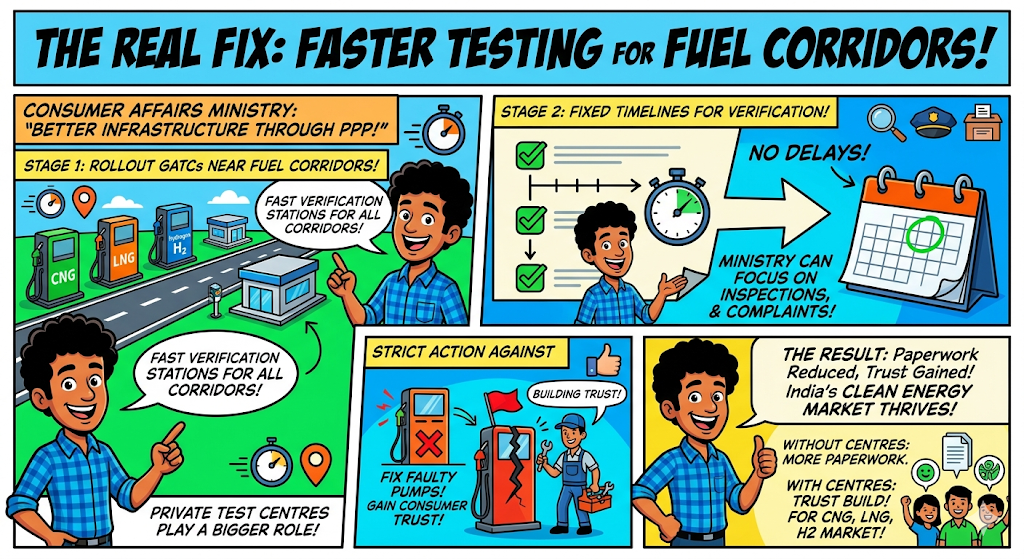
The Consumer Affairs Ministry said the reform will strengthen legal metrology infrastructure through public-private participation and allow state departments to focus more on inspections, enforcement and consumer complaints. Deccan Herald also reported that private testing centres will now play a bigger role in verification.
The solution is faster rollout of approved test centres near fuel corridors, fixed timelines for verification, and strict action against faulty dispensers. Without enough centres, the rule may add paperwork. With enough centres, it can build trust in India’s CNG, LNG and hydrogen market.
India’s clean-fuel policy is moving from targets to pump-level checks.
The next test is simple: quick verification, fair fees and strict action where fuel quantity is wrong.
Why Do Some People Avoid Filling Petrol For ₹500 Or ₹1,000?
Many people avoid ₹500 or ₹1,000 petrol fills because they feel common amounts may be easier to manipulate at pumps. But that fear is not always correct. If a dispenser is faulty or tampered with, it can short-fill any amount, even ₹730 or ₹1,250.
So odd amounts alone do not protect anyone. A better habit is to check if the meter starts from 0, keep watching while the fuel is filled, take the bill, and compare mileage over a few trips. Filling by litres can also help if someone wants to track fuel use properly.
How Can A Customer Know If A Petrol Pump Meter Is Tampered?
Before filling fuel, check that the meter is at 0. Stand near the dispenser and keep watching the litre reading, not only the amount. Do not let staff distract you with card payment, cash change or small talk.
Take a bill after filling. If you feel the fuel quantity is less, ask for the 5-litre measure test at the pump. Also look for the Legal Metrology seal or sticker on the machine. In case of doubt, note the pump name, address and bill number, then complain to the state Legal Metrology office or consumer helpline.









.png&w=3840&q=75)



