By continuing, you agree to LoansJagat's Credit Report Terms of Use, Terms and Conditions, Privacy Policy, and authorize contact via Call, SMS, Email, or WhatsApp
Disclaimer: The information published on LoansJagat is intended for general informational and educational purposes only and should not be considered financial, legal, or investment advice. Interest rates, loan terms, statistics, and other data may change over time and may vary by lender or source. Please verify the latest information and consult a qualified financial advisor or the respective Bank/NBFC before making any financial decisions.
Subscribe Now
About the author

Arshathul Afia
Arshathul Afia is a journalism graduate and fintech content writer with 4+ years of experience in digital publishing and research-led writing. She has written 200+ articles covering personal finance, lending, banking, digital payments, credit, insurance, and major financial developments in India. At LoansJagat, she focuses on simplifying complex fintech news, RBI updates, loan-related changes, policy developments, and industry trends for everyday readers. Her journalism background helps her approach stories with research, context, and clarity, while her SEO experience ensures content remains discoverable and relevant. She aims to make financial news easier to understand, practical, and useful for readers across India.
Related News
Simplify All Your Loans Into One Affordable EMI

Customers Served

Debt Consolidated

1200+ Reviews

Locations in India
Club all Loans & Credit Card Bills into Single EMI

Quick Apply Loan
Consolidate your debts into one easy EMI.

Takes less than 2 minutes. No paperwork.

10 Lakhs+
Trusted Customers

2000 Cr+
Loans Disbursed

4.7/5
Google Reviews

50+
Banks & NBFCs Offers
Other services mentioned in this article
With the monsoon still 15% short, ICRA expects weaker farm earnings to show up in late repayments and tighter rural lending during FY2027.
Key Highlights
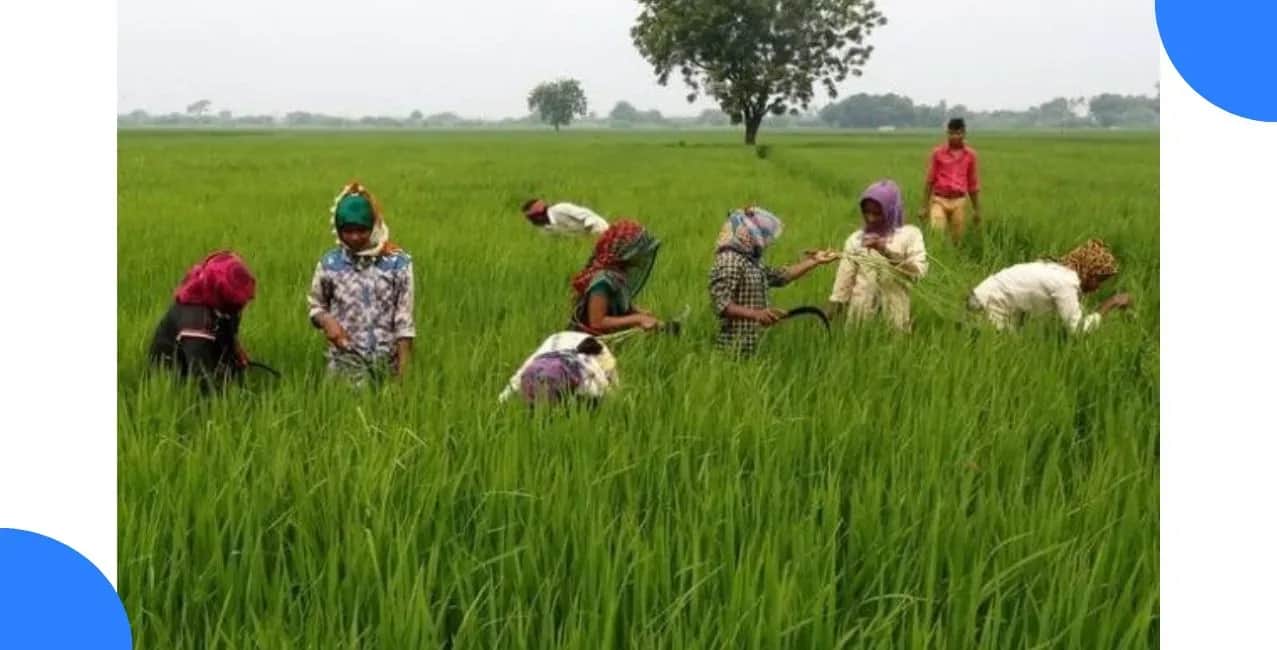
AM Karthik of ICRA raised the concern on 16 July 2026. He said weak rain could cut farm earnings, leaving many rural borrowers short of cash when instalments fall due. The impact would not stop with crop loans. Microfinance accounts, used-vehicle finance, village business loans, personal credit and gold loans could all come under pressure, especially in districts where most families depend on the same harvest.
The rainfall numbers explain the warning. According to the India Meteorological Department, India received 15% less rain than the long-period average between 1 June and 8 July 2026. Late payments may show up first. Some lenders could also see more bounced instalments and slower collections. If crop output remains poor, rural spending may fall further and fresh loans could become tougher to secure.
The effect can travel well beyond a farm loan. A cotton farmer may postpone machinery repairs. A tractor operator may get fewer bookings. Local transporters, seed sellers, labourers and small shops can lose business during the same weeks. When several income sources slow down together, a household may protect daily expenses first and delay an EMI.
Microfinance borrowers face a sharper test because many repay every week or month. ICRA said about 66% of microfinance loans go to borrowers engaged in agriculture and allied work, while more than 80% of the portfolio is rural. The positive side is that July rainfall improved in several regions, leaving some scope for late sowing and shorter-duration crops.
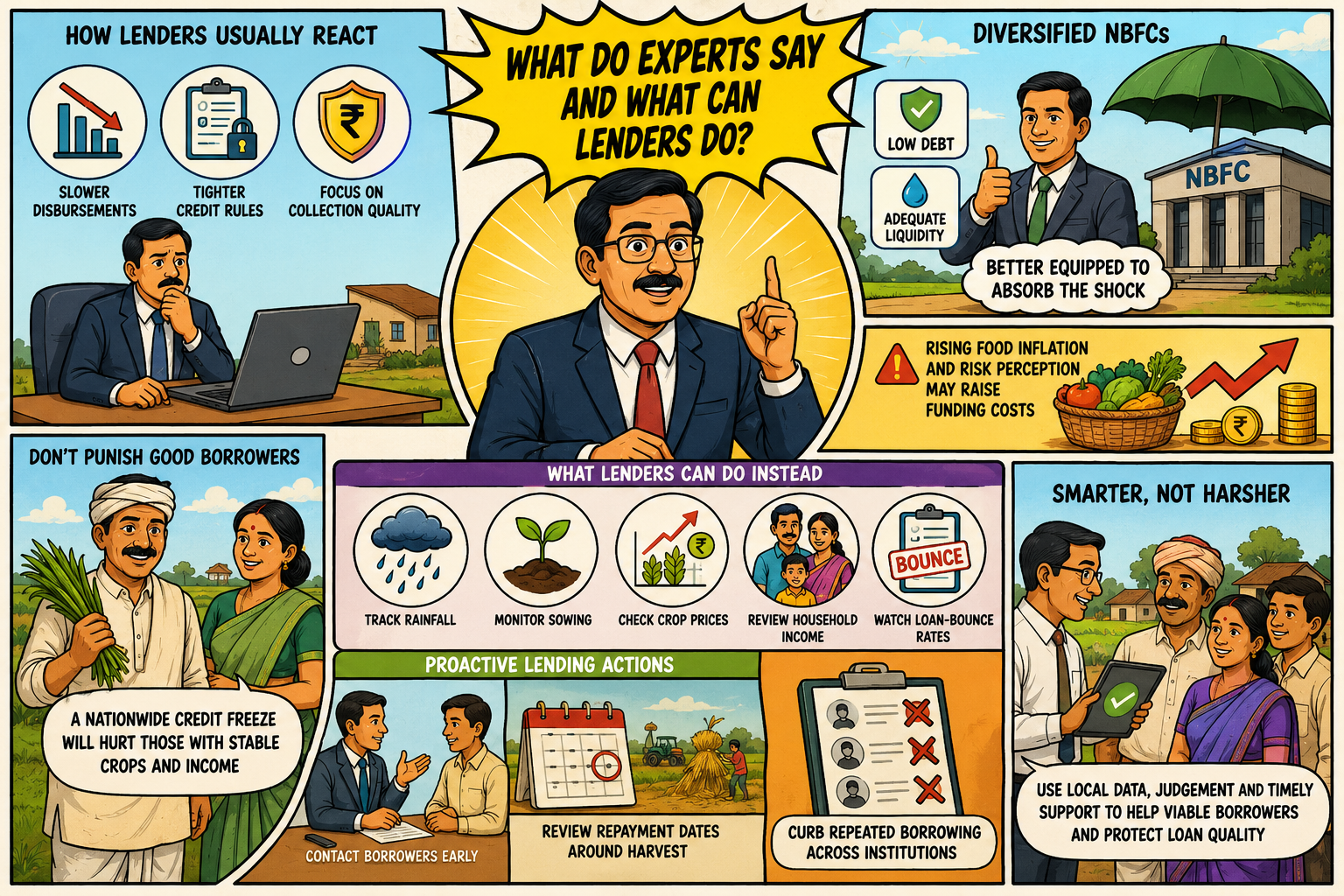
Karthik said lenders usually respond to a weaker economy by slowing disbursements, tightening credit rules and putting collection quality ahead of rapid loan growth. He also said "diversified." NBFCs, with less direct dependence on agriculture, should absorb the shock better. Their current low debt and adequate liquidity provide some protection, although funding costs may rise if food inflation and lender risk perception increase.
A nationwide credit freeze would punish borrowers whose crops and non-farm earnings remain stable. Branch-level checks offer a better response. Lenders can track rainfall, sowing, crop prices, household income and loan-bounce rates by district. They can contact borrowers before arrears build, review repayment dates around harvest and stop repeated borrowing across several institutions.
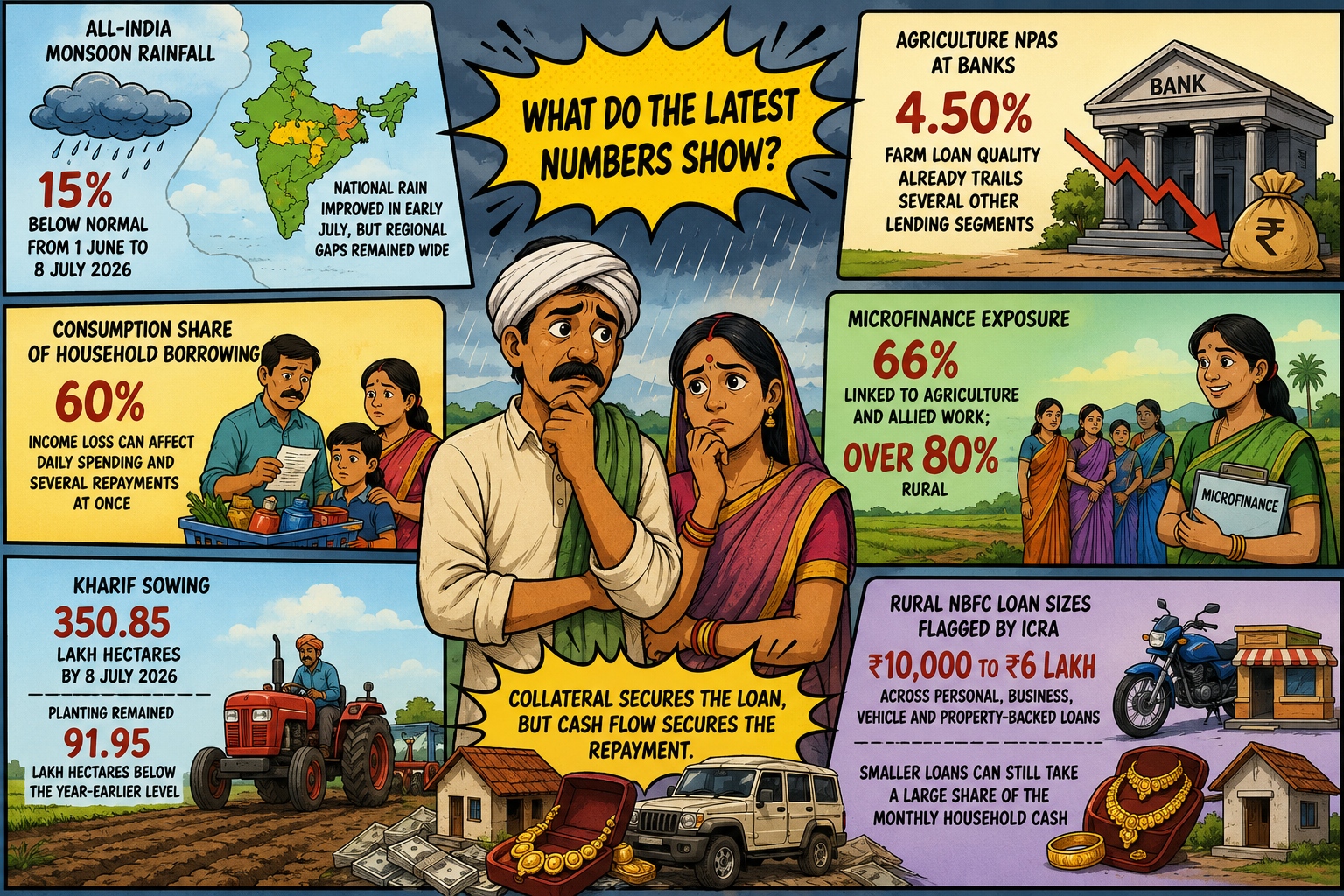
The national rainfall gap is only one part of the story. ICRA’s warning shows how weather pressure can move into different loan products, including secured credit, where collateral does not create monthly income.
The table also shows why collateral is not a full safeguard. A used vehicle, pledged jewellery or mortgaged property may secure the lender, yet the borrower still needs cash each month. If the asset itself depends on farming activity, such as a vehicle carrying crops, repayment pressure can rise even when the loan is secured.
ICRA had raised the agricultural risk earlier. Its thematic report, “El Niño-Induced Bleak Monsoon Forecast Weakens Agri Outlook for FY2027; Sectoral Impact Would Be Mixed," was released on 29 May 2026. It referred to IMD’s second long-range forecast of rainfall at 90% of the long-period average, with a model error of ±4%. ICRA projected agricultural GVA growth below 1.5% for FY2027.
Government data later showed that June rainfall was 33% below normal before the gap narrowed to 24% in early July. The number of rainfall-deficient districts dropped from 262 to 178. The Press Information Bureau release for the Ministry of Agriculture and Farmers Welfare, published on 8 July 2026 under Release ID 2282422, said soybean and cotton sowing had faced the largest delays.
The same release said farmers in delayed areas were advised to consider maize, bajra and moong. It also recorded a national seed reserve of about 1.75 lakh quintals and said more than 94,000 Kisan Credit Card applications had been approved from 1.14 lakh applications received by 30 June. These measures may help viable farms continue sowing, though they cannot replace income after a poor harvest.
Karthik’s 16 July commentary placed microfinance among the more exposed segments. MFIs were already recovering from loan-quality stress seen in 2024 and 2025, much of it linked to borrower overleveraging. New underwriting controls may reduce multiple borrowing, but they cannot fully protect collections when the weather lowers income across an entire village.
Agriculture Minister Shivraj Singh Chouhan offered a more hopeful view on 8 July. He said the rainfall position had improved and expected sowing to accelerate during July. The government had prepared district contingency plans, promoted crop insurance enrolment and started weekly reviews of rainfall, sowing, crop conditions and market movement.
The LoansJagat report on El Niño and FY2027 rural demand, published on 24 June 2026, said its NBFC marketplace had facilitated over ₹2,000 crore in loans across India. That figure shows the scale of formal credit demand, but it does not identify how much came from rain-dependent households.
Its editorial assessment is that the first borrower-level warning may appear before a formal default. A family may seek another small loan, roll over a card balance or ask to combine several repayments after farm receipts are delayed. Lenders should treat that pattern as an income warning, not as proof that the borrower simply needs a larger limit.
For borrowers, early action is cheaper than repeated late fees. Households can list every repayment, preserve essential spending, speak to lenders before the due date and avoid using an expensive short-term loan to repay another loan. Crop insurance and formal farm-credit channels should be checked before jewellery or property is pledged.
ICRA’s warning points to higher repayment uncertainty, not an immediate nationwide rural credit crisis. The outcome will depend on where rain falls, whether late sowing survives and how much income reaches households after harvest.
The next warning signs are likely to appear in collection efficiency, repeat borrowing and village spending before they show up fully in bad-loan ratios. Targeted farm support and careful lending can contain temporary stress. Continued weak rain in major rain-fed districts would make the post-harvest repayment cycle much harder.
Why has ICRA warned about rural cash-flow stress?
Weak rainfall may lower farm income and leave households with less money for scheduled loan repayments.
Which loans face the highest monsoon risk?
Agriculture, microfinance, used-vehicle, small business, personal, gold and micro property-backed loans face higher volatility.
Is a 15% rainfall deficit the same across India?
No. Rainfall distribution differs sharply, so district crop conditions are more useful than a national average.
Can gold loans protect rural borrowers?
Gold loans provide quick cash, but they add another repayment and do not replace lost income.
What should lenders track during the monsoon?
They should watch local rain, sowing, crop prices, household earnings, repeat borrowing and loan-bounce rates.










.png&w=3840&q=75)


