By continuing, you agree to LoansJagat's Credit Report Terms of Use, Terms and Conditions, Privacy Policy, and authorize contact via Call, SMS, Email, or WhatsApp
Disclaimer: The information published on LoansJagat is intended for general informational and educational purposes only and should not be considered financial, legal, or investment advice. Interest rates, loan terms, statistics, and other data may change over time and may vary by lender or source. Please verify the latest information and consult a qualified financial advisor or the respective Bank/NBFC before making any financial decisions.
Subscribe Now
About the author

LoansJagat Team
‘Simplify Finance for Everyone.’ This is the common goal of our team, as we try to explain any topic with relatable examples. From personal to business finance, managing EMIs to becoming debt-free, we do extensive research on each and every parameter, so you don’t have to. Scroll up and have a look at what 15+ years of experience in the BFSI sector looks like.
Related Blog Post
Simplify All Your Loans Into One Affordable EMI

Customers Served

Debt Consolidated

1200+ Reviews

Locations in India
Club all Loans & Credit Card Bills into Single EMI

Quick Apply Loan
Consolidate your debts into one easy EMI.

Takes less than 2 minutes. No paperwork.

10 Lakhs+
Trusted Customers

2000 Cr+
Loans Disbursed

4.7/5
Google Reviews

50+
Banks & NBFCs Offers
Other services mentioned in this article
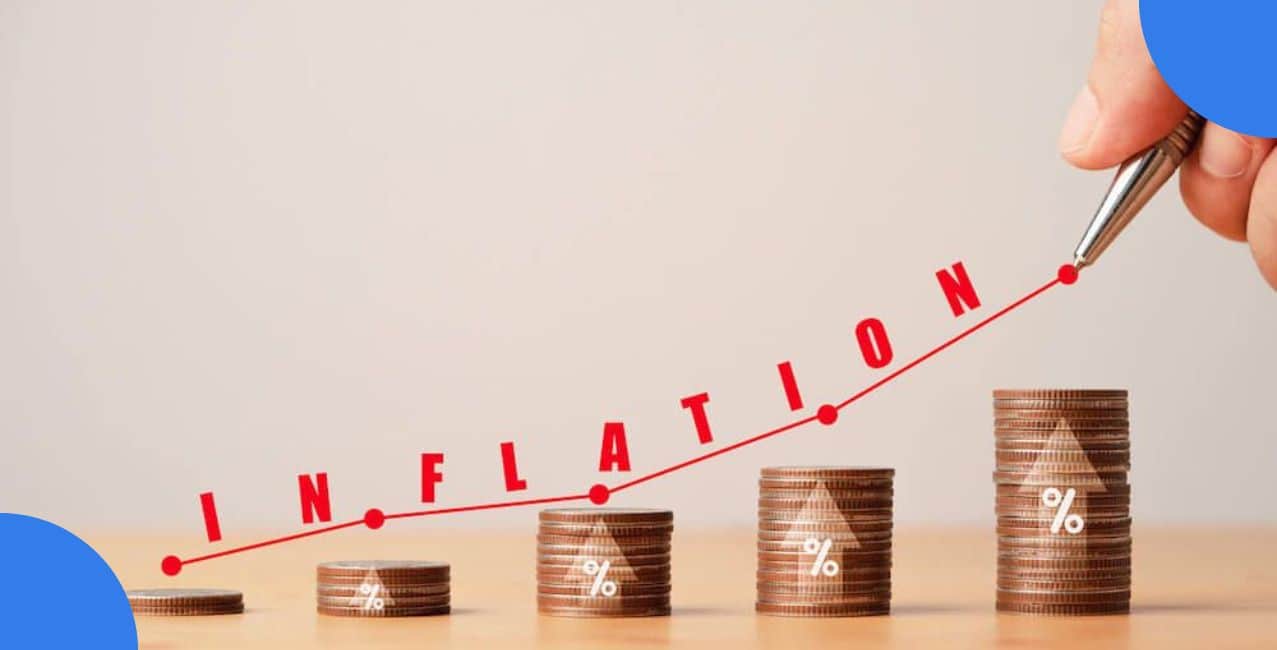
India has retained the 4% CPI inflation target with a 2% to 6% band till March 31, 2031, signalling continuity amid fresh oil-led price risks.
The Centre has decided to keep India’s retail inflation target at 4%, with the tolerance band unchanged at 2% to 6%, for the 5-year period from April 1, 2026 to March 31, 2031. The decision was notified on March 25, 2026 and reported by multiple outlets including Reuters, The Times of India, India Today and LoansJagat. The move keeps the inflation-control framework unchanged at a time when global crude and shipping disruptions are again in focus.
The latest notification does not change the target, the band, or the policy horizon. It simply extends the same framework for another 5 years. That gives households, lenders and markets a familiar policy anchor.
Reuters reported on March 25, 2026 that economists broadly backed the unchanged target because it allows room to absorb supply shocks without altering the overall inflation discipline.
Official data also shows why the government did not feel pushed to reset the target. The Ministry of Statistics and Programme Implementation said in its CPI press release for February 2026, released on March 12, 2026, that headline retail inflation stood at 3.21%. Rural inflation was 3.37% and urban inflation was 3.02%.
India first adopted the inflation-targeting system in 2016. It was later continued for 2021 to 2026, and now again for 2026 to 2031. Recent reporting shows the government preferred continuity because price pressures are manageable for now, even though geopolitical tensions could lift imported inflation in the coming months.
Reuters reported on March 27, 2026 that 69 of 71 economists expected policy rates to remain unchanged at the April 8, 2026 review, while average inflation was seen at 4.3% over the next 2 fiscal years.
*T&C Apply
LoansJagat’s report on March 26, 2026 also framed the extension as a continuity step for borrowers and markets, especially when inflation expectations remain sensitive to fuel costs and external shocks.
Government reporting across Reuters, Times of India and India Today presents the decision as a stability-focused extension, not a policy shift.
Economists cited by Reuters said the unchanged band offers flexibility during food and fuel shocks, while recent oil-market disruptions still remain a risk to the inflation path.
India has chosen continuity over recalibration. With inflation at 3.21% in February 2026, the 4% target stays in place as the country heads into a more uncertain global price environment.









.png&w=3840&q=75)



