
By continuing, you agree to LoansJagat's Credit Report Terms of Use, Terms and Conditions, Privacy Policy, and authorize contact via Call, SMS, Email, or WhatsApp
Disclaimer: The information published on LoansJagat is intended for general informational and educational purposes only and should not be considered financial, legal, or investment advice. Interest rates, loan terms, statistics, and other data may change over time and may vary by lender or source. Please verify the latest information and consult a qualified financial advisor or the respective Bank/NBFC before making any financial decisions.
Subscribe Now
About the author

Arshathul Afia
Arshathul Afia is a journalism graduate and fintech content writer with 4+ years of experience in digital publishing and research-led writing. She has written 200+ articles covering personal finance, lending, banking, digital payments, credit, insurance, and major financial developments in India. At LoansJagat, she focuses on simplifying complex fintech news, RBI updates, loan-related changes, policy developments, and industry trends for everyday readers. Her journalism background helps her approach stories with research, context, and clarity, while her SEO experience ensures content remains discoverable and relevant. She aims to make financial news easier to understand, practical, and useful for readers across India.
Related News
Simplify All Your Loans Into One Affordable EMI

Customers Served

Debt Consolidated

1200+ Reviews

Locations in India
Club all Loans & Credit Card Bills into Single EMI

Quick Apply Loan
Consolidate your debts into one easy EMI.

Takes less than 2 minutes. No paperwork.

10 Lakhs+
Trusted Customers

2000 Cr+
Loans Disbursed

4.7/5
Google Reviews

50+
Banks & NBFCs Offers
Other services mentioned in this article
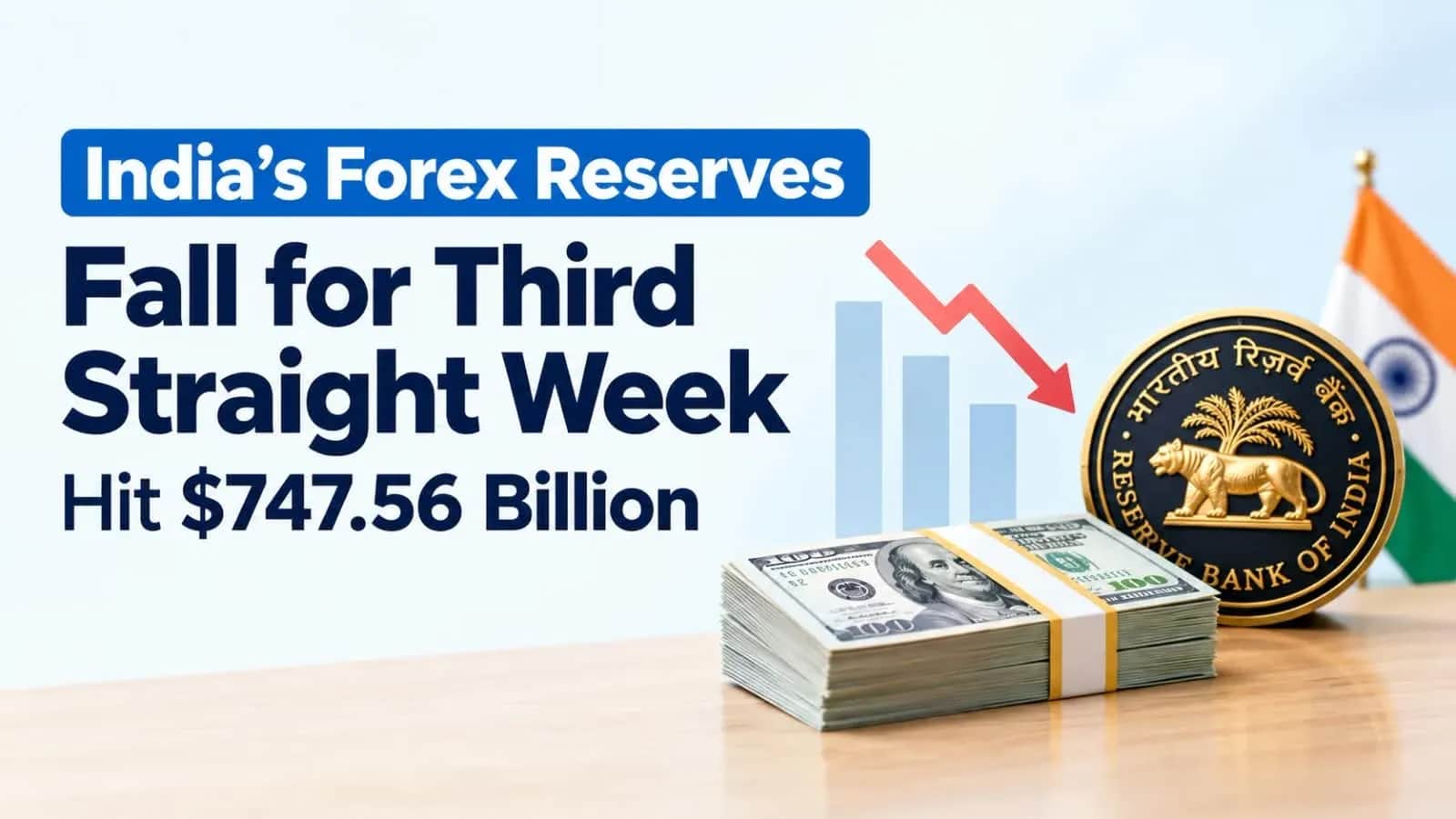
A $18.34 billion fall in the week ended September 25 extended India’s reserve decline to 3 weeks, with foreign currency assets and gold losing reported value.
Key Highlights
The official statistical release dated October 2, 2026, recorded another weekly fall in India’s foreign exchange reserves, taking the run of declines to 3 weeks. Part of the fall reflected currency intervention during the rupee’s decline, market participants said. They also pointed to changes in the dollar valuation of reserve holdings.
Even with no change to a dollar invoice, a business needs more rupees to pay it after the Indian currency weakens. Payments already due become costlier, and prolonged weakness keeps pressure on import bills. Household prices and loan instalments do not rise directly because reserves fell during the week.
The reserve balance supports the country’s ability to manage external payment pressures. To restrain excessive currency swings during the rupee’s decline, the central bank intervened through dollar sales and foreign exchange swaps. Those operations draw attention to the role of foreign exchange reserves, particularly when businesses face uncertain costs for payments abroad.
Our view is that borrowers need to separate this currency-market development from changes to their loan terms. A rupee loan’s instalment follows its interest rate, repayment period and contractual reset rules. The reserve headline is therefore more directly relevant to foreign-currency payments than to an existing domestic EMI. Reading it as an automatic loan-rate increase would go beyond what the figures show.
Reserve accounts convert the value of euro, pound and yen holdings into US dollars. Those holdings are worth fewer dollars when their currencies weaken against the dollar, reducing the amount recorded. Currency operations also affect the balance, so the weekly change captures more than dollar sales alone.
Gold contributed to the latest decline too. A lower reported value does not establish that physical gold was sold. The government update dated October 2, 2026 confirmed reductions across all reserve components. The exact figures below appear in the October 2 official release.
The biggest reduction came from foreign currency assets, followed by gold. Neither of the remaining components fell by as much. The official release notes that rounding can produce differences between component totals and the overall balance.
Gaura Sengupta, chief economist at IDFC First Bank, attributed the decline to intervention and valuation losses in comments published on October 2, 2026. “The rest of the decline was due to revaluation losses,” she said, identifying gold and foreign currency assets as contributors.
Her assessment helps explain why the full weekly fall should not be described as money spent defending the rupee. Dollar sales and swaps formed part of the response to currency pressure, while movements in asset values also reduced the reported balance. The published weekly figures do not assign separate amounts to those causes.
The preceding update, released on September 25, 2026, showed reserves falling $14.881 billion to $765.901 billion for the week ended September 18. Foreign currency assets led that decline as well. Gold increased in value during that earlier week, providing a partial offset that disappeared in the latest figures.
The consecutive falls followed September’s record reserve level. Deposit and borrowing facilities had brought substantial foreign currency into India, the Finance Ministry said in its August 24, 2026, statement. That earlier accumulation provides context for the subsequent retreat, rather than evidence that every weekly movement has the same cause.
India’s latest reserve decline reflects lower foreign currency assets and gold values during a period of rupee pressure. For borrowers, exposure to exchange-rate changes is separate from the terms that determine domestic loan costs. The weekly reserve change is a currency-market development, not an automatic revision to an existing EMI.
By September 25, 2026, reserves stood at $747.557 billion after a weekly reduction of $18.343 billion.
September 25, 2026, is the date of the reserve holdings measured in this update. Publication followed on October 2, 2026.
No. An EMI depends on the loan’s interest rate, repayment period and applicable reset terms, rather than a weekly reserve movement.
The country uses foreign exchange reserves to support payments abroad. They also fund intervention to address disruption in currency markets.
Selling dollars to manage rupee volatility changes the central bank’s reserve balance. Other holdings also change in dollar value as their currencies move against the dollar, independently of those sales.









.png&w=3840&q=75)


